
May 30, 2023
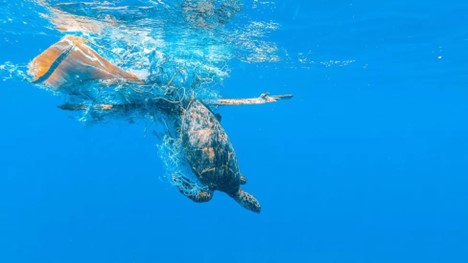
The Nation & World section of today’s local newspaper headlined the United Nations talks happening now in Paris. Nearly 200 countries have agreed to start negotiations on an international agreement to act on the “plastic crisis”. UN members are tasked with developing an over-arching framework for reducing plastic waste across the world amid a growing concern that discarded plastic is destroying habitats, harming wildlife, and contaminating the food chain. While positive, there appears to be little agreement on the outcome of these talks. This is the second of five talks to complete negotiations by the end of 2024. Supporters describe this as one of the world’s most ambitious environmental actions since the 1989 Montreal Protocol which phased out ozone-depleting substances. There are more than 2000 participants, including governments and observers. One of the major issues under debate is how to determine the system of voting on the decisions by each nation.
When I looked online, I found a set of facts concerning the world’s plastic pollution. More than five trillion pieces of plastic are in the world’s oceans, all of which can take years to break down. Humanity produces more than 430 million tons of plastic each year and 40% of that is single use plastic or used once before being thrown away. Over eight million tons of plastic enter the world’s oceans each year and most escape from land. Not all plastic can be recycled, some because of the way it is made and others because it is considered too expensive or difficult to do so. Plastic pollution can harm animals on both land and sea as they get trapped in carrier bags, food packaging, or mistake plastic for food. Steve Fletcher of the University of Portsmouth is an advisor for the UN Environment Program (UNEP) on plastics issues. Fletcher stressed the plastic problem spans international borders and boundaries. “One country can’t deal with plastic pollution alone, no matter how good its policies are. We need a global agreement to enable us to deal with the widespread challenges that plastic gives us as a society.”
Global plastic waste is set to triple by 2060, with about half slated to end up in landfills and only one fifth being recycled (the other third scatter across the planet?). As with any global treaty, there are several power players who are lining up to protect their right to make plastic even as they work to curtail the waste. A “high ambition” coalition led by Norway and Rwanda want limits on plastic production and restrictions on some of the chemicals used to make plastics. A coalition of plastic producers and oil and gas exporters, including the US, Saudi Arabia, and China, wants to address waste and scale up recycling. The International Council of Chemical Associations, the World Plastics Council, and American Chemistry Council want to eliminate plastic pollution while “retaining the societal benefits of plastics.” Finally, the International Pollutants Elimination Network wants a treaty to restrict chemicals to make plastics that are harmful to health and the environment. World leaders have until 2024 to agree on the plastic pollution treaty, including which elements will be legally binding and how the deal will be financed. There will be additional pressure to help countries in the global south deal with plastic problems created in the global north.
Thoughts: It is interesting to note the UK not only supports the resolution but described the agreement as “truly historic”. That is even though no treaty or even a framework for one has been drawn up. During one lifetime humans have caused unimaginable damage to the global ocean with plastic pollution. Right now, there is no text to negotiate, only ideas. Until “something” is on paper, nothing will happen. They have until 2024. Act for all. Change is coming and it starts with you.
 A travelers odyssey