Mallalieu

June 29, 2023

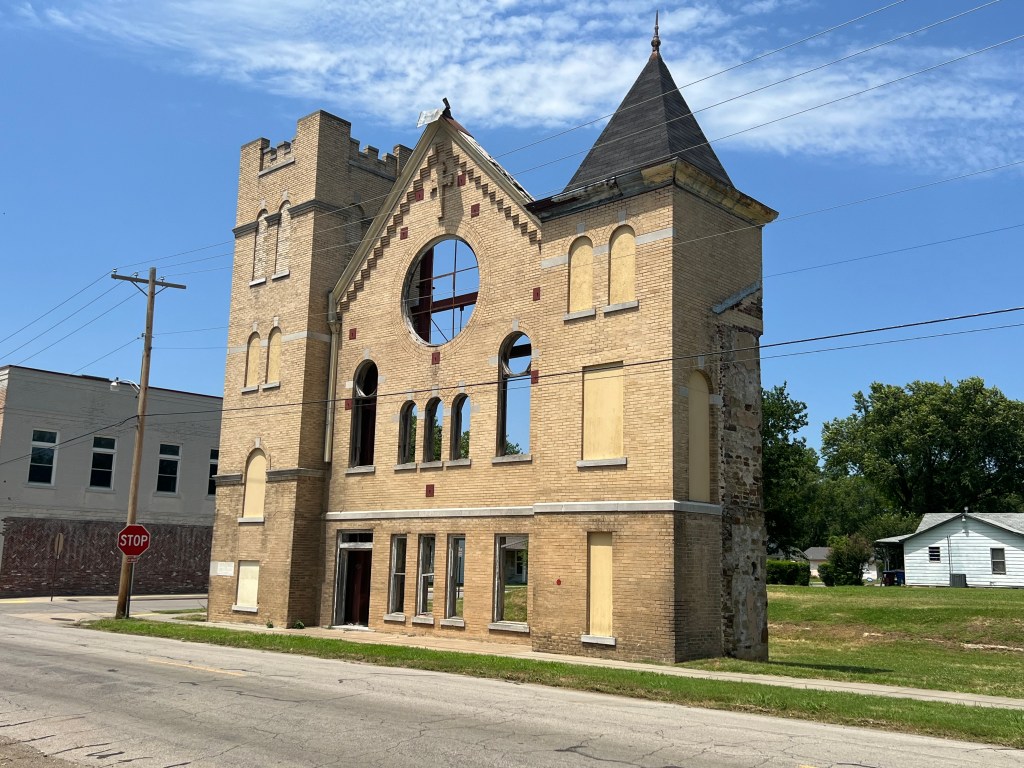
I am planning to play golf when I visit my brother next week for the 4th holiday.  I was an avid golfer (although never good) but lost the drive when I moved back to Kansas.  I injured my back on my last trip up North and am still recovering.  I decided if I it might be good to see if I could swing a club.  I knew of a driving range in the city and decided to see if I could swing a club.  I was glad to see the electronic sign flash “OPEN” despite the 100F (37.7C) temperature.  I saw the range was not covered but did have a tree with a chair beneath it as I walked in and asked for a bucket of balls.  The owner told me the range was closed because of construction next door which forced them to remove the netting that protected neighbors from errant balls.  The shop was open, just not the range.  I decided to drive across town to pick up some supplies.  I had never driven from this side of town but was sure I could find my way (is directions a male trait?).  I drove through an unfamiliar part of town and came across an abandoned brick facade.  When I got out to look, I found a cornerstone identified this as the Mallalieu M.E. Church.

When I went online, I found the Mallalieu Methodist Episcopal (M.E.) Church was established in 1885 as an African American congregation of the local Methodist Church.  The brick building was built in 1921 and according to the inset cornerstone was “cleared of all indebtedness” on October 15, 1947.  The building served the congregation until it relocated across the street as the Mission United Methodist Church in the late 1980’s.  The Mallalieu building remained vacant and was severely damaged by the elements and the stained glass windows were sold to an out of state collector.  The Howard Foundation was a non-profit started in 1988 to raise funds for the building’s rehabilitation.  The long-term goal was to develop the Mallalieu building as an outreach center for the youth on the north side of Fort Smith.  That did not happen, and by 2014 the rear of the building had been destroyed leaving the front facade and bracing support.  There is no signage to indicate the historic past or present plans for the impressive structure that remains.

It turns out Mallalieu is a popular name among early Black M.E. churches in the South.  The Rev. Willard Francis Mallalieu (1828-1911) spent 24 years in the as an M.E. beginning in 1858, including 2 years as presiding elder.  Although he declined several educational positions, Mallalieu became well known and liked by his denomination through contributions to Methodist periodicals and as a platform speaker at places like Chautauqua.  Mallalieu was a friend of Bishop Gilbert Haven and prepared Haven’s memorial for the General Conference of 1880.  Mallalieu was a delegate to the M.E. General Conferences of 1872 and 1884, and during the 1884 M.E. General Conference Mallalieu was elected to lead the episcopacy.  Mallalieu was thought of as “a practical wide-awake minister, [who] makes a good speech in a way that assures you he could preach a better sermon . . .”  He was apparently also well-known and liked by the founders of Black M.E. churches of the South.

Thoughts:  The national protestant denominations in the US all suffered a split during the decades prior to the American Civil War.  Southern M.E. churches were no different, forming the Methodist Episcopal Church South.  Following the war, many of these splits continued to maintain their own polity.  The M.E. churches who returned were mostly segregated and formed separate Black and white churches, like the Mallalieu M.E. Church.  Now denominations (including Methodist and Southern Baptist) are dividing over issues of sexuality and leadership roles.  These divisions center on the question of who is in control.  Heaven forbid we leave that call to God.  Act for all.  Change is coming and it starts with you.
Pokeweed

June 28, 2023

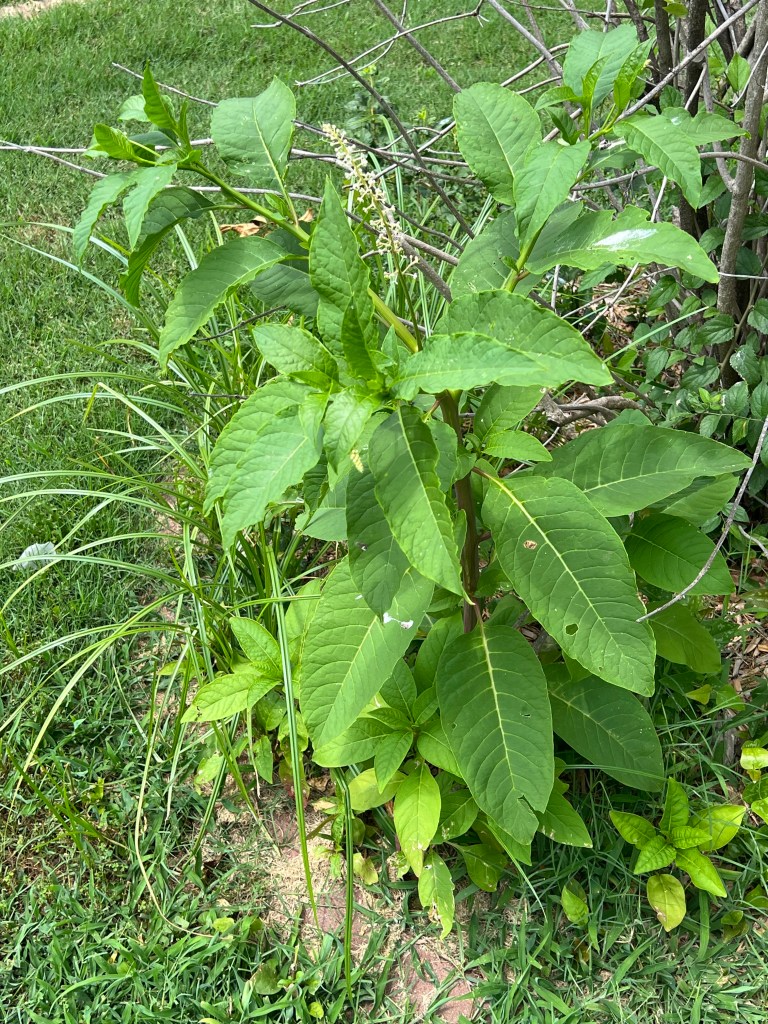
I have been lax caring for my front beds because of the extreme heat we have been under the last few weeks.  Since I am reluctant to go outside, I end up staying up late and getting up later.  By then the excessive heat danger alert has come up on my phone and it is too hot to do the work.  That means the beds I had cleared and mulched have all overgrown.  As I have gone back and forth to the car when forced outside on errands, I have noticed two weeds growing larger by the day, and one of the tall weeds has even begun to flower.  I did make it outside to mow yesterday knowing it was predicted to rain (it did) and was amazed by the thickness of the stems on these two plants.  I took a picture of the plants, googled it on my phone, and identified the plant as pokeweed.     

When I went online, I found pokeweed (Phytolacca americana), also known as American pokeweed, poke sallet, dragonberries, and inkberry, is an herbaceous perennial plant in the family Phytolaccaceae.  The first word in its scientific name comes from the Greek words phyton (plant) and lacca (crimson lake) and refers to its reddish-purple fruits.  The second word indicates it is native to America.  The common name “poke” is derived from an Algonquin (Native American tribe) name for the plant (puccoon) and the moniker “inkberry” comes as the berries were used to make ink.  Pokeweed is native to America in the East, the Midwest, and the South.  The species has been introduced as scattered populations in the far West and is naturalized in parts of Europe and Asia.  Pokeweed can grow from 4 to 10 feet (1 to 3 m) tall.  It has simple leaves on green to red or purplish stems and a large white taproot.  The flowers are green to white, followed by berries which ripen through red to purple to almost black.  The berries are a food source for songbirds such as gray catbird, northern mockingbird, northern cardinal, and brown thrasher, as well as other birds and some small mammals, but is a pest species for farmers as it is poisonous to humans, dogs, and livestock.

All parts of mature pokeweed are poisonous, but spring and early summer shoots and leaves are edible with proper cooking.  By late summer the shoots and leaves become deadly, and the root and berries (late summer) are always poisonous.  According to Michael Twitty, Southern food expert and author of The Cooking Gene, poke sallet was originally eaten as a potent tonic.  Twitty explains that most of the pre-depression Southerners walked barefoot and were full of worms.  Poke sallet acted to purge worms (vermifuge).  Memorial Sloan Kettering Cancer Center cites research that raw pokeweed has medicinal properties that can help cure herpes and HIV, but there are no clinical trials to support the cooked dish as a medicine.  Pokeweed is also used as a folk medicine.  According to Nicole Taylor, chef and author of The Up South Cookbook, poke sallet is a “stretch food”.  The plant was the first fresh vegetable to grow in early spring.  People who were poor or former slaves had to be innovative with what to eat and how to cook it and we can trace a variety of wild food dishes back to them.  “People who are looking for food to get by are more likely to eat poke sallet than someone who had means to eat other things.” 

Thoughts:  The term “poke salad” is a misnomer.  The true name for the most common pokeweed dish is poke sallet or poke salat.  The dish was eaten by the early English pioneers when they came to North America.  The word sallet comes from an older form of English and refers to something like a cooked salad.  Last year I allowed the bramble (Rubus trifidus) on my back patio to grow for the butterflies (flowers) and birds (fruit).  I have planted potatoes in that spot this year and removed the aggressive plant.  Now I must decide whether to allow the pokeweed to grow for the birds or cut it to protect my dogs.  Most ecological decisions present a tradeoff.  Act for all.  Change is coming and it starts with you.
Rock

June 27, 2023

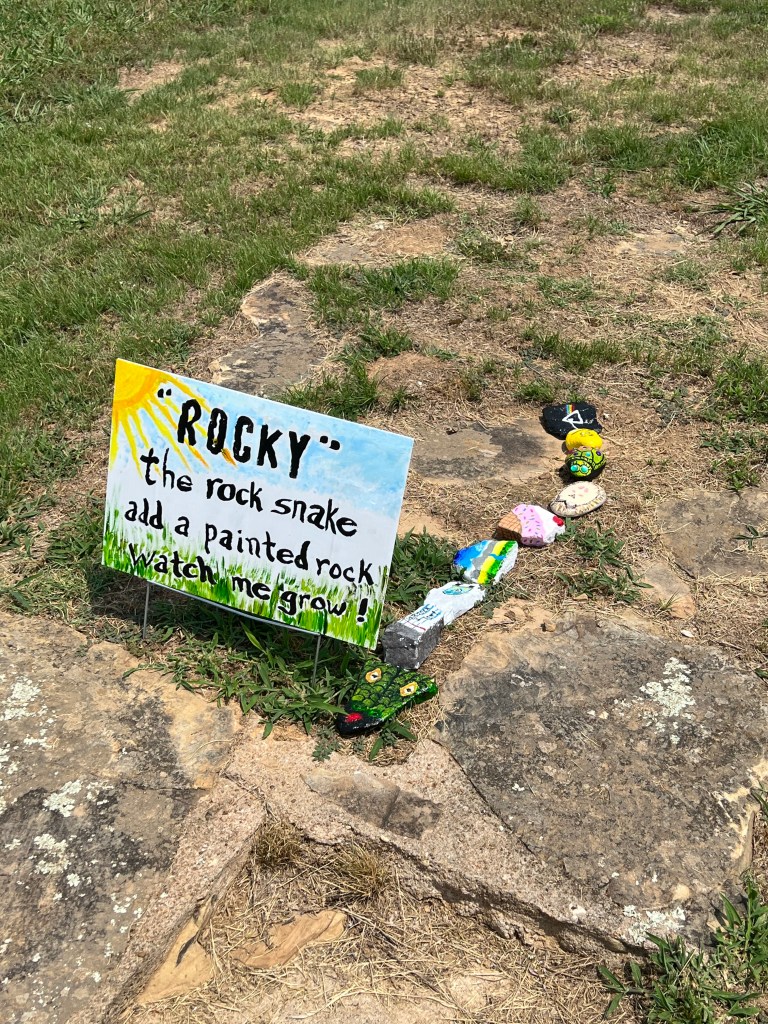
Melissa and I decided to take a drive last week after taking the dogs for a walk.  The dog park is close to a small park and fishing lake where I often try my luck.  This is one of the community fishing lakes that Arkansas Game and Fish stock with catfish in the summer and trout during the winter.  It also has a 1.2 mile (1.9 km) walking trail that winds around the lake.  As we entered the park, I noticed a brightly painted sign at the side of the road but did not pay much attention.  We went to the lake so I could check my fishing spots.  There were several people fishing, but the spots I frequent were all open.  I keep my poles in the back of the car “just in case” but because of the heat decided not to stop.  As we drove out of the park the bright sign again caught my eye, and this time I stopped.  Laying on the group, ground next to the sign was a line of painted rocks with the lead rock painted like the head of a snake.  The sign said, “Rocky” the rock snake add a painted rock and watch me grow!”

When I went online, I found that making a rock snake is one of the children’s activities that took hold during the isolation brought on by the pandemic.  One rock snake located in Atascadero, California, was reported by the local newspaper claiming to be the longest rock snake in America, if not the world.  The snake began in August of 2020 and by March 2021 it had grown to 1,200 feet (365 3/4 m) long.  The Rock Snake was started by Wanda Kohl who had collected interesting rocks of different shapes and sizes and turned them into art projects with her children.  Kohl made the sign to (help) ensure the rocks would not be taken, painted the snakehead and a few other rocks, and placed them at the lake.  Kohl said she follows a popular rock snake community Facebook group, “SLO Painted Rocks” (1.3 members), and a few other fun rock pages where people hide rocks around the neighborhood, but she had never seen a project that continued to grow.  There are rocks for sports teams, superheroes, favorite movies, declarations of love, messages of faith, advertisements for businesses, and even ways to get help if you are struggling through the pandemic.  There are rocks painted by professionals, amateurs, babies, and the elderly.  It is something that belongs to the City of Atascadero and all its residents.

The Atascadero News printed a follow-up concerning the dismantling of the rock snake September 15, 2022.  The original article mentioned the 1,200 foot snake wrapped a quarter of the way around the lake, and the goal was to wrap the entire distance, or nearly a mile at around 4800 feet (1,463 m).   

While pride for the rock snake was said to bring the city together, the snake was vandalized early in 2022 in a way that made it difficult to repair.  While the community was sad to see it go, safety concerns and the condition of the rocks had the city and Kohl admitting it is time to move on.  Many of the rocks had worn by the weather and returned to their natural state.  Those who donated a rock were invited to pick them up and then Kohl and a team came in October to collect the remaining rocks.  The next stage of the rock snake’s next life is uncertain.

Thoughts:  Painting a rock is not new and Atascadero is not the first place in the world to have an extensive collection of painted rocks.  The current record for the largest display of painted rocks is in the UK in memory of a young girl, Isla Tansey, with 8,500 “painted pebbles” but they are not positioned into a long trail but in a display.  The Facebook group “painting rocks!” has 343.7K members who enjoy painting on a rock.  We still have a painted rock on display in our front yard that dates to the pandemic.  The yellow “N” (or “Z” ?) was part of an alphabet challenge offered by our neighborhood.  Destroying art has a long human tradition.  The sign for the rock snake ultimately did not protect it from vandals.  The missing heads and arms of a stature was a way for conquers to debase their fallen foes.  Vandalism is just a way to be mean and take away other’s enjoyment.  Act for all.  Change is coming and it starts with you.
Crickets

June 26, 2023

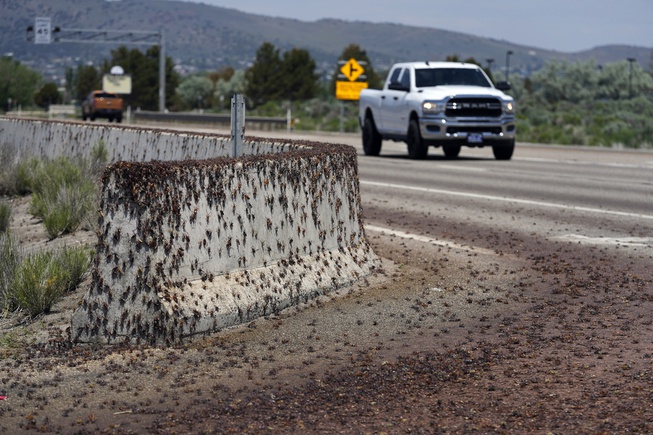
Last Thursday my local newspaper carried an AP story of the blood-red crickets that had invaded a town in north central Nevada.  Tens of thousands of Mormon cricket eggs buried about an inch deep in the soil began to hatch in late May and early June.  The cricket invasion has especially hit the small town of Elko along Interstate 80.  The crickets stick to tires and the bottoms of shoes and their carcasses are everywhere.  They blanket highways and scuttle over barriers seeking food.  They are crushed under the tires of trucks creating something like a blood-red oil slick.  Residents are trying several innovative ways to rid the ground of insects.  A local hospital has hired four temporary part-time employees to clear the campus to allow patients to enter the building.  Residents use brooms and leaf-blowers to move the live and dead crickets from their lawns and walkways.  While the adult crickets only live long enough to mate (males) and lay eggs (females), they continue to hatch in waves from May to early August.

When I went online, I found Mormon crickets (Anabrus simplex) are a large insect native to western North America in rangelands dominated by sagebrush and herbaceous flowering plants like grass, sedge, or rush (forbs).  Anabrus is a genus in the shield-backed katydid subfamily in the Tettigoniidae family, commonly called katydids, bush crickets, and previously “long-horned grasshoppers”.  Mormon crickets can grow to almost 3 inches (8 cm) in length. Coloration can vary among individuals from black, brown, red, purple, or green.  The dorsal “shield” above the prothorax (pronotum) covers vestigial wings, and in some individuals can include colored markings, while the abdomen may also have a striped appearance. Like many Tettigoniidae, females have a long tube-like organ (ovipositor) used to burrow into the earth to insert the eggs, which is sometimes mistaken for a stinger.  The high population densities of swarming Mormon crickets cause them to undergo changes in morphology and coloration.  Solitary crickets are typically green or purple, while swarming individuals are often black, brown, or red.  Although flightless, the Mormon cricket may travel up to 1.2 miles (2 km) a day in its swarming phase.  This swarm can become a serious agricultural pest and sometimes a traffic hazard.

While “Mormon cricket” is the common name for this insect, it is a misnomer.  True crickets are of the family Gryllidae, while Mormon crickets are of the Tettigoniidae family.  Mormon crickets take their common name from the prominent role it played in the “miracle of the gulls”.  Later accounts claimed seagulls miraculously saved the crops by eating thousands of insects that were devouring their fields.  Traditional accounts report legions of gulls that are native to the Great Salt Lake appeared on June 9, 1848, following fervent prayers by the pioneer farmers.  The gulls ate mass quantities of crickets, drank some salt water, regurgitated, and continued eating more crickets over a two-week period.  The pioneers saw the gulls’ arrival as a miracle.  The traditional story is that the seagulls annihilated the insects, ensuring the survival of the 4,000 Mormon pioneers who had traveled to Utah.  A Seagull Monument was erected, and the California gull (Larus californicus) is the state bird of Utah.

Thoughts:  The indigenous populations around the Great Salt Lake had a different view of the crickets and often included them in their diet.  A friend at the Utah Division of State History did an analysis of the crickets and found if a buffalo fell from the sky already butchered and landed on a spit over a lighted fire to cook itself, there would still be more kilocalories available and less energy expended than eating the crickets that dropped in the lake, were salted by the waters, and then dried as they washed up on the shore.  There was plenty of food . . . if you knew where to look.  Humans can seek divine intervention to resolve life’s problems.  While that does happen, “The Lord helps those who help themselves,” is another adage.  We need to do our part as well.  Act for all.  Change is coming and it starts with you.
Species

June 24, 2023

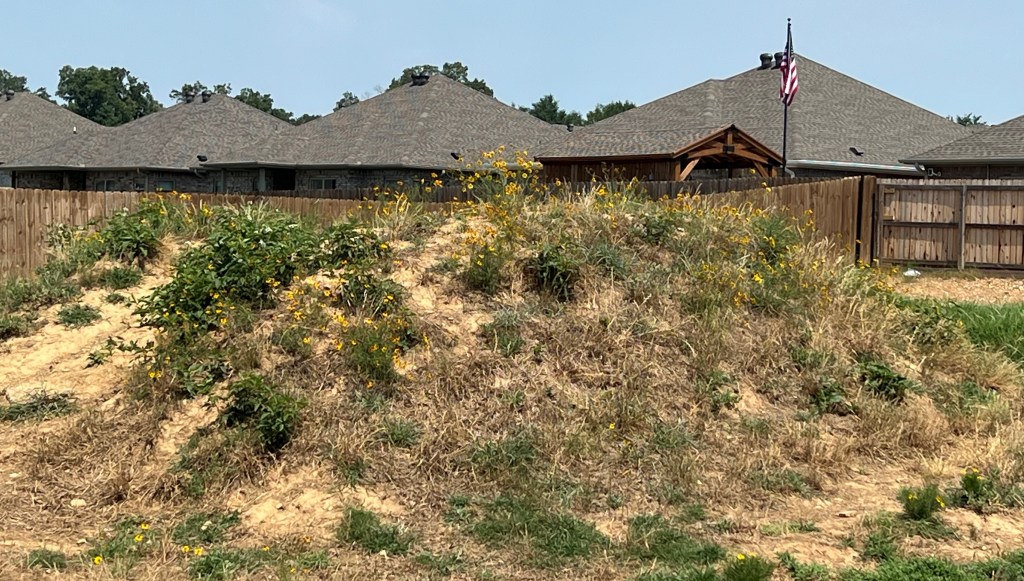
We got out early to walk the dogs today because we were forecast to have an excessive heat warning for the afternoon.  The meant I got up early to water the garden and pick a few ripe vegetables.  While the heat warning was not predicted until noon, I knew it would still be hot, so we only planned to be there for a short visit.  I loaded up my water bottle and Melissa and I took off for the dog park.  I opened the car door at the park and the kids quickly jumped out and ran toward the gate.  There was a small dog belonging to an electrical worker inside the transformer fence next to the park that started barking as we got out of the vehicle.  Zena immediately turned to confront the smaller animal, but the lure of the park drew Zena and when I asked her to “come”, she did (along with getting a treat).  I let the dogs run in the larger section of the park and began my walk around the exterior.  Having just blogged on the superbloom in the American west, I noticed the different types of wildflowers blooming in the park.  While it may not have been a superbloom, there were a variety of wildflower species.

When I went online, I found “The Natural State” has more than 600 species of wildflowers.  These wildflowers are being used by the Arkansas Department of Transportation (ARDOT) as part of a three stage program to beautify the 200,000 plus acres of highway roadsides in the state.  The Wildflower Route program is designed to preserve existing wildflower populations, Operation Wildflower establishes new populations, and the ARDOT Wildflower Program places signage along these plots to increase public awareness.  Approximately 1,000 miles (1,600 km) of highways have been included in a system of Wildflower Routes to showcase existing wildflower populations.  Maintenance practices along these routes allow annual and perennial wildflowers to prosper and return year after year.  The signage program directs attention to naturally occurring populations of wildflowers.  This also relies on public input to inform ARDOT of any large showy stands of natural occurring wildflowers.

Zena and Loki were intrigued by the small mound located in the center of the eastern half of the dog park.  This mound is only about 5 feet (1.5 m) high, but it is great to run up to the top and survey the surrounding area.  The mound is also covered by calliopsis (Coreopsis tinctoria) or tickseed.  Scattered throughout the park were golden aster (Chrysopsis mariana), queen anne’s lace (Daucus carota), white clover (Trifolium repens), white blossom aster (Symphyotrichum lateriflorum), and bristleleaf pricklyleaf (Thymophylla tenuiloba).  What I found interesting was there was only one example of prairie verbena (Glandularia bipinnatifida) in the entire enclosure.  ARDOT’s concept of spreading wildflower species must have spread to the dog parks as well.

Thoughts:  When I served as a camp director in Kansas, I oversaw maintaining over 60 acres of land.  This included some small, wooded areas (yes, trees in Kansas) and several acres of open prairie along with the developed sections around our buildings.  I started a program to reestablish the natural Tall Grass Prairie ecosystem.  That meant the five main prairie grasses, the wildflowers, and the critters that came along with them.  We chose several areas to seed with prairie wildflower mixes to augment the naturally occurring flowers.  While not surprised, I was discouraged when I learned it can take two to five years, along with the right conditions, for these species to reestablish.  Destroying our ecosystems can be done in an instant, but preserving and caring for the species and systems takes a lifetime.  Act for all.  Change is coming and it starts with you.
Pico ’23

June 23, 2023

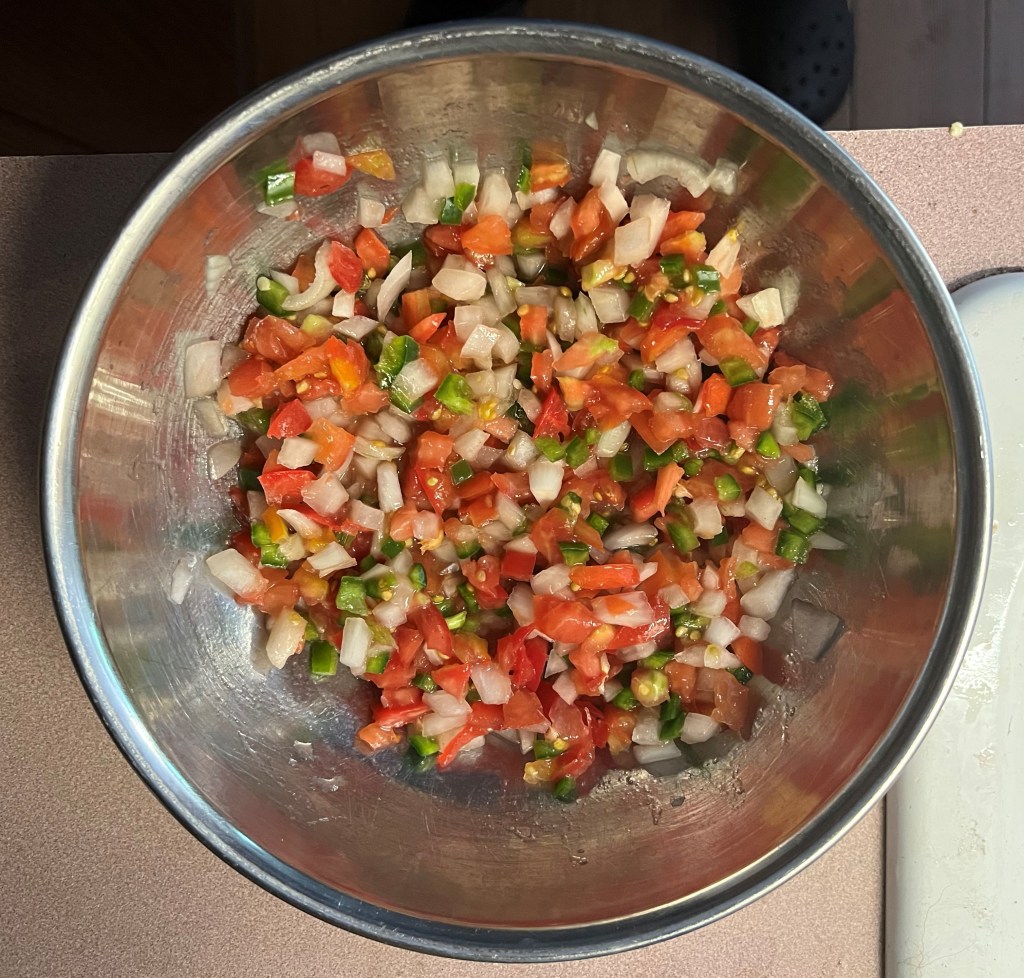
The tomatoes and peppers in my garden have really taken off this year.  While I am not a huge fan of tomatoes, I do enjoy them in many things.  In contrast I can eat jalapenos in almost anything.  I had big crops of peppers and tomatoes the first two years of my garden (2020 and 2021) and made batches of Pico de Gallo throughout the summer.  The poor production last year meant I never even tried to make my Pico.  The production this year meant Melissa has been eating tomatoes nearly every day.  When I brought in some ripe vegetables this morning, I decided it was time to get back to making Pico.  I always called my fresh vegetables Pico, but I realized I did not know the difference between Pico and salsa. 

When I went online, I found the ingredients for salsa and Pico de Gallo are nearly identical.  What sets these two condiments apart is their texture and whether the ingredients are cooked or uncooked.  Salsa (Spanish; “sauce”) can refer to cooked or fresh mixtures, and salsa can refer to a variety of vegetable and even fruit combinations.  Generally, salsa is made with tomatoes, onions, herbs, and chiles.  Other variations use fruit and vegetables like corn or beans.  Green salsa (salsa verde) is made with tomatillos and cilantro.  The consistency of salsa can vary and usually contains considerable liquid.  Some recipes use the diced ingredients as is, while others process the ingredients into a purée before serving.  When the salsa is cooked it gives the tomatoes a savory flavor that is not present in the always fresh Pico.  Pico de Gallo (Spanish; “rooster’s beak”) is a type of salsa also called salsa fresco.  It is a fresh, uncooked mixture of chopped tomatoes, onions, cilantro, fresh chiles, lime juice, and salt.  While salsa can take on a lot of different variations, the ingredients in Pico de Gallo do not vary much from recipe to recipe, and the ingredients are always fresh.  While traditional salsa has a thinner consistency with more liquid, Pico de Gallo is chunky with each chopped ingredient distinctly visible.

When I blogged about making my Pico those first years, I got the same response from my mom, “Ugh, it sounded good until you added the cilantro.”  She did not like the taste of cilantro (Coriandrum sativum) and tried to avoid it whenever possible.  Mom did love the salsa and chips when we went to her favorite Mexican restaurant.  I did not tell her the pureed salsa the restaurant served contained cilantro that she could not see.  I grew my own cilantro those first years and included it in my fresh Pico.  Last year the cilantro grew fast and then went to seed (technically making it coriander) which changes the flavor of the fresh plant.  I also realized the cilantro produced was not much more than the plant I purchased to put in the ground (another vegetable failure).   This year I got rid of my small containers and replaced them with larger grow bags.  That meant I inadvertently did away with my cilantro growing container.  I put the Pico in the refrigerator to marinate.  Hopefully it will be good without the cilantro.

Thoughts:  While mom could not detect the cilantro in the salsa, she could see it in the Pico de Gallo.  I realized the small pureed bits of green in the salsa were cilantro, although the savory cooked tomatoes may have overpowered the taste.  When mom and dad were with the hill tribes in Thailand, he would eat whatever was put before him, while mom was more discerning.  Dad believed not knowing what you were eating allowed you to taste the dish and decide whether it was good regardless of the ingredients.  Most cultures have certain foods that outsiders may find disgusting without ever tasting the dish.  I had avoided eating pecan pie (a Southern staple) because of the way it looked.  I finally broke down one Thanksgiving and tried a pie baked by my sister-in-law to be polite and found it to be delicious.  Now I rarely eat pecan pie because of the calories, not the taste.  When we are open to other experiences, we often find something we have been missing.  Act for all.  Change is coming and it starts with you.

Park

June 22, 2023

Loki is finally old enough that I can start to train him to walk on a leash.  This was Zena’s favorite part of the day when we took our walks in the park.  She went into heat, and I stopped the walks to avoid other dogs.  I have tried to walk Loki several times, once with Zena and twice on his own, but he has not really been into the concept and tends to spend more time biting the leash than walking.  I ordered a new harness for Loki this week, so the leash does not pull on his collar.  It arrived yesterday and I was determined to take them both for a walk.  Zena knows the harness means getting outside and when I grab it, she will sit in front of my chair and even raise her paw to help me put it on.  I had to pull Loki to the chair and then fight to get the harness over his head.  At first the harness was too loose, and Loki was able to get his mouth under the front to try and bite it off.  I rearranged the harness, put on their leashes, and then we were off to the dog park so they could run and play in a larger space.

When I went online, I found the concept for the dog park started in Berkeley, California, in the 1970’s at a time when cities were making stricter leash laws.  In 1979, activists from People’s Park took over an empty lot in Berkeley that had been cleared for subway construction.  Along with the demonstrations and bail fund drives for arrested protesters common at People’s Park, the new space was frequently full of dogs playing and socializing.  Berkeley resident Doris Richards led much of the effort to circulate petitions in support of the dog park, organize residents, and deal with disputes around zoning and noise pollution.  The area eventually became the Ohlone Dog Park.  As interest in dog parks spread across the country and around the world, Richards became an important source of information and guidance for communities wanting to establish their own dog park.  Alissa Greenberg believes a dog park has had an impact on the urban landscape and development.  “Dog park proponents and designers are building on this private idea of a more-than-human family to envision a new kind of public city.  A family with children believes they deserve a playground; a family with dogs believes the same.”  There are three dog parks in our nearby city, but one park will soon be lost to airport expansion.

Zena has not yet taken to the idea of socializing with other dogs.  When we walked in our neighborhood she would lunge at the leash and bark whenever we encountered another dog.  As she got older, I began to take her to the city park to avoid these encounters.  Now she is good at seeing a dog from a distance, but still gets overly excited when the dog is close.  The dog park is a better way to initiate Zena to being with other dogs, but it is 20 minutes away.  Melissa got Loki to acclimate Zena to another animal, but Loki is a pup who likes to play fight as his form of socialization.  This week I began to take both to the dog park to let off steam and run free.  The wide space allows them room to explore and sniff all the different smells.  I have still separated them from other dogs, which is contrary to the notion of the park.  This is something both I and them will need to continue to work on.

Thoughts:  A dog park is designed to allow your dog to play and socialize with other dogs.  My son lives near Seattle, and they have a huge park where he takes his dogs.  They do play-fight with other dogs, but it is not real biting.  When I read up on how to get your dog to stop lunging and barking it suggested you distract your dog with treats.  Zena is a big foodie and that could help.  Ultimately, I know I need to let her go and work this out on her own.  My real concern may be that her behavior embarrasses me.  The same can be said about raising children.  We can train them to react properly and socialize with others but eventually you need to let them be on their own.  The child’s reactions may embarrass you at times, but you need to continue to love them and show them you care.  Act for all.  Change is coming and it starts with you.
Yellow

June 21, 2023

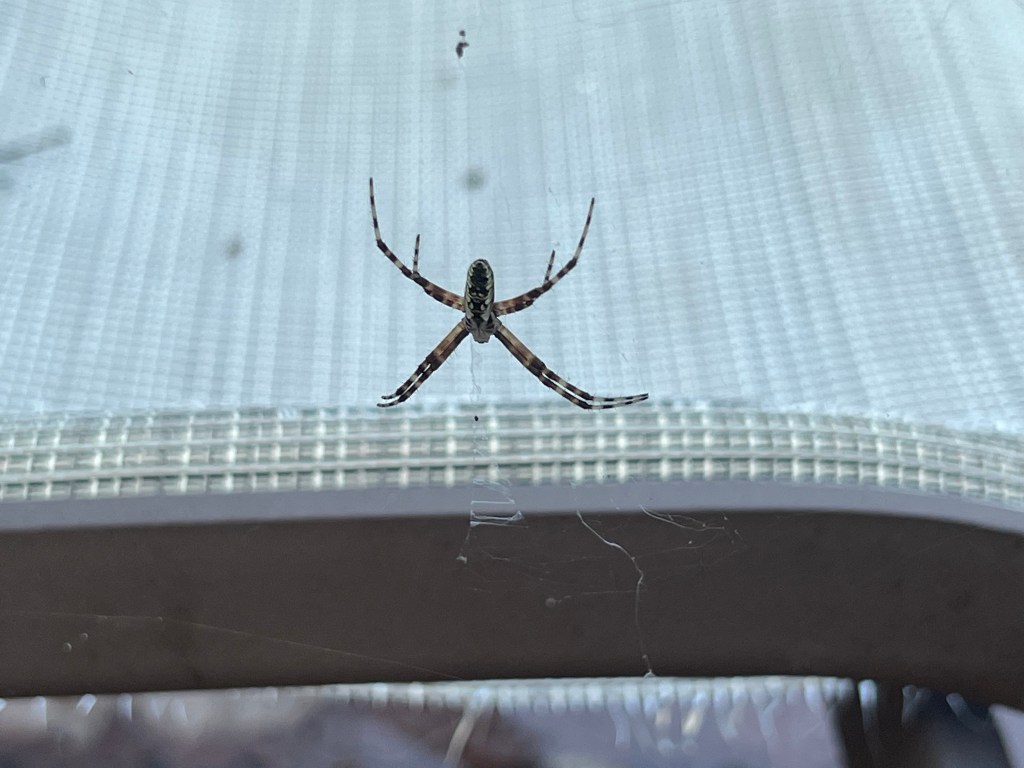
The kids (my dogs) like to go out with me when I water my garden.  Zena likes to grab a quick drink from the hose when she can get her mouth close enough and Loki goes crazy when I bring out the hose, hopping and spinning around.  Now he pushes Zena out of the way as he franticly tries to bite and lick the constant stream of water.  After I watered last night, I sat in one of our pool chairs for a moment to watch the dogs chase each other around the deck.  I looked at the other chair and noticed a 1 inch (2.5 cm) spider had built a web across the arm of the chair.  I am always intrigued by the spiders who thrive around my garden and decided to take a closer look.  It hung motionless in the center of its web and held its legs in four pairs of two.  The circular web had a thicker zig-zag thread that ran through the middle.  What really caught my eye was the striated markings on the spider’s leges, alternating black and yellow.  This appeared to be the yellow garden spider I had blogged about after my sister sent me a picture of one on its huge web at mom’s two years ago.

When I went online, I found the yellow garden spider (Argiope aurantia), also known as the black and yellow garden spider, is common to the contiguous US, Hawaii, southern Canada, Mexico, and Central America.  It has distinctive yellow and black markings (hence the name) on the abdomen and a mostly white cephalothorax.  Its scientific name translates to “gilded silver-face” (Argiope means “silver-face”, aurantia means “gilded”).  The body length of the male ranges from 0.20 to 0.35 inches (5 to 9 mm), while the larger females range from 0.75 to 1.10 inches (19–28 mm).  The spiders may bite if disturbed or harassed, but the venom is harmless to non-allergic humans, roughly equivalent to a bumblebee sting in intensity.  Yellow garden spiders are orb-weavers and prefer to build their webs in areas adjacent to open sunny fields where they stay concealed and protected from the wind.  They can also be found along the eaves of houses and outbuildings or in any tall vegetation where they can securely stretch a web.  Female yellow garden spiders tend to be somewhat local, often staying in one place throughout much of their lifetime.  The large size of my yellow spider indicated this must have been a female.

Females of the yellow garden spiders are the most common ones seen in gardens. Their webs are usually characterized by a zigzag shaped stabilimentum (an extra thick line of silk) in the middle extending vertically.  The spiders spend most of their time in their webs, waiting for prey to become ensnared.  When prey becomes caught in the web, the spider may undulate the web back and forth to further trap the insect.  When the prey is secure, the spider kills it by injecting its venom and then wraps the prey in a cocoon of silk for later consumption (typically 1 to 4 hours later).  Prey includes small vertebrates, such as geckos and green anoles, as well as insects.  Two years ago, my sister accidentally bumped into the web and this undulating and shaking of its web was what the spider had done.  Luckily my sister is bigger than a gecko and was able to get away. 

Thoughts:  While female yellow garden spiders grow and molt throughout the summer, the males die shortly after mating, even if they do not become the female’s tasty snack.  Offspring usually hatch in late summer or autumn.  In cold areas the young spiders may remain dormant in the egg sac during winter and emerge in the spring.  Females usually die in the first hard frost after mating but if the temperatures permit, females may live several years.  Nature has developed a delicate balance between male and female of a species, as well as between predator and prey, that ensure the best genes are passed to succeeding generations.  Humans have used intellect to overcome this balance.  We need to use our intellect to preserve the balance nature provides.  Act for all.  Change is coming and it starts with you.
Serpent

June 20, 2023

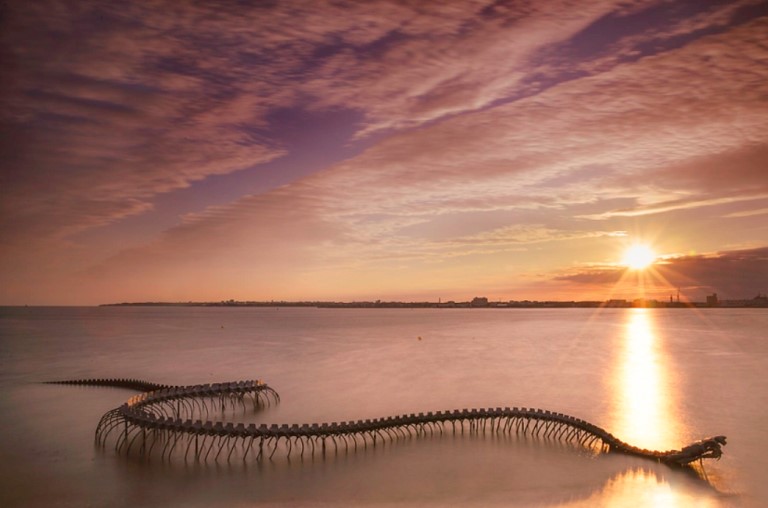
Last Saturday I found a link on Tiffy Taffy to the giant ‘serpent’ that emerges from the sea off the coast of France.  This is a 425-foot (129.5 m) sculpture that is repeatedly hidden and revealed by the tides every day in the Loire Estuary.  The serpent is located along the Loire estuary and is part of a permanent public art collection that spans the 37-mile-long shore.  Made of aluminum, the giant serpent emerges from the water when the tide rolls out as if the ocean is revealing an ancient fossil.  The piece was created in 2012 by the French-Chinese contemporary artist Huang Yong Ping and is called Serpent d’océan.  Huang created the giant serpent to mimic the nearby Saint Nazaire bridge to blend the piece with the rest of the landscape.

When I went online, I found that sea serpents have a prominent role in myths and legends of most seafaring cultures on Earth and with the reality of the oceans’ biodiversity and the dangers of the sea itself it is not difficult to see why.  A sea serpent or sea dragon is a type of sea monster described in various mythologies, including Mesopotamian (Tiamat), Judaeo-Christian (Leviathan), Greek (Cetus, Echidna, Hydra, Scylla), and Norse (Jörmungandr).  An apparent eye-witness account is given by Aristotle in his work Historia Animalium on natural history.  The Greek historian Strabo makes reference to an eyewitness account of a dead sea creature sighted by Poseidonius on the coast of the northern Levant, reporting, “As for the plains, the first, beginning at the sea, is called Macras, or Macra-Plain. Here, as reported by Poseidonius, was seen the fallen dragon, the corpse of which was about a plethrum [100 feet or 30 m) in length, and so bulky that horsemen standing by it on either side could not see one another, and its jaws were large enough to admit a man on horseback, and each flake of its horny scales exceeded an oblong shield in length.”  The creature was reported to have been seen sometime between 130 and 51 BCE.  Huang’s serpent mixes myth and reality as more sea giants (past and present) are discovered.

Huang is known for his various art installations that challenged tradition, brought various cultures together, and most prominently commented on humanity itself.  Huang created an even bigger serpent in 2016 for his Empires exhibition in the Grand Palais in Paris.  This even larger serpent was 787 feet (239.8 m) long and surrounded by 305 shipping containers.  Huang intended the piece to start a conversation around world trade.  Huang was one of the most well-known artists in China during their avant-garde movement in the 1980’s, and many of his pieces were banned by the Chinese government.  He moved to France in 1989 to have more freedom of expression.  Much of his work was based on politics and attempting to push them to higher moral ground.  He often used animals and insects to depict his views on aspects of human nature.  Huang liked to use art to address the topic of identity and cultural mixing and he did this using various animals and Chinese mythological creatures and adding them to the European art scene and landscape.  Huang died from a brain hemorrhage on October 19, 2019, at the age of 65.  As the giant serpent in the Loire estuary shows, the tide rolls in and out, long after your life is over.

Thoughts:  While I did not see the Serpent, when I visited the Musee d’Orsay in Paris with my sister and brother-in-law they were commenting on the beautiful paintings housed on the upper floor that were well known to them.  Frankly, I was not impressed.  However, the lower floors contained sculptures and paintings I did find impressive.  As Huang stressed, art not only imitates life, but it can also cause us to reflect on the past and strive for a better future.  Act for all.  Change is coming and it starts with you.
Superbloom

June 19, 2023

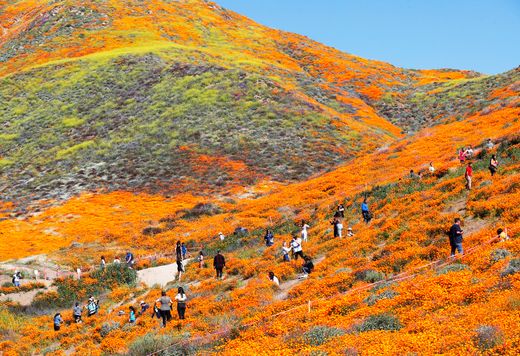
Hidden among the Father’s Day and Juneteenth information in Sunday’s newspaper was an article on the effect last winter’s rains had on the California hillsides.  This resulted in an explosion of wild black mustard (Brassica nigra) which now blanket the hills surrounding Los Angeles in bright yellow flowers.  As temperatures warm the mustard dies, leaving their dried stalks to act as a tinderbox for wildfires.  The invasive plant also crowds out native flowers and can be nearly 4 feet (1.2 m) tall, blocking the burgeoning wildflowers from the sun.  Clothing designer Max Kingery is among a growing group of artists, designers, and chefs who are harvesting the invasive plants and turning them into dyes for clothing, works of art, and even in salads and a form of pesto.  To get the right hues for the dyes requires a lot of mustard, but in this context that is a good thing.  Clearing the plots of the mustard restores the biodiversity while broadening the neighborhoods concept of land care and gets people into seeing themselves as environmentalists.  Removing the invaders allows the native wildflowers to enjoy the superbloom that is allowing the mustard to flourish.

When I went online, I found a superbloom is a rare desert botanical phenomenon in California and Arizona where an unusually high proportion of wildflowers blossom at roughly the same time.  The term seems to have appeared as a label in the 1990’s.  A rare chain of events must happen for a superbloom to occur.  The invasive grasses compete with native flowers for moisture so the desert must remain dry enough to keep the grasses from being established.  The autumn rain needs to be sufficient to penetrate deep into the soil to reach the dormant seeds of flowering plants.  Too much subsequent rain will wash away the young plants, and too little rain will kill them from lack of moisture.  The ground then needs to warm slowly over several months following the first soaking rain, and there must be enough cloud cover to shield the soil from the desert heat and insulate the soil from freezing temperatures at night.  When the plants reach the surface, the shoots cannot be disturbed or uprooted by strong winds.  This is a rare chain of events.  A California superbloom occurs about once every ten years, but the persistent drought which affected the state over the last decades has made them even rarer.

In the Mojave Desert of California, common plant species and their colors composing the superbloom are brittlebush (Encelia farinose – yellow), California poppies (Eschscholzia californica – bright orange), bluebells (Phacelia campanularia – deep purple), lupine (Lupinus albus – purple), sand verbena (Abronia villosa – yellow), desert sunflowers (Geraea canescens – bright yellow), evening primrose (Camissonia brevipes – mostly white but occasionally yellow), popcorn flowers (Plagiobothrys rufescens – white or yellow), and desert lily (Hesperocallis undulata – white).  Invasive plants also include the wild mustard, and particularly the black mustard that has invaded the hills around Los Angeles.  After a unique series of winter storms, outdoor enthusiasts are expecting an unprecedented abundance of flowers this year.  Daniel Winkler, a research ecologist with the US Geological Survey said there is no scientific definition for what constitutes a superbloom.  “The superbloom is really a cultural phenomenon, where people decide that there are enough flowers here, right now, that we’ll call it a superbloom.” Winkler said.

Thoughts:  The black mustard that is flourishing amid the current superbloom originated in North Africa, spread to Europe, and was introduced to the Pacific coast of North America in the 1700’s where it has been found in adobe bricks of the missions.  It is now classified as an invasive weed.  Invasive plants and animals can predominate as they have no natural predators or deterrents.  While the vast fields of yellow look pretty, they exist at the expense of the natural variety of colors they dominate.  Act for all.  Change is coming and it starts with you.