
June 23, 2023
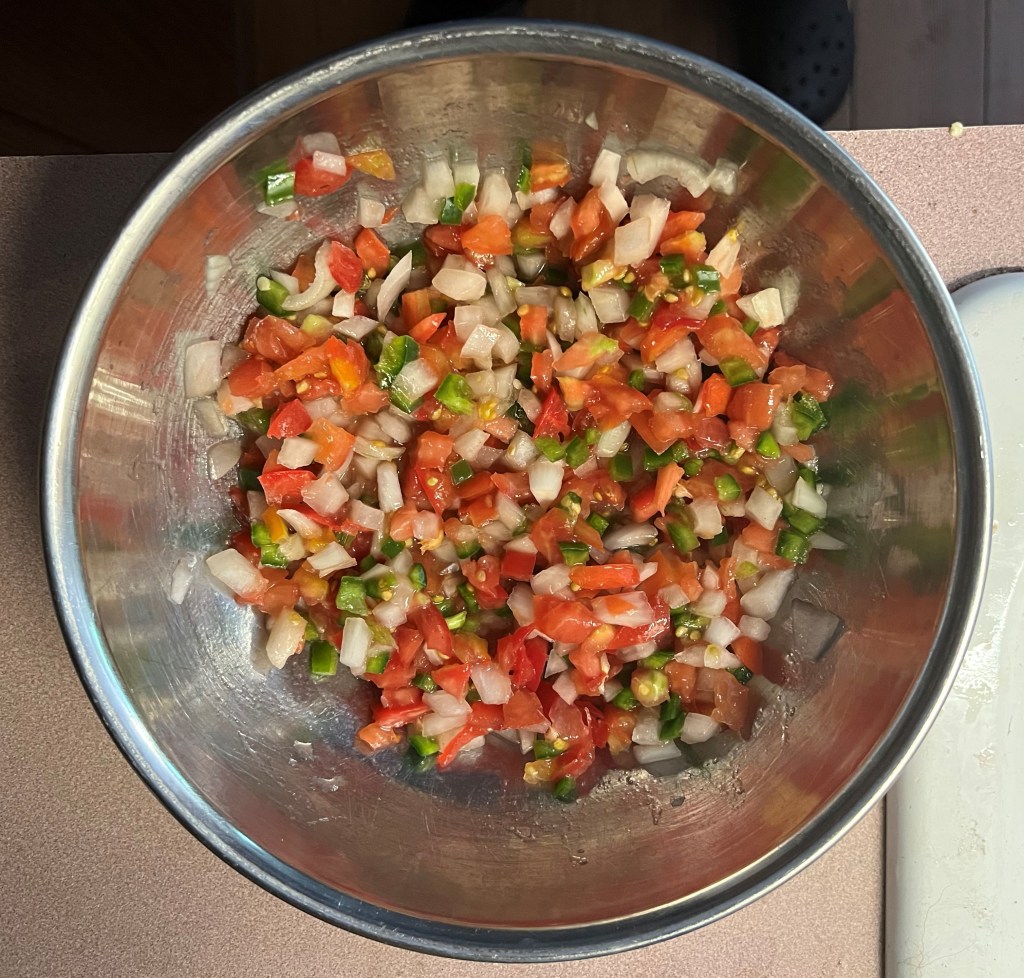
The tomatoes and peppers in my garden have really taken off this year. While I am not a huge fan of tomatoes, I do enjoy them in many things. In contrast I can eat jalapenos in almost anything. I had big crops of peppers and tomatoes the first two years of my garden (2020 and 2021) and made batches of Pico de Gallo throughout the summer. The poor production last year meant I never even tried to make my Pico. The production this year meant Melissa has been eating tomatoes nearly every day. When I brought in some ripe vegetables this morning, I decided it was time to get back to making Pico. I always called my fresh vegetables Pico, but I realized I did not know the difference between Pico and salsa.
When I went online, I found the ingredients for salsa and Pico de Gallo are nearly identical. What sets these two condiments apart is their texture and whether the ingredients are cooked or uncooked. Salsa (Spanish; “sauce”) can refer to cooked or fresh mixtures, and salsa can refer to a variety of vegetable and even fruit combinations. Generally, salsa is made with tomatoes, onions, herbs, and chiles. Other variations use fruit and vegetables like corn or beans. Green salsa (salsa verde) is made with tomatillos and cilantro. The consistency of salsa can vary and usually contains considerable liquid. Some recipes use the diced ingredients as is, while others process the ingredients into a purée before serving. When the salsa is cooked it gives the tomatoes a savory flavor that is not present in the always fresh Pico. Pico de Gallo (Spanish; “rooster’s beak”) is a type of salsa also called salsa fresco. It is a fresh, uncooked mixture of chopped tomatoes, onions, cilantro, fresh chiles, lime juice, and salt. While salsa can take on a lot of different variations, the ingredients in Pico de Gallo do not vary much from recipe to recipe, and the ingredients are always fresh. While traditional salsa has a thinner consistency with more liquid, Pico de Gallo is chunky with each chopped ingredient distinctly visible.
When I blogged about making my Pico those first years, I got the same response from my mom, “Ugh, it sounded good until you added the cilantro.” She did not like the taste of cilantro (Coriandrum sativum) and tried to avoid it whenever possible. Mom did love the salsa and chips when we went to her favorite Mexican restaurant. I did not tell her the pureed salsa the restaurant served contained cilantro that she could not see. I grew my own cilantro those first years and included it in my fresh Pico. Last year the cilantro grew fast and then went to seed (technically making it coriander) which changes the flavor of the fresh plant. I also realized the cilantro produced was not much more than the plant I purchased to put in the ground (another vegetable failure). This year I got rid of my small containers and replaced them with larger grow bags. That meant I inadvertently did away with my cilantro growing container. I put the Pico in the refrigerator to marinate. Hopefully it will be good without the cilantro.
Thoughts: While mom could not detect the cilantro in the salsa, she could see it in the Pico de Gallo. I realized the small pureed bits of green in the salsa were cilantro, although the savory cooked tomatoes may have overpowered the taste. When mom and dad were with the hill tribes in Thailand, he would eat whatever was put before him, while mom was more discerning. Dad believed not knowing what you were eating allowed you to taste the dish and decide whether it was good regardless of the ingredients. Most cultures have certain foods that outsiders may find disgusting without ever tasting the dish. I had avoided eating pecan pie (a Southern staple) because of the way it looked. I finally broke down one Thanksgiving and tried a pie baked by my sister-in-law to be polite and found it to be delicious. Now I rarely eat pecan pie because of the calories, not the taste. When we are open to other experiences, we often find something we have been missing. Act for all. Change is coming and it starts with you.
 A travelers odyssey