
June 24, 2023
We got out early to walk the dogs today because we were forecast to have an excessive heat warning for the afternoon. The meant I got up early to water the garden and pick a few ripe vegetables. While the heat warning was not predicted until noon, I knew it would still be hot, so we only planned to be there for a short visit. I loaded up my water bottle and Melissa and I took off for the dog park. I opened the car door at the park and the kids quickly jumped out and ran toward the gate. There was a small dog belonging to an electrical worker inside the transformer fence next to the park that started barking as we got out of the vehicle. Zena immediately turned to confront the smaller animal, but the lure of the park drew Zena and when I asked her to “come”, she did (along with getting a treat). I let the dogs run in the larger section of the park and began my walk around the exterior. Having just blogged on the superbloom in the American west, I noticed the different types of wildflowers blooming in the park. While it may not have been a superbloom, there were a variety of wildflower species.
When I went online, I found “The Natural State” has more than 600 species of wildflowers. These wildflowers are being used by the Arkansas Department of Transportation (ARDOT) as part of a three stage program to beautify the 200,000 plus acres of highway roadsides in the state. The Wildflower Route program is designed to preserve existing wildflower populations, Operation Wildflower establishes new populations, and the ARDOT Wildflower Program places signage along these plots to increase public awareness. Approximately 1,000 miles (1,600 km) of highways have been included in a system of Wildflower Routes to showcase existing wildflower populations. Maintenance practices along these routes allow annual and perennial wildflowers to prosper and return year after year. The signage program directs attention to naturally occurring populations of wildflowers. This also relies on public input to inform ARDOT of any large showy stands of natural occurring wildflowers.
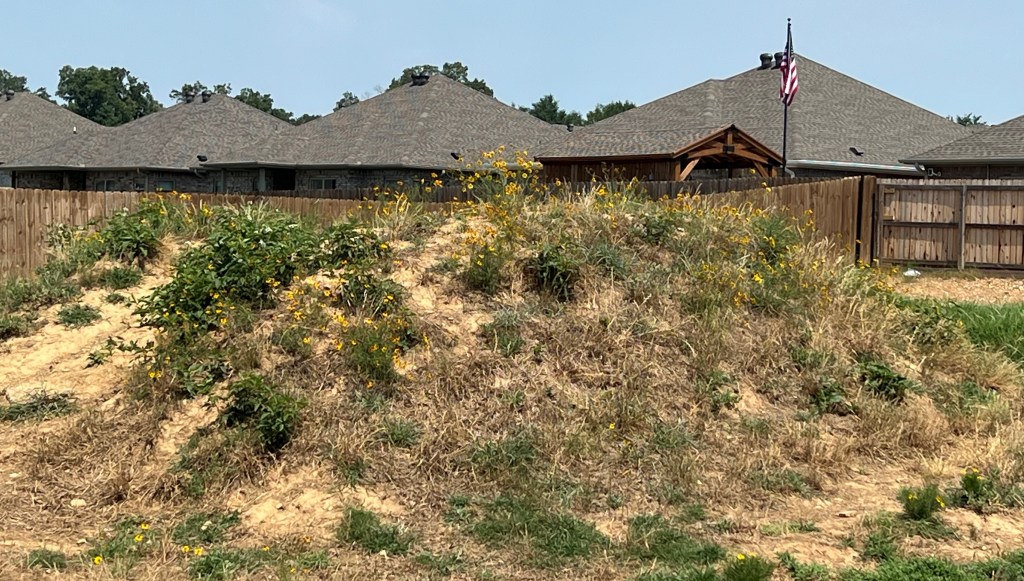
Zena and Loki were intrigued by the small mound located in the center of the eastern half of the dog park. This mound is only about 5 feet (1.5 m) high, but it is great to run up to the top and survey the surrounding area. The mound is also covered by calliopsis (Coreopsis tinctoria) or tickseed. Scattered throughout the park were golden aster (Chrysopsis mariana), queen anne’s lace (Daucus carota), white clover (Trifolium repens), white blossom aster (Symphyotrichum lateriflorum), and bristleleaf pricklyleaf (Thymophylla tenuiloba). What I found interesting was there was only one example of prairie verbena (Glandularia bipinnatifida) in the entire enclosure. ARDOT’s concept of spreading wildflower species must have spread to the dog parks as well.
Thoughts: When I served as a camp director in Kansas, I oversaw maintaining over 60 acres of land. This included some small, wooded areas (yes, trees in Kansas) and several acres of open prairie along with the developed sections around our buildings. I started a program to reestablish the natural Tall Grass Prairie ecosystem. That meant the five main prairie grasses, the wildflowers, and the critters that came along with them. We chose several areas to seed with prairie wildflower mixes to augment the naturally occurring flowers. While not surprised, I was discouraged when I learned it can take two to five years, along with the right conditions, for these species to reestablish. Destroying our ecosystems can be done in an instant, but preserving and caring for the species and systems takes a lifetime. Act for all. Change is coming and it starts with you.
 A travelers odyssey