
July 01, 2023
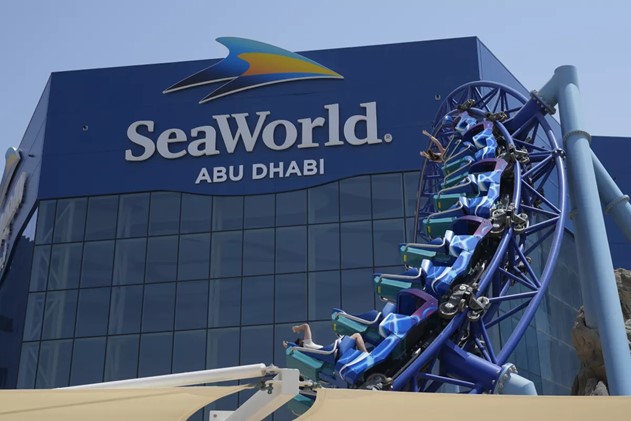
Inside my local newspaper last week, I found an article on the latest marine park opened by Sea World in the United Arab Emirates. The US$1.2 billion venture partnered with state-owned developer Miral and features the world’s largest aquarium and a cylindrical LED screen. There are no orcas at the park, but it does house dolphins and seals, whose captivity and training for entertainment are also criticized as unethical by animal rights groups. The facility opened last month and gives the Orlando, Florida-based company a foothold in a fast-growing international tourism destination and the ability to continue its rebranding after years of criticism and allegations of animal cruelty. SeaWorld and Miral declined multiple interview requests from The Associated Press, did not answer written questions, or grant AP journalists access to the park. This is a typical response by SeaWorld and the UAE.
When I went online, I found the United Arab Emirates (UAE) is a country in the Middle East. UAE is located at the eastern end of the Arabian Peninsula and shares borders with Oman and Saudi Arabia, while having maritime borders in the Persian Gulf with Qatar and Iran. The nation’s capital is located at Abu Dhabi, but Dubai is the most populated city and an international hub. The UAE has an elective monarchy formed from a federation of seven emirates (territories), consisting of Abu Dhabi, Ajman, Dubai, Fujairah, Ras Al Khaimah, Sharjah, and Umm Al Quwain. Each emirate is governed by a ruler and together the rulers form the Federal Supreme Council. The Federal Supreme Council then elects a president (from Abu Dhabi) and vice president (from Dubai) from among their members. Islam is the official religion and Arabic is the official language. The UAE has the world’s 6th largest oil and 7th largest gas reserves. In the 21st century, the UAE has become less reliant on oil and gas and is economically focusing on tourism and business. The UAE is considered substandard by human rights organizations as critics are imprisoned, disappear, and individual rights like freedoms of assembly, association, the press, expression, and religion are repressed. As of 2023, the United Arab Emirates has an estimated population of roughly 10.2 million.
The arrival of SeaWorld adds another major tourist attraction for the UAE, along with the futuristic city of Dubai, the world’s tallest skyscraper, and the Louvre Abu Dhabi. Miral’s plan is to transform Yas Island into a theme park hub that will rival Orlando. The island already has a Formula 1 circuit, a water park, and a Warner Bros. theme park. The new SeaWorld pays homage to Abu Dhabi’s cultural heritage with a themed “realm” of traditional houses and sailboats depicting a simpler time before the discovery of oil, when the sparsely populated emirates largely relied on fishing and pearl-diving. SeaWorld Abu Dhabi has an in-house research facility to study aquatic life in the Persian Gulf and support conservation of local species, including the manatee-like endangered dugong. John Jett is a former orca trainer and acknowledges that companies like SeaWorld have a role to play in conservation and have done well on animal rescue and rehabilitation. “I wish they would focus more of their energy, expertise, and finances on taking a lead role in moving global policy and helping animals in the wild, rather than figuring out ways to keep them alive in captivity.”
Thoughts: The UAE and Sea World are both trying to rebrand their image. They have chosen to do this by projecting a public persona that does not address the underlying oppression, human for UAE and animal for SeaWorld. Both entities have money that is being used to mask oppression rather than deciding to make substantive changes. While both have the right to govern or act as they will, the impression is, “I will change, as long as I do not have to change.” This approach seemed to work for Saudi Arabia and the LIV. Act for all. Change is coming and it starts with you.
 A travelers odyssey