
July 25, 2023
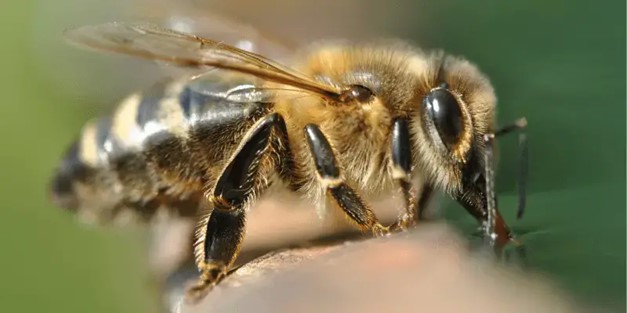
One of the postings on my neighborhood app today was a repost about how to attract bees and keep them. The original post came from an Oregon woman whose neighbor kept beehives. With all the hot weather they had been having she decided the bees needed a way to stay cool and hydrated. After reading about watering bees my own neighbor had purchased a set of bee watering stations and they were actively attracting bees. The back and forth banter provided other suggestions for your bee watering station. Some suggested ice with just a little water so the melting ice would keep the station filled all day. Others suggested DIY bee stations rather than opting for the store bought plastic models (less than US$10). The key seemed to be keeping water in the station and providing the bees a place to land where they could drink without drowning. Everyone who responded thought it was a “cool” idea.
When I went online, I found the western honeybee or European honeybee (Apis mellifera) is the most common of the 7 to 12 species of honeybees worldwide. The genus name Apis is Latin for “bee”, and mellifera is Latin for “honey carrying”, referring to the species’ production of honey. Like all honeybee species, the western honeybee is eusocial, creating colonies with a single fertile female (queen), many non-reproductive females (workers), and a small proportion of fertile males (drones). Each colony can house tens of thousands of bees. Colony activities are organized by complex communication between individuals, using both pheromones and the dance language. The western honeybee was one of the first domesticated insects, and it is the primary species maintained by beekeepers to this day. The western honeybee has been introduced to every continent except Antarctica, but there are indications the species is rare or extinct in the wild in Europe, and in 2014 the western honeybee was assessed as “Data Deficient” on the IUCN Red List. The western honeybee is threatened by pests and diseases, especially the mites and colony collapse disorder.
Colony collapse disorder (CCD) is an abnormal phenomenon that occurs when most worker bees in a honeybee colony disappear, leaving behind a queen, plenty of food, and a few nurse bees to care for the remaining immature bees. These disappearances have occurred sporadically throughout the history of apiculture, and have been known by various names (i.e., disappearing disease, spring dwindle, May disease, autumn collapse, and fall dwindle disease). The syndrome was renamed colony collapse disorder in early 2007 in conjunction with a drastic rise in reports of disappearances of western honeybee colonies in North America. Beekeepers in most European countries had observed a similar phenomenon since 1998, especially in Southern and Western Europe, and Northern Ireland. There is no widespread acceptance among the scientific community for the hive collapse. Suggested causes include pesticides, infections transmitted by Varroa (V. destructor) and Acarapis (A. woodi) mites, malnutrition, genetic factors, immunodeficiencies, loss of habitat, and changing beekeeping practices. The only agreement is that the collapse is likely caused by a combination of factors.
Thoughts: Many of the world’s agricultural crops depend on pollination by western honeybees. In 2005 the UN’s Food and Agriculture Organization estimated the total value of global crops pollinated by honeybees was nearly US$200 billion. Shortages of bees in the US have increased the cost to farmers to rent them for pollination services by up to 20%. The US managed hive industry has been shrinking at a steady pace since 1961, predating the current CCD by several decades. Doing whatever humans can to maintain the honeybee population is in humanities best interest. Act for all. Change is coming and it starts with you.
 A travelers odyssey