
August 30, 2023
Photograph: Education Images/Universal Images Group/Getty Images
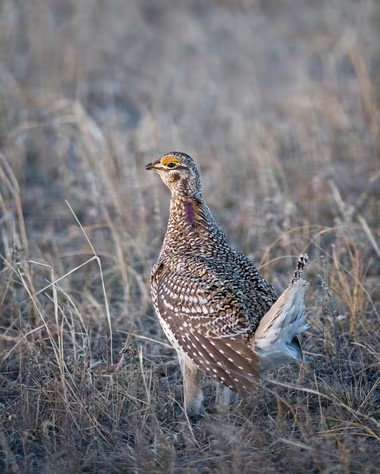
A side front page AP article in today’s newspaper noted the plight of birds in the North American grasslands. Now 50 years after adoption of the Endangered Species Act numbers of North America’s grassland birds are plunging due to habitat loss, land degradation, and climate change. Over half the grassland bird population has been lost since 1970, which is more than any other type of bird. Some species have declined 75% or more, and a quarter are in extreme peril. This comes as the 38% (293,000 miles2 or 760,000 km2) of historic North American grasslands that remain are threatened by intensive farming and urbanization, and as trees once held at bay by periodic fires spread rapidly. Both are consuming vital rangeland and grassland bird habitat. This has prompted a coalition of biologists, conservation groups, government agencies, along with farmers and ranchers, to work together to stem or reverse losses. Scientists are intensifying efforts to tag birds and install radio telemetry towers to track the birds, and they are working with farmers and ranchers to implement best practices that ensure survival of their livelihoods and native birds. Both are dependent on a healthy ecosystem.
When I looked online, I found grasslands used to cover a large swath of North America before European settlement. When Europeans arrived, they plowed up about half of the grasslands on the continent and converted them to agricultural use, growing corn, soybeans, and wheat. For a few years in the 2010’s the rate of grassland loss was decreasing but in 2018 and 2019, the number started to rise again. A report in 2021 estimated that from 2018 to 2019 at least 2.6 million acres of grassland were plowed up, primarily to make way for row crop agriculture. While there are many reasons grasslands are turned into croplands, farmers and ranchers make decisions based on global commodity prices, and there is an increased crop demand for human consumption, livestock feed, and biofuels. Urban sprawl also plays a part as croplands are being turned into housing and crop production is being pushed into grasslands. These marginal, less productive grasslands contain some of the highest-quality habitats for nesting birds and monarch butterflies.
As the vast grasslands of central North America were explored after acquisition by the US via the Louisiana Purchase (1803), they were referred to as the Great American Desert. The term can be traced to Stephen H. Long’s 1820 scientific expedition which put the name Great American Desert on the map. The grasslands are now usually referred to as the High Plains, and the original term is used to describe the arid regions of northwestern Mexico and the American southwest. In the past, the term “desert” had two conflicting meanings. Dessert was used to describe any uninhabited or treeless land whether it was arid or not, and dessert also referred specifically to hot and arid lands, or wastelands. It was long thought that treeless lands were not good for agriculture, so the term “desert” held the idea of “unfit for farming”. The High Plains are not a desert in the modern sense but were a dessert in the older sense of the word as the region is mostly semi-arid grasslands and steppe. Today much of the region supports agriculture (crops and grazing) using aquifer water irrigation.
Thoughts: People often think of forests as natural ecosystems that store huge amounts of carbon, but grasslands also store immense amounts of carbon underground. Patrick Lendrum, of the World Wildlife Fund’s northern Great Plains program, says “When we plow ancient grasslands that storage capacity is lost, and it can take decades or centuries to restore the grasslands.” Everyone knows about the destruction of the Amazon, but grasslands in the “flyover country” are off their radar. It is just an open expanse. The world’s ecosystems work in cooperation and support each other. They all need to be saved and cared for. Act for all. Change is coming and it starts with you.
 A travelers odyssey