
September 05, 2023
(AP Photo/Trisha Ahmed)
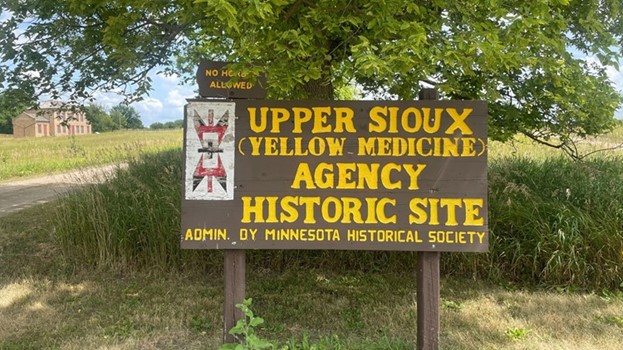
Inside the back section of my newspaper was a half-page AP article concerning the transfer of land back to the descendants of the Dakota Sioux tribe who once live (and secretly died) there. Legislation adopted this year will lead to the transfer of Upper Sioux Agency State Park land to the Upper Sioux Community. In three separate bills, the Minnesota Legislature approved around US$6.5 million to pay for the transfer of about 1,400 acres. The last bill was adopted on August 28th, the final day of the 2023 session. The transfer will not happen anytime soon, and Ann Pierce, Parks and Trails director for Minnesota Department of Natural Resources (DNR) said, “The park will be open this summer.” More than 30,000 people visit the park each year. The DNR will begin this year by reviewing any barriers to the land transfer and looking for areas to develop comparable recreational opportunities in the area. Barriers could arise as state and federal funds were used to make improvements at the park, and these will need to either be repaid or forgiven. Legislation requires state officials to identify the barriers and submit a report to legislative committee chairs by January 15, 2024.
When I looked online, I found the Upper Sioux Agency (or Yellow Medicine Agency), was a federal administrative center established in response to treaties with the Dakota people in what became Yellow Medicine County, Minnesota. The government run campus located on the Minnesota River south of Granite Falls, Minnesota, included employee housing, warehouses, and a manual labor school which were destroyed in the Dakota War of 1862. The grave of Chief Walking Iron Mazomani, a leader of the Wahpetonwan (Dwellers in the Leaves) Dakota tribes, who was killed during the 1862 Dakota War’s Battle of Wood Lake is buried here. The site was established as a Minnesota state park during the 1960’s and listed on the National Register of Historic Places in 1970 for its significance under the themes of archaeology, architecture, education, and social history. State Route 67 which traverses the park was closed after its collapse and the repairs to make it drivable would be expensive, as well as repairs to the bridge over the Yellow Medicine River that needs to be removed or replaced.
The US–Dakota War of 1862, also known as the Sioux Uprising or Little Crow’s War, was an armed conflict between the US and several bands of eastern Dakota. It began on August 18, 1862, at the Lower Sioux Agency along the Minnesota River in southwest Minnesota. The Dakota had been pressed into ceding large tracts of land in a series of treaties signed in 1837, 1851 and 1858 in return for cash annuities, debt payments, and other provisions. All four bands of eastern Dakota were displaced and moved to a reservation 20 miles (32 km) wide, with 10 miles (16km) on each side of the Minnesota River where they were pushed to become farmers. A crop failure in 1861, followed by a harsh winter and poor hunting due to depletion of game, led to starvation and severe hardship on the reservation. Tension rose in the summer of 1862 when the US government annuity payments were late, and traders refused to extend credit for tribal members to buy food. By the end of the war, 358 settlers, 77 soldiers, and 29 volunteer militia had been killed, along with an unknown number of Dakota casualties. The Dakota released their 269 hostages on September 26, 1862, while around 2,000 Dakota surrendered or were taken into custody, including at least 1,658 non-combatants. That included those who had opposed the war and helped free the hostages.
Thoughts: One complaint voiced by the Dakota is they are forced to pay entrance fees to visit the graves of their loved one on land taken by force. While the return falls short of reparations, it begins to acknowledge the government’s complicity in the past. It is opposed to the residents around the park that profit from the tourists. Act for all. Change is coming and it starts with you.
 A travelers odyssey