
September 11, 2023
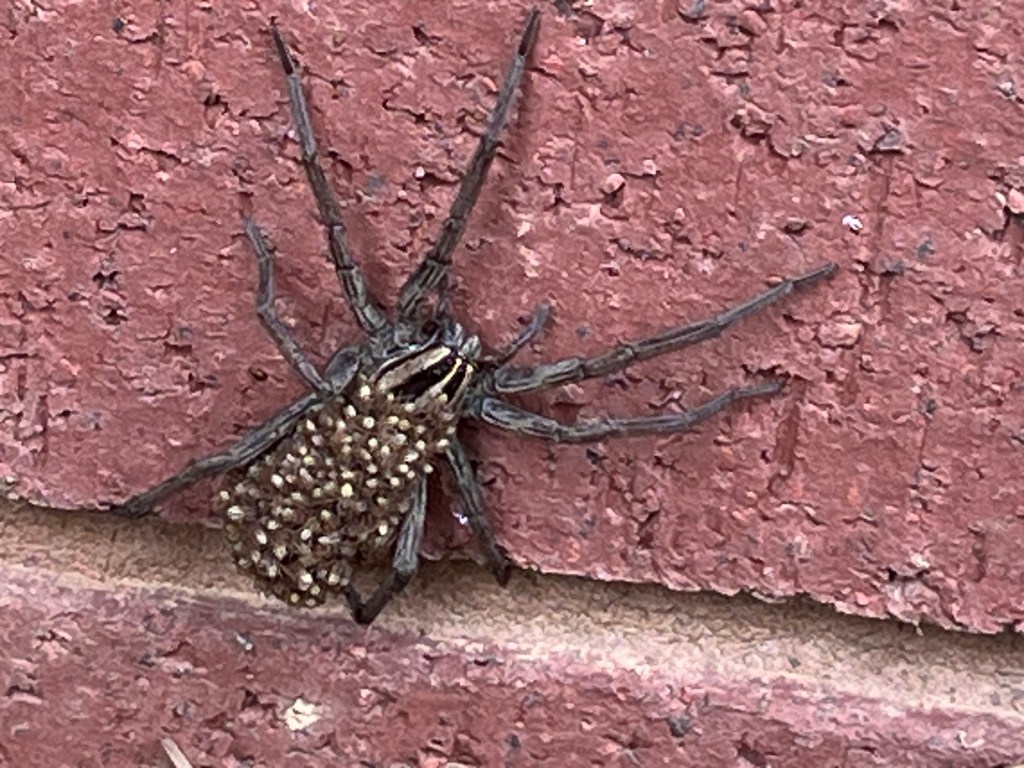
Over the weekend I decided I could no longer procrastinate and had to clear the weed out of the three beds where I was growing potatoes. I cleared all three beds when I planted the 16 Yukon Gold (Solanum tuberosum) potato sets and placed cages on each mound to make sure I knew where they were. I even took the step of placing a small (30 inch/.76 m) fence around the beds to keep Loki from trying to investigate. The vines took off well and produced the flowers I had seen on my potatoes last year. I had mulched the beds with straw to keep the weeds from growing, but apparently did not use enough mulch. The weeds grew and the cages and fence did as much to discourage me from weeding as it did to keep Loki from investigating. I removed the fencing (thinking I would put it back up after clearing the weeds) and began clearing the weeds. When I got to the third bed, I noticed a large (3 inch/7.6 cm) spider crawl out of the weeds and onto the wall. When I checked my identification app it said it was a rabid wolf spider.
When I looked online, I found the rabid wolf spider (Rabidosa rabida) is a species of spider from the family Lycosidae. The rabid is native to North America and can be found in the US from Maine to Florida and west to Texas. The cephalothorax (head and the thorax fused together and distinct from the abdomen behind) has two dark stripes and the abdomen has one stripe of the same color. The female rabid can grow to a body size of 1 inch (2.5 cm), while males measure slightly smaller around .5 inches (1.25 cm). Their total leg span can take them to about 3 inches (7.5 cm). The rabid has eight eyes (4 above and 4 below) which look like a spider’s moustache. During the day, these spiders live in burrows or holes that they have created for themselves and cover it with debris or silk. They do not create webs and instead come out at night to hunt where they use a combination of sheer speed, agility, and camouflage to hunt down or ambush their prey. The common name (rabid wolf spider) is believed to derive from the erratic, rapid movement of this species. The rabid will bite, if provoked, but it is not dangerous to humans and since spiders cannot contract rabies, they do not spread this disease to humans or other animals.
One of the things that threw me off in identifying the rabid spider was the large bumpy abdomen. What I found was this was not the mother spider, but the large number of spiderlings she was carrying on her back. During the spider’s mating ritual, the males perform a dance to seduce the female, along with creating sound through stridulation, or rubbing together their two stridulatory organs. The female will create an egg sac around 1/3 inch (.84 cm) in diameter that is carried with them while they hunt. As the eggs get ready to hatch, the egg sac turns from a bright white to a muddier brown color. A single egg sac can produce between 150 and 350 spiderlings. The newly hatched spiderlings stay with the female on her back until they are mature and strong enough to go off on their own. I have often seen wolf spiders carrying their web sacs, but this is the first time I recall seeing the spiderlings on the mother.
Thoughts: The rabid wolf spider is a frequent traveler and always on the move at night while they hunt. They tend to stay in the brush and debris, which made my overgrown flower bed the ideal place to live. Predators include cats, dogs, and snakes, as well as other wolf spiders. The rabid I found likely crawled out of the weeds as I was removing them, and then stayed motionless on the wall above the bed. Melissa did not want to hear about the rabid when I brought her the picture, saying she “did not like critters”. While I do not like spiders crawling on me, I find their lives and nuances fascinating. Humans struggle to take care of more than two offspring. I cannot imagine living with 150 children riding on my back. Act for all. Change is coming and it starts with you.
 A travelers odyssey