
September 12, 2023

I mentioned how I was wanting to clear the weeds from my three potato beds last weekend. When I finally got around to removing the weeds, I found that while the vines still had some green, they had mostly withered and even become detached from the store of potatoes I anticipated underground. I carefully removed the surface vegetation and then got my hand rake to scoop the potatoes out of the ground. Last year’s potato harvest was not great, but each of the six hills yielded around 5 or 6 spuds of various sizes. With 16 hills planted this year had high hopes, and this year’s harvest was disappointing. The five hills in the first bed held very few potatoes, ranging from small to tiny. The other two beds had no potatoes at all, although I did encounter several rotted tubers. With the 100F (37.7C) temperatures we had just two weeks ago I was not sure I was ready to think about winter but since the weeds and potatoes were cleared out of the beds, I knew I needed to do something to keep the weeds from taking over again. Once more (as I seem to do every year) I vowed that next year I would do better.
When I looked online, I found several sites offering tips on how to clear your garden beds for the winter. They spoke of the joy of a wonderful harvest (not so much) and the dying plants that come with the first frost of October. Fall preparation begins with removal of the dead vegetation to keep pests from overwintering in the foliage and fruit left in the beds. A light layer of compost and mulch will help keep down the weeds and protect the soil without insulating the beds (a ground freeze will kill most pests). They recommend a soil test from your state extension office to see how much lime and fertilizer to add to the soil. This is also the time to plan for what will be planted the following spring and to begin construction of any additional plots or beds. The leaves that are about to fall are another good way to expand your compost pile. This is the time to take notes as you prepare the beds for winter. What did you grow, how did it fair, and what kind of pests did you face are good reminders for the coming planting season. Your beds will soon be covered with snow or frozen until the coming spring. Finally, take time to enjoy the fall.
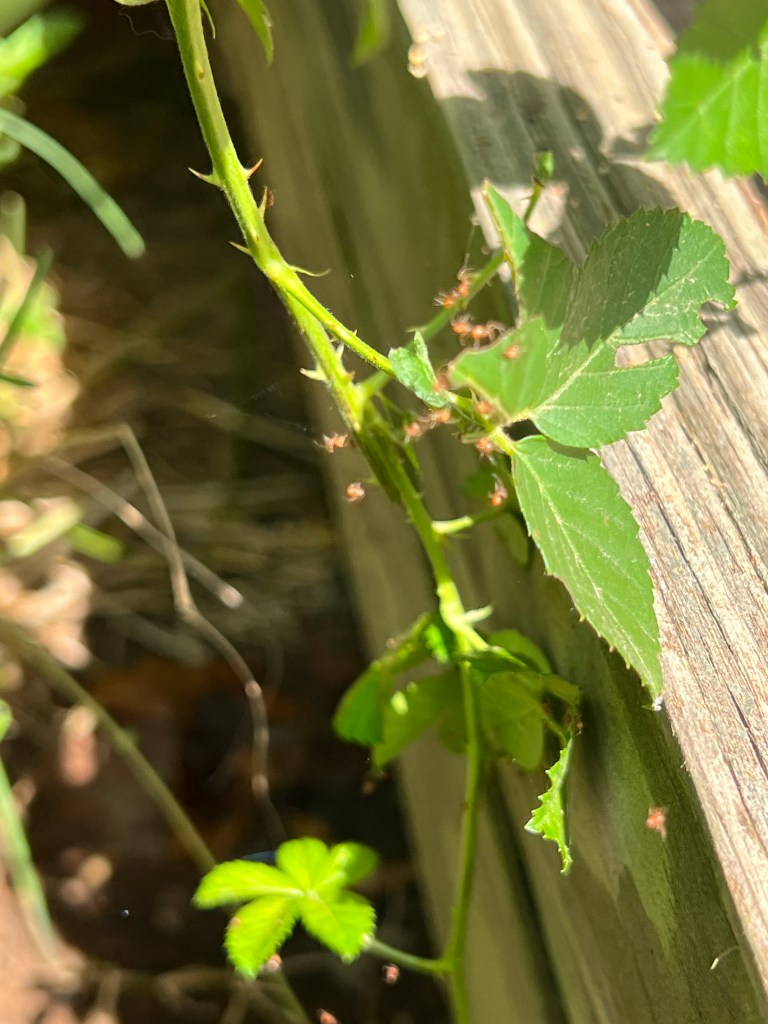
I mentioned I found a rabid wolf spider (Rabidosa rabida) in the third bed when I began to clear out the weeds and how the spider was carrying her young spiders on her back. I also came across a cache of tiny baby spiders when I cleared the first bed. I had not thought much about them at the time, and assumed they were the small red spider mites (Tetranychus urticae) that are known to attack potato plants. After I researched the rabid wolf spider, I changed my mind. The dozens of tiny critters had spider bodies and eight legs and were concentrated around a thin area of web. While I do not know what species this was, I believe these were another form of wolf spider and that I had disturbed the nest that had been hidden by the debris. If they are tiny spiders, they will clear out to find their own nesting and habitation. If they are mites, the lack of cover and impending freeze will clear them for me. Either way, I should be good by next year.
Thoughts: While I was able to clear the potato beds, the tomatoes are again beginning to produce. While now is the time for me to sit back and reap a second harvest I know I need to plan better for next year. I ended up with lots of tomatoes and peppers, a few potatoes, and a single melon (two, but one was eaten by a critter). Every year I learn a new skill and technique, but if I am going to rely on my garden, I need more diversity. Diversity is essential for what we eat, but also adds to our quality of life. Diverse ideas and perspectives can create a better outcome on any human project. Act for all. Change is coming and it starts with you.
 A travelers odyssey