
September 14, 2023
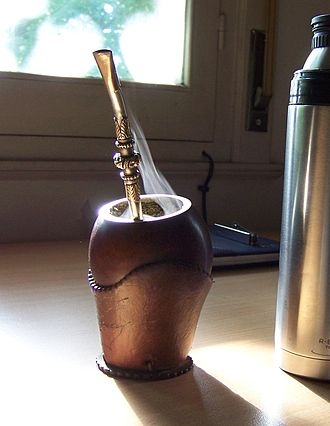
I flew into Seattle yesterday to visit the grand babies (and their parents). This was an exciting time as we had not been able to get together for quite a while (covid and time constraints). We spent last night catching up and enjoying the kids (not my dogs this time) talents for baseball and gymnastics that they have been honing. After an early night and earlier wakeup (for me at least) I watched the orchestrated chaos as the kids ate breakfast and got ready for school. After joining their dad to take them to school, we returned, and the parents went online for work. I enjoyed a cup of coffee as Alex came into the kitchen to make himself a cup of Yerba Mate. This became a new compassion for him, and he explained how the drink was made, where it came from, and the bioeconomic aspects of its production in the Amazon rain forest. Since I had recently blogged on bioeconomy, I was intrigued to learn about Mate.
When I looked online, I found Mate or maté is a traditional South American caffeine-rich infused herbal drink also known as chimarrão or cimarrón. The drink is made by soaking dried leaves of the yerba mate (Ilex paraguariensis) plant in hot water and is traditionally served with a metal straw (bombilla) in a container made from a calabash gourd (also called the mate). In some areas the container can be made from a cattle horn (guampa). A similar preparation (mate cocido) removes some of the plant material and sometimes comes in tea bags. Yerba mate (ka’a in the Guarani language) contains the stimulant caffeine. The leaves are dried and chopped or ground to make the coarse powdery preparation called yerba (‘herb’), which is then soaked in hot water. Mate was traditionally consumed by the Guaraní and Tupí peoples and was exclusive to the natives of Paraguay. It is now the national beverage of Argentina, Paraguay, and Uruguay. It is also consumed in the Bolivian Chaco, Northern and Southern Chile, and southern Brazil. It was brought to Syria (largest world importer) and Lebanon by immigrants from Paraguay and Argentina. Today, mate is sold commercially as “yerba mate” in tea bags and as bottled iced tea.
Drinking mate is a common social practice in Paraguay, Uruguay, Argentina, and Southern Brazil among people of all ages, and is often a communal ritual following customary rules. Friends and family share from the same mate container, and drink through the same wooden or metal straw. The gourd is given by the brewer to each person in turns, and they often sit in a circle. The recipient drinks the few mouthfuls in the container (denoted by the slurp as it is finished), and then returns the mate to the brewer where it is refilled and then passed to the next person in clockwise order. The recipient is not supposed to say thanks until they have completed drinking the beverage. If they do say thanks, they will not be served any more mates. In warm weather the hot water may be replaced by lemonade. Today the traditional gourds are also produced from a variety of other materials including wood, glass, bull horns, ceramic, and silicone. Alex’s gourd is ceramic encased in leather.
Thoughts: Sitting and passing a cup is a traditional way to both acknowledge and build community. Similar practice can be found with the shared pipe (Native American), hookah (India and the Middle East), or even the English practice of High Tea. Community has not been lost, but we often bury its cohesion under a blanket of activity. When we take time to step back from the orchestrated chaos that makes up so much of modern industrialized culture, we can reconnect with friends, family, or even any newcomers we welcome into our midst. Act for all. Change is coming and it starts with you.
 A travelers odyssey