
September 22, 2023
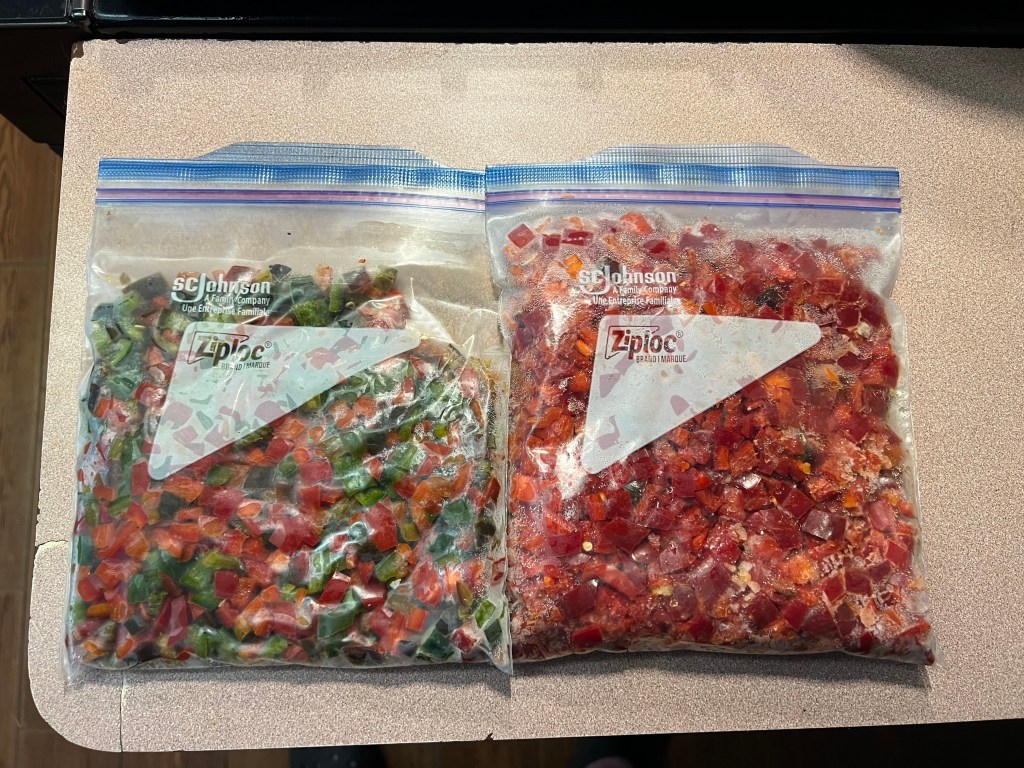
When I returned from my trip to Seattle, I was met with a profusion of jalapeños on my two vines. Many of the pepper pods were ripe when I was leaving but I had no time to process them and decided to leave them on the vine. On my return many of the peppers had turned bright crimson, indicating they were not only ripe, but had matured to the hot pepper stage. I harvested the red peppers but left a few of the green jalapeños on the vine. Along with the peppers I had previously picked I now had 30 jalapeños that needed to be processed. When I chopped and froze my peppers last year, I made two mistakes. I cut the peppers into large pieces, forcing me to re-cut them to use in food (defeating the process). I had used latex gloves, but the number of peppers processed allowed the oil to get through the gloves and my hands burned for days. This time I used two pairs of gloves to be safe.
When I looked online, I found jalapeños (Capsicum annuum) are a medium-sized pod type chili pepper cultivar. Jalapeños are variously named huachinango (ripe red jalapeños) and chile gordo (“fat chili pepper”), also known as cuaresmeño. The mature chili is 2 to 4 inches (5–10 cm) long and 1 to 1 1⁄2 inches (25 to 38 mm) wide. Different jalapeños can range in pungency, with Scoville heat units of 4,000 to 8,500. The fruit is commonly picked and eaten while green, but it is occasionally allowed to fully ripen and turns orange, yellow, or red (like mine). The name jalapeño is Spanish for “from Xalapa” (the capital of Veracruz, Mexico), the area where pepper was traditionally cultivated. Xalapa itself is of Nahuatl (Aztec language) origin, formed from roots xālli (“sand”) and āpan (“water place”). Genetic analysis places jalapeños as a distinct genetic clade with no close relatives not directly derived from jalapeños. The Aztecs’ use of jalapeños dates back thousands of years, including smoking some varieties to preserve them. In Mexico, jalapeños are used in many forms such as in salsa, pico de gallo, or grilled jalapeños. Jalapeños were included as food on the Space Shuttle as early as 1982.
Compared with other chilies, the jalapeño heat level varies from mild to hot depending on cultivation and preparation and can have from a few thousand to over 10,000 Scoville heat units. As the peppers ripen their heat increases, making red jalapeños hotter than green jalapeños, at least of the same variety. If the plants are stressed (erratic watering and heat, i.e., me) it will increase their heat. The number of scars on the pepper (brown lines called ‘corking’) have a positive correlation with heat level, as the growing conditions that increase heat cause the pepper to form scars. US consumer markets find corking unattractive, but it is a favored trait in other markets, particularly in pickled or oil-preserved jalapeños. The chemical irritants (capsaicin and related compounds) produce a sensation of burning in any tissue it contacts and these are concentrated in vesicles of the placenta membrane surrounding the seeds. People who are sensitive to capsaicin will wear latex or vinyl gloves while handling the peppers. When preparing jalapeños, it is recommended your hands not contact your eyes as “this leads to burning and irritation” (ya think?).
Thoughts: Wearing double gloves kept me from the heat of the jalapeños, but Melissa was not so lucky. I touched several items that Melissa later picked up and the oil moved from her hands to her eyes. I was protecting myself and never considered the larger effect of the jalapeños. Jalapeños are a Mexican chili but were designated by the Texas Legislature as the official “State Pepper of Texas” in 1995. Texas seems to take the opposite view toward embracing other immigrants. The oil on my jalapeños and the US attitude toward immigrants both caused us to make changes in our practices. When we only think of our protection and concerns it has the potential to cause unintended and lasting effects on others. Act for all. Change is coming and it starts with you.
 A travelers odyssey