
September 26, 2023
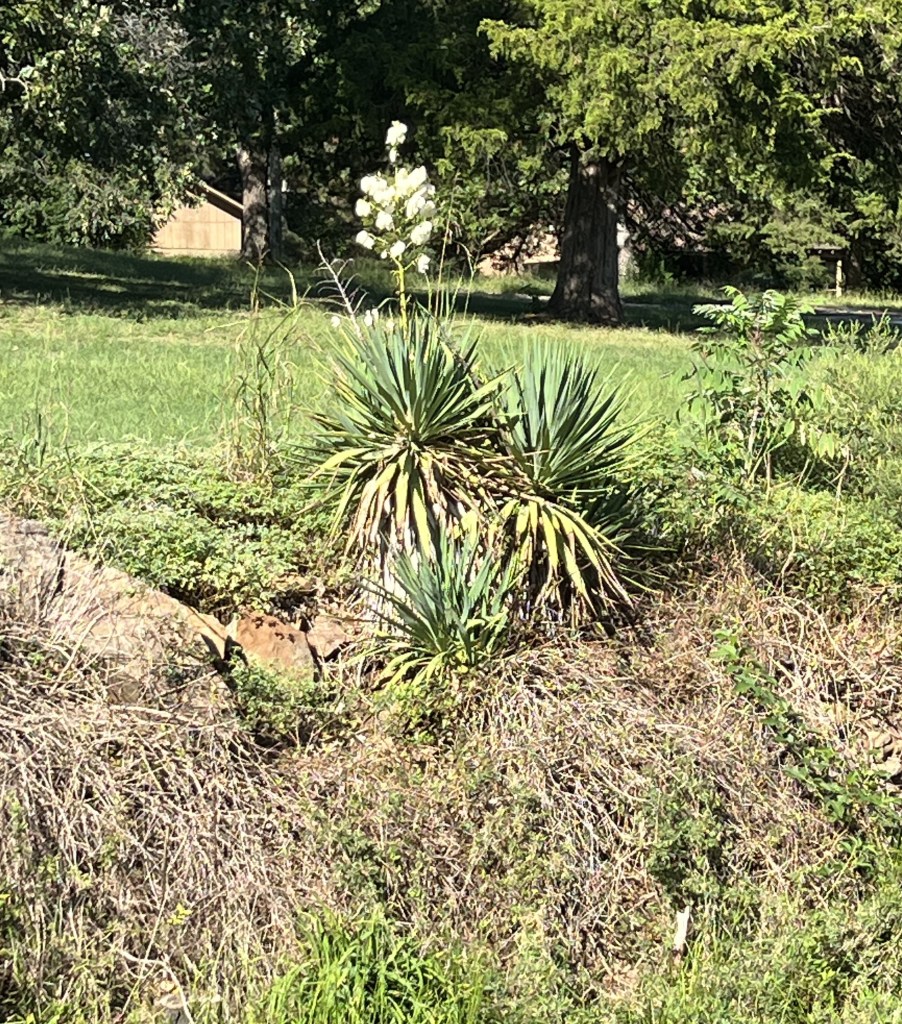
I have been researching how to amend my garden beds in preparation for winter. In the past I have basically pulled the dead plants and let the ground fallow until the following spring. I have begun to think this is why (in part) I am getting decreasing yields. I watched several YouTube videos explaining what I needed to do and why. They all began saying I needed to get my soil tested at the local county extension to tell me if I needed more lime (alkaline) or sulfur (acid) in my soil, and whether to add more nutrients. I was not worried about my containers as I had filled them with new potting soil earlier in the spring. I decided I needed to amend the ground soil with vermiculite (soil conditioner to allow air channels so the soil can breathe), compost (improve the soil fertility), and peat moss (improve soil capacity to withhold water). I went to both a plant nursery and our local box market and neither had any of this in stock. I had seen all three earlier at the hardware store but since I bought food at the market I decided to go home. As I was driving home, I noticed a large yacca plant in full bloom.
When I looked online, I found the Yucca gloriosa, commonly known as the Spanish-dagger, is a species of flowering plant in the Asparagaceae family native to the southeastern US. Yucca can grow to 8 feet (2.5 m) tall and is categorized as an evergreen shrub. Yucca gloriosa has a well-developed stem above ground (caulescent), usually with several stems arising from the base. The base will thicken in adult specimens. The cluster of flowers are arranged on a stem composed of a main branch (inflorescence) that is up to 8 feet (2.5 m) long. The bell-shaped flowers are white, but sometimes tinged purple or red. The fruit is a leathery, elongated berry up to 3 inches (8 cm) long. The long narrow leaves are straight and very stiff, growing to 12 to 20 inches (30 to 50 cm) long and 3⁄4 to 1+1⁄2 inches (2 to 3.5 cm) wide. The leaves are dark green with entire margins, smooth, rarely finely denticulate, acuminate, with a sharp brown terminal spine. Yucca gloriosa has been known to cause skin irritation and even allergic reactions upon contact and the leaf points are sharp enough to break the skin. Hence the name dagger.
The Yucca plant is widely cultivated in warm temperate and subtropical climates and is valued as an architectural focal point. Yucca requires little maintenance other than the removal of dead leaves when the shrub nears its ultimate height. The plant is very hardy and sustains temperatures of -4F (-20C) without leaf damage (except ours which all rotted and died) and can handle brief snow and freezing temperatures, as well as long periods of drought. The species has reportedly escaped from cultivation and naturalized in Italy, Turkey, Mauritius, Réunion, Guam, the Northern Mariana Islands, Puerto Rico, Argentina, Chile, and Uruguay (yet it will not escape into our front bed). Yucca gloriosa and several cultivars (‘Variegata’ and ‘Bright Star‘) have gained the Royal Horticultural Society’s Award of Garden Merit.
Thoughts: I found it interesting after having lost two successive years of the yucca Melissa planted in our front bed to read about the plant’s durability and resistance to cold. We had covered the plants to protect them and yet seven different plants of varying size all appeared to freeze over the winter. In contrast, the large yucca I saw was completely exposed on a rocky bank next to the road. The yucca appears to be like most other cacti and succulents which adhere to the adage, “leave it alone and it will thrive.” My covering the plants may have provided too much humidity which led to their demise. Just as (I say . . .) I have given up on planting onions, Melissa says the same of outdoor yucca. Humans may give up on trying to manipulate the environment when faced with failure. Nature keeps trying and allows the species to eventually thrive on their own. Perhaps we could learn something from nature’s example. Act for all. Change is coming and it starts with you.
 A travelers odyssey