
October 01, 2023
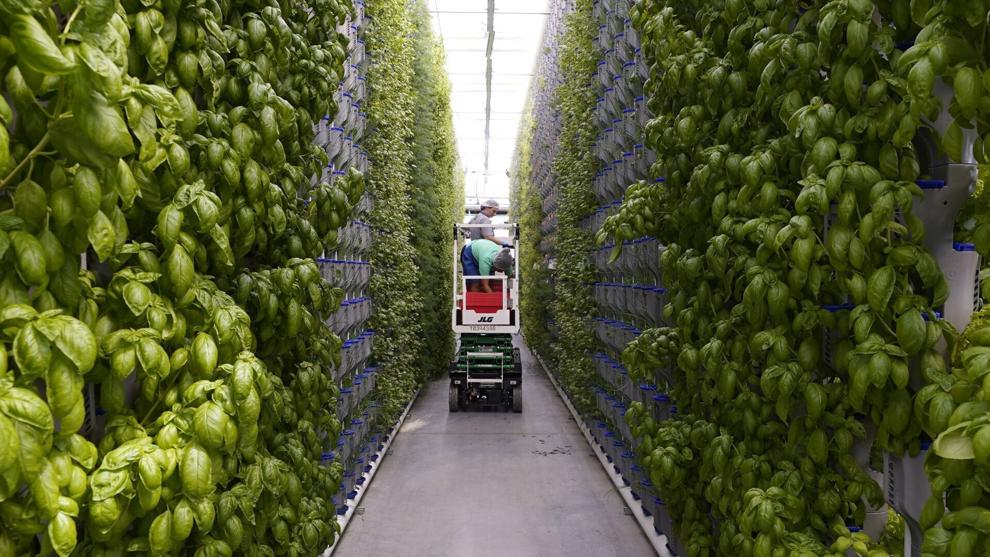
I came across an AP article in my local newspaper that discussed the plight of indoor farms. These green factories are meant to provide harvests of fresh produce all year long and can be built close to the urban markets. This enables the farms to pick, package, and ship to markets within 48 hours. Indoor facilities are meant to shelter their produce from climate change while using less water and land. Eden Green Technology in California operates two greenhouses and has broken ground on two more at its Cleburne campus. Players in the industry are betting big even as rivals wobble and fail. California-based Plenty Unlimited broke ground on a $300 million facility this summer, while Kroger announced that it will be expanding its availability of vertically farmed produce. Meanwhile, two indoor farming companies that attracted strong startup money filed for bankruptcy reorganization and a 5-year-old company in Detroit shut its doors this summer. Many of the farms are proving to be unsustainable and are forced to close due to the high cost of electricity to operate the indoor grow lights.
When I looked online, I found controlled-environment agriculture (CEA), including indoor agriculture and vertical farming, is a technology-based approach toward food production. The aim is to protect plants from the outdoor elements and maintain optimal growing conditions throughout development of the crop. Production takes place within an enclosed growing structure such as a greenhouse or plant factory. Plants are often grown in a soilless medium to ensure the proper amounts of nutrients and water to the root zone, along with supplemental lighting to ensure sufficient daily light. Indoor farms optimize the use of resources such as water, energy, space, capital, and labor. CEA technologies include hydroponics, aeroponics, aquaculture, and aquaponics. Greenhouse production is currently the largest component of the CEA industry but another quickly growing segment is the vertical farming industry. As a form of urban agriculture, CEA can exist inside repurposed structures, built to purpose structures, or in basements and subterranean spaces. The trend is growing as entrepreneurs and households seek to meet the demand for fresh food products.
Skeptics question the sustainability of operations that can require energy-intensive artificial light, saying paying for that light can make profitability impossible. The industry has acknowledged those high costs. Some companies are seeking to cut costs by relying on solar, which also supports sustainability. Those that rely on artificial light that does not come from renewables maintain they can still be profitable by producing a high volume of produce year-round. Evan Lucas, associate professor at Northern Michigan University who teaches infrastructure design for indoor farms, said he is not concerned about the instability of the industry. Some companies may be struggling to scale up due to problems that come from launching in spaces that are not built specifically as indoor farms. “My guess, based on what’s happening, is everyone saw the opportunity and started to try to do a lot really quickly.” Farmers and farms seem to struggle whether they are inside or out.
Thoughts: Indoor farms have the potential to change the way we grow and access food. These farms operate in smaller locations (saving land), use less water (drought resistant), and are not subject to heat and cold extremes (climate change). While artificial light is expensive, solar panels are becoming less expensive and fiber optics could be used to channel sunlight to indoor farms. My grandfather was successful at farming because he shifted what he produced (crops and animals) depending on the market. The problem may come from the types of produce that can be grown in these environments. We may need to change the way we eat to accommodate what we can produce. Act for all. Change is coming and it starts with you.
 A travelers odyssey