
November 09, 2023
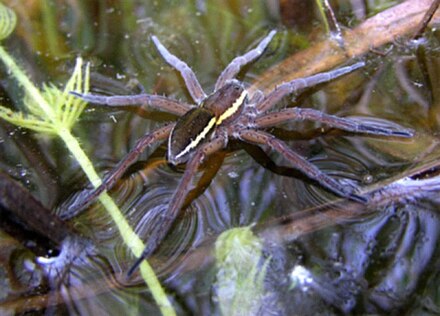
One of the stories highlighted in my browser suggestions concerned a fishing spider that can often be found on docks or near ponds and streams around the world. The genus of spiders gets their name because they literally wait by the edge of a water source and ambush small fish that come to the surface. Rather than using a web to trap their prey, they hunt by waiting at the edge of a pool and when they detect the ripples from prey, they run across the surface of the water to subdue it using their foremost legs, which are tipped with small claws. Like other spiders they inject venom with their hollow jaws to kill and digest the prey. They mainly eat insects, but some larger species can catch fish up to the size of a small goldfish (Carassius auratus). Fishing spiders are also capable of submerging beneath the surface of the water by using the hairs on their bodies to trap air bubbles. The browser caption called the gigantic Dolmedes one of “nature’s best scuba divers.”
When I looked online, I found the Dolomedes, also known as fishing spiders, raft spiders, dock spiders, or wharf spiders, is a genus of large spiders of the family Pisauridae. Their scientific name (Dolomedes) comes from Greek and means “wily or deceitful”. Almost all Dolomedes species are semiaquatic, except for the tree-dwelling, white-banded fishing spider (Dolomedes albineus) of the southeastern US. Many species have a striking pale stripe down each side of the body. There are over a hundred species of Dolomedes throughout the world, including the forest-stream species of New Zealand (Dolomedes aquaticus) and the great raft spider (Dolomedes plantarius) which lives in the marshlands (fens) of Europe. Many species of this genus are large, with females up to 1 inch (26 cm) long and a leg span of just over 3 inches (80 mm). Member species are easily confused with wolf spiders (family: Lycosidae) except for their context with water. Even out of context they could be easily identified as this genus has two rows of eyes with two larger eyes at the top, a placement unique to this genus inside the Pisauridae family. If you keep your distance, you can still tell them apart by their aquatic adaptations.
Dolomedes spiders are covered all over in short, velvety hairs which are hydrophobic (repel water). This allows them to use surface tension to stand or run on the water, like water striders (family: Gerridae). They also submerge beneath the water by trapping air in the body hairs to form a thin silvery film over the whole surface of their body and legs. Like other spiders, Dolomedes breathes with book lungs found beneath their abdomens. These open into the captured air film and allow the spiders to breathe while submerged. The trapped air makes them buoyant and if they do not hold onto a rock or a plant stem they will float to the surface where they emerge completely dry. The fishing spider hunts for mayflies and other insects on the surface of the water, using the water like a web, detecting ripples and vibrations which indicate where their prey is located. The spider can estimate distance and direction, as well as discern the vibrations given off by predators such as trout (maybe I should rig a spider fly). Dolomedes are powerful predators capable of eating tadpoles and fish as large as a small goldfish.
Thoughts: Although species of Dolomedes spiders are frighteningly large, they rarely bite people. They also help keep the insect population in check but eating larva and emerging adults, especially of the approximately 3,500 species of mosquitos (family Culicidae). They build webs on shore to lay eggs and house their spiderlings. Humans often brush away the webs or squash intrusive spiders when we come upon them. There are more than 40,000 species of spiders, almost all of them venomous, but only a few are known to produce venom that is toxic to humans. Most serve as a beneficial species, and they are best left alone to do their work. Act for all. Change is coming and it starts with you.
 A travelers odyssey