
November 15, 2023
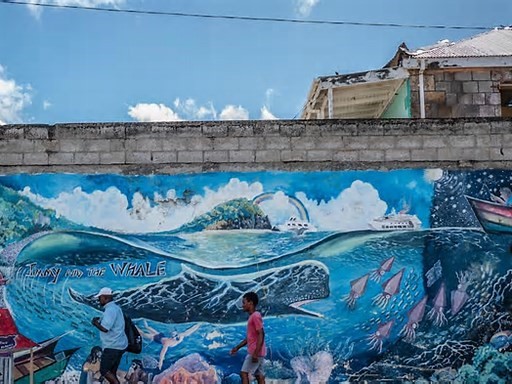
The back page of the News section of my local newspaper carried an AP article on the creation of the world’s first marine protected area for sperm whales (Physeter macrocephalus). The area covers nearly 300 square miles (800 km2) on the western side of the island nation of Dominica and serves as a key nursing and feeding grounds for the whales. Less than 500 sperm whales live in the waters surrounding Dominica, part of a population that moves along the Lesser Antilles chain south from St. Vincent and north into Guadeloupe. Unlike other sperm whales, the ones in the eastern Caribbean do not travel very far. Dominica Prime Minister Roosevelt Skerrit said, “We want to ensure these majestic and highly intelligent animals are safe from harm and continue keeping our waters and our climate healthy.” The preserve will not only protect the animals but will help fight climate change. Sperm whales defecate near the surface and the nutrient-rich poop creates plankton blooms that capture carbon dioxide and drag it to the ocean floor when they die. Whale biologist Shane Gero said sperm whales in Dominica are believed to defecate more than whales elsewhere, either because they eat twice as much or due to the type of squid they are eating.
When I looked online, I found Dominica is a small island country of the Lesser Antilles in the eastern Caribbean Sea that lies between the French islands of Guadeloupe and Marie-Galante to the north and Martinique to the south. The country has been a member of the British Commonwealth since its independence in 1978. The island is 29 miles (47 km) long with a maximum width of 16 miles (26 km). The capital and chief port is Roseau. The island is a volcanic formation and still has active volcanoes (eruptions are rare), fumaroles (volcanic vents), and hot springs. Boiling Lake lies in the south at 2,300 feet (700 m) above sea level. The lake gets its name as its waters are often forced 3 feet (1 m) above normal by the pressure of escaping gases. There are numerous rivers (unnavigable), and a range of high forest-clad mountains running north to south broken in the center by a plain drained by the Layou River. The highest points are Mount Diablotins (4,747 ft/1,447 m) and Mount Trois Pitons (4,670 ft/1,424 m).
An estimated 35 families of sperm whales spend most of their time in waters surrounding Dominica and some are likely more than 60 years old. Sperm whales are a matrilineal society, and young males leave and switch oceans at some point in their lives. Sperm whales produce a single calf every five to seven years so protecting the female calves is key. The loss of a single calf can mean the end of a family. In the waters around Dominica and elsewhere, sperm whales have been hit by ships, entangled in fishing gear, and affected by agricultural runoff, limiting their survival. Prior to whaling an estimated 2 million sperm whales roamed the Earth’s oceans before they were hunted for their oil. There are only 800,000 left. Once the reserve is created, the prime minister said his administration will appoint an officer and observers to ensure the area is respected and that whale tourism regulations are enforced. Visitors can still swim with sperm whales and see them from a boat, but in limited numbers. The move was praised by scientists and conservationists.
Thoughts: Dominica experienced out-migration in the 1970’s that culminated with a massive exodus after Hurricane David (1979). This continued in the 1980’s but moderated in the 1990’s. A controversial government scheme in 1992 offered “economic citizenship” to investors from other countries. Now Dominica has embraced the idea that sperm whales are also citizens of Dominica, and they are taking care of some of their citizens in a way few nations have ever done. Tourism is a major economic force for Dominica, and they have grasped the importance of ecotourism. Whether a publicity stunt or not, it protects endangered whales. Act for all. Change is coming and it starts with you.
 A travelers odyssey