
November 20, 2023
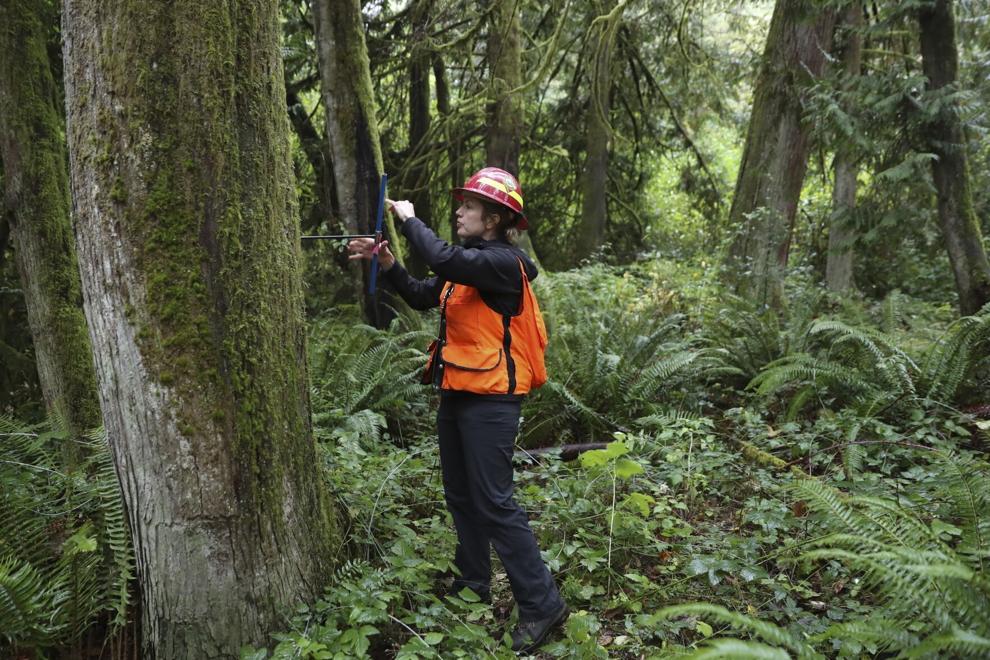
Located toward the back of Sunday’s local newspaper, I found an article on how the forests of the US’ Pacific Northwest are disappearing. The article began with the loss of the iconic western red cedar (Thuja plicata). People have used red cedar for thousands of years to make everything from canoes to clothing, and the many uses for this tree have earned the cedar the name “Tree of Life”. More recently, scientists have started calling this water-loving relative of redwoods “the climate canary”. Studies and reports in recent years indicate at least 15 native Pacific Northwest tree species have experienced growth declines and die-offs, and 10 have been directly linked to drought and warming temperatures. Christine Buhl, a forest health specialist for the Oregon Department of Forestry, and other researchers are now arguing that the drought-driven die-offs are the beginning of a much larger and long-predicted shift in tree growing ranges due to climate change. Researchers call the loss of trees, “Firmageddon”.
When I looked online, I found Firmageddon refers to the more than 1,875 square-mile (4,856 km2) die-off of five fir species in Oregon, Washington, and northern California. The drought-driven fir “mortality event” was identified last year during an aerial survey of the forested area. According to tree-range predictions, climate-induced die-offs are expected to start at the edges of growing ranges, including at lower-elevation locations that are predicted to become too warm and dry for many existing species. The survey eventually tallied about 1.1 million acres (445,154 ha) of Oregon forest with dead firs, the most damage recorded in a single season since surveys began 75 years ago. Climate change is reshaping the landscape in Western states that have been experiencing extreme heat and drought conditions. As conditions change the fir trees might be replaced by more drought-hardy species in the future, which would reshape how the ecosystems function and along with changing their character.
Trees, and all plants, have growing ranges that are largely determined by climate factors like moisture and temperature. Scientists have argued for decades that as atmospheric warming continues, growing ranges in the Northern Hemisphere will shift upslope in elevation and farther north, leaving many trees stranded in a warmer, drier world. With the resulting climate mismatch, native trees are predicted to die-off and not grow back. “That’s why it’s the canary,” says Buhl. “Any tree that’s less drought tolerant is going to be the canary in the coal mine. They’re going to start bailing.” Last year, Buhl and colleagues reported that red cedars were dying throughout the tree’s growing range not because of a fungus or insect attack, but due to the region’s “climate change-induced drought”. Daniel DePinte, Forest Service aerial survey program manager, said surveys found the largest die-offs associated with Firmageddon are occurring at lower-elevations. Buhl and colleagues found a similar pattern with western red cedar. Mortality was greatest at sites less than about 650 feet (200 m) in elevation west of the Cascade Range, according to their analysis. The forests are all moving uphill.
Thoughts: While red cedar is believed to be dying from drought alone, Firmageddon and Douglas fir (Pseudotsuga menziesii) die-offs have been linked to a combination of drought weakening trees and insect pests. Where the insects would not normally kill the trees, the combination of stress from drought and pests are like a person with a weakened immune system dying from the flu. While it is unlikely the red cedar is going to disappear from the landscape entirely it probably will not grow back in areas where it’s dying off. These changes in turn affect the entire ecosystem, as plants, birds, and even other animals move along with the forests. Perhaps the “oceanfront property in Arizona” sung by George Strait is not too far from reality. Act for all. Change is coming and it starts with you.
 A travelers odyssey