
November 24, 2023
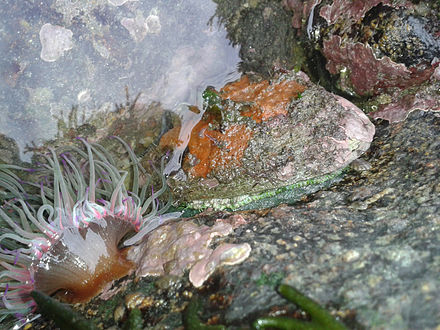
While my local newspaper did not provide a print issue today, I was able to access the online version and found an article on how poaching is affecting the fishing villages of South Africa. Over the last three decades poachers have cleaned out every snail they could find for US$25 a pound (0.45 kg). Danie Keet, chairman of Community Against Abalone Poaching, has seen highly organized gang-related poaching grow for the last 15 years. The poachers arrive in groups in broad daylight on pickup trucks towing their rubber duck boats. The divers pry the abalone off the reefs and get them to shore in bags, runners hide them in the dunes, and others take them to stash houses. Lookouts watch for police and warn the divers who keep cellphones sealed in watertight condoms. The South African government initially banned fishing but has now established strict quotas for those lucky enough to get the right to harvest 264 pounds (119.7 kg) a year. A 2022 report by the Global Initiative Against Transnational Organized Crime estimated the illegal trade heading to Hong Kong was worth nearly US$1billion between 2000 and 2016 and is growing. The legal fishing quota in South Africa is set at a maximum of 110 tons (.11 kt) a year, yet Hong Kong imports between 2,200 to 3,550 tons (2.2 to 3.5 kt) of illegal South African abalone a year.
When I looked online, I found Abalone is a common name for a group of small to very large marine mollusks in the family Haliotidae whose family contains only one genus (Haliotis). The original six subgenera are now considered alternative representations of Haliotis. The number of species recognized worldwide ranges between 30 to 130. The abalone shells have a low, open spiral structure, and are characterized by several open respiratory pores in a row near the shell’s outer edge. Most abalone vary in size from 0.8 inches (20 mm) for Haliotis pulcherrima to 8 inches (200 mm). The largest species (Haliotis rufescens) reaches 12 inches (300 mm). The thick inner layer of the shell is composed of mother-of-pearl (nacre), which in many species is highly iridescent, giving rise to strong, changeable colors which make the shells attractive as decorative objects, jewelry, and as a source of colorful mother-of-pearl. The flesh of abalone is considered a desirable food and is consumed raw or cooked by a variety of cultures. Abalone is found in the coastal waters on every continent around the world, except for the Pacific coast of South America, the Atlantic coast of North America, the Arctic, and Antarctica.
The demand for these tasty snails has spurred the rise of farmed abalone as an alternative to wild caught abalone. HIK Abalone has around 13 million abalone at any one time at their two South African coastal farms. The farmed version is grown in rows of open-top tanks and has never felt the ocean or a rock. They are bred, fed, and harvested at the farm to be shipped (dried or canned) to Hong Kong. A few are exported live for Hong Kong’s high-end customers. The farms are using selective breeding to tweak the abalone life cycle to get them to grow to a size they can be sold and eaten as fast as possible, said HIK CEO Bertus van Oordt. The farms have no role in conservation, and it is unclear what effect the tank-bred abalone may have in the wild. Van Oordt also said he is unwilling to put farmed abalone in the sea “to create a bigger poaching environment” but will work with the government if they control poaching.
Thoughts: Raphael Fisher does fish his abalone quota, but it is part-time now and his job at HIK supports his two small fishing boats. The article stated Fisher plans to go fishing this weekend, just not necessarily for abalone. Just fishing. “When it’s in you, it’s in you,” he said. The International Union for Conservation of Nature says nearly half of all abalone species around the world are threatened with extinction. Many are affected by the pollution and climate change that is part of the larger destruction of marine wildlife. The human cost is added to the environmental. Act for all. Change is coming and it starts with you.
 A travelers odyssey