
December 06, 2023
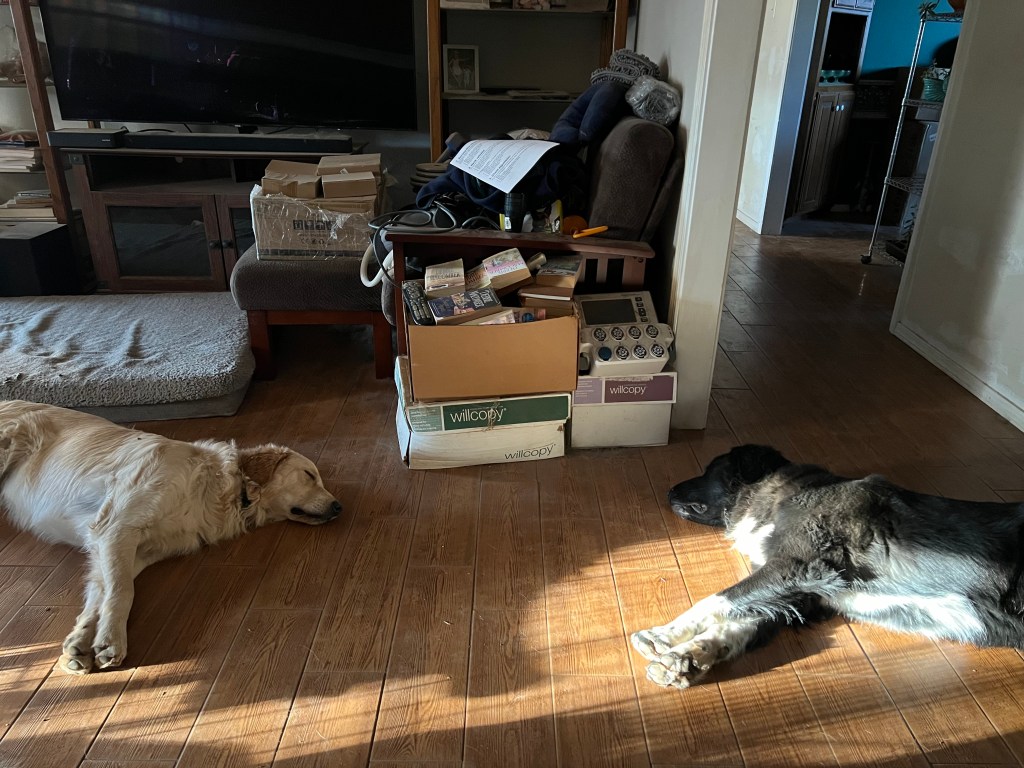
When we first got our dog Zena, I quickly found she seemed to have two speeds: asleep and full bore. She would play by running around the house or outside around the pool. This would go on for fifteen to twenty minutes and then she would unexpectantly stop. This was followed by her lying down and quickly falling asleep. Zena would spend the next hours lying on her side, occasionally getting up to shift positions or to get on (or off) her dog bed. Melissa got Loki in part to give Zena a playmate to keep her active. They do play together (“fighting” and struggling for possession of a “tugga” toy) and run around the house and pool daring the other to chase them or try to take the tug toy away. However, the favorite way for both dogs to idle the hours away is to take a nap.
When I looked online, I found taking a nap during the day is not only healthy, but also recommended. Getting healthy sleep is one of Life’s Essential 8, or the key measures for improving and maintaining cardiovascular health as defined by the American Heart Association. The 8 include eating better, being active, quitting tobacco, managing weight, controlling cholesterol, managing blood sugar, managing blood pressure, and getting healthy sleep. Better cardiovascular health helps lower the risk for heart disease, stroke, and other major health problems. Taking an afternoon nap helps in several ways. First, it increases your alertness and allows you to concentrate on the task. A nap on the couch helps your memory and can make it easier to recall facts learned earlier that day. Sleep gives you the ability to learn new skills and to be creative as your brain processes all the information we stuff into it, and a long nap can be like a good night’s sleep. Finally, a nap may save you money on the coffee and energy drinks you normally use to stay awake.
In many locations taking a nap had been ingrained into the culture. A siesta (Spanish, “nap”) is a short nap taken in the early afternoon, and often after the midday meal. This nap is particularly common in warm-weather countries. The “siesta” can refer to the nap itself, or to a period of the day, generally between 2–5 pm. This period is used for sleep, as well as leisure, midday meals, or other activities. Siestas are historically common throughout the Mediterranean and Southern Europe, the Middle East, mainland China, and the Indian subcontinent. In the US, the UK, and a growing number of other countries, this short sleep has been referred to as a “power nap”, a term coined by Cornell University social psychologist James Maas. The power nap is called “riposo” in Northern Italy and “pennichella” or “pisolino” in Southern Italy. My dogs must be taking a power nap because when they are awake, they always seem raring to go (or to eat).
Thoughts: The timing of sleep in humans depends upon a balance between the need for sleep as a function of the amount of time elapsed since the last adequate sleep episode, and circadian rhythms which determine the ideal timing of a correctly structured and restorative sleep episode (homeostatic sleep propensity). The homeostatic pressure to sleep starts growing when we wake and the circadian signal for wakefulness starts building in the (late) afternoon. In humans there is a dip when the drive for sleep has been building and the drive for wakefulness has not yet started. This is the perfect time for a nap. The term “power nap” seems a way for Anglos (in particular) to justify an afternoon nap. Western culture often takes a dim view of those who practice the siesta as just being lazy, when in fac, they may get more (or better) work done because of the nap. Act for all. Change is coming and it starts with you.
 A travelers odyssey