
December 20, 2023
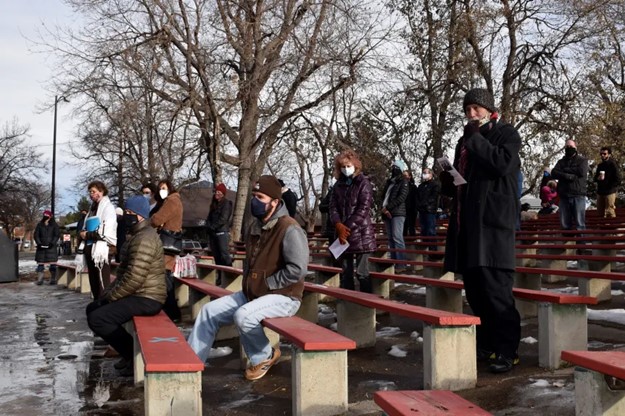
National Homeless Persons’ Remembrance Day is commemorated each year in the US on December 21st (tomorrow), the winter solstice in the Northern Hemisphere and the longest night of the year. This remembrance began in 1990 and the National Coalition for the Homeless and the National Health Care for the Homeless Council have sponsored this day to call attention to the plight of America’s homeless population. This is also a day to encourage the public to act on behalf of homeless people.
When I went online, I found the origin of homelessness in America can be traced back to colonial times. As early as 1640 English “vagrants” were listed as outcast individuals and subject to arrest. King Philip’s War (1675-1676) against the indigenous people resulted in homelessness as colonists were driven out of their homes to seek shelter in the forests or coastal areas. Many remained idle until a law was enacted to prevent “idleness” in the cities, and idle people were made to be servants or indentured servants. Homeless people were called “Sturdy beggars” in the mid-18th century and were found in every colonial town. During the American Revolution homelessness increased and after the war many were forced into homelessness due to insufficient means. By the depression of 1857, most American cities were full of homeless people with no government effort to intervene. Private charities and organizations like the “Western Soup Society” in Philadelphia organized to help people with food, but without government funding. The outbreak of the Civil War made conditions worse as war veterans remained unemployed and others lost their property to war and natural catastrophes. Later events like The Great Depression and World War II again increased the number of homeless in the US. Remembrance of the legacy of homelessness is acute, as many pass their homelessness to the next generation.
In the 1980’s, the US government began to acknowledge homelessness as a national problem. The Homeless Survival Act (1986) provided emergency relief and long-term solutions to homelessness and the Homeless Eligibility Clarification Act (1986) ended the problems associated with a permanent address and other social barriers. This led to the introduction of food stamps benefits, Medicaid, and other benefits. In the US today individuals make up 66.7% of the total homeless population, while families make up the remaining 33.3%. Homelessness has increased nationally by almost 1% in recent years. Homelessness is not the same for everyone and is often broken into three categories. Transitional Homelessness is most common where a person is homeless for a short period due to a crisis. Chronic Homelessness is when someone has been homeless for more than a year or has had frequent episodes of homelessness within the last two years. Episodic Homelessness happens when a person has been homeless three times or more within the last year or when someone has periods of homelessness on-and-off in their life. A Day of Remembrance honors the fact that all need a safe place to live.
Thoughts: There are actions you can take to observe Remembrance Day (as well as on other days). You could ask your community for the number of homeless people who died in the previous year and then hold a tribute to remember them. The tribute could be a candlelight march, a religious service, or even a simple performance. Ideally, these should be performed outdoors to share a little of the experience of the homeless population. You could volunteer at a homeless shelter by serving meals, helping with kids, or organizing donation drives. Local shelters serve a variety of people and need help in whatever skills you may offer. Homeless organizations usually operate under strict budgets or depend on donations and your financial gift may go a long way in helping provide for the needs of homeless individuals. Most important, see homeless people as human beings and act toward them as you would like to be treated. It is not about a handout, but a hand up. Act for all. Change is coming and it starts with you.
 A travelers odyssey