
December 28, 2023
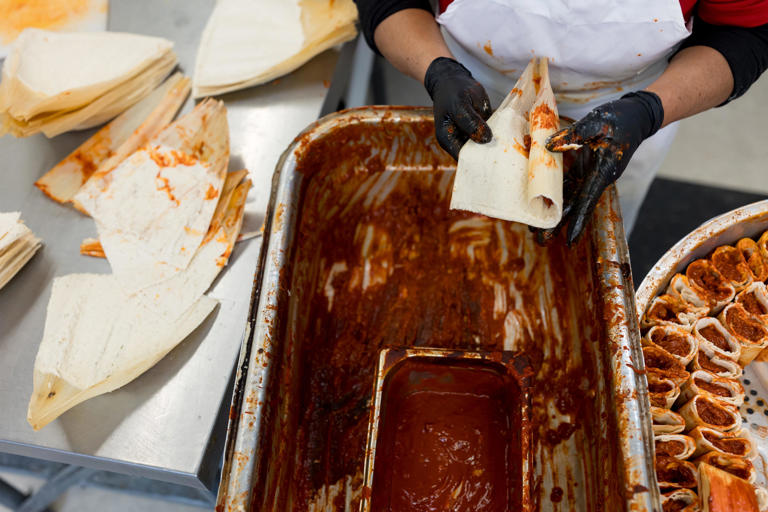
Hidden in the back of the Christmas Eve edition of my local newspaper was a “feel good story” about how a group of nuns started a holiday tradition in El Paso, Texas. The article recalls how the culture of the Texas Borderland is tightly wrapped with Mexico and the tamal tradition begins with the cold weather and accelerates during the holiday celebrations known as “Guadalupe-Reyes”, or the Catholic holy days from December 12th(Day of the Virgin of Guadalupe) to January 6th (Day of Los Reyes Magos, or Three Kings Day). At Food City, operated by the Santos family, they make and sell 36,000 tamales in December. It is not a family recipe that keeps customers coming back. The original recipe belongs to Dominican nuns from Mexico who needed money for their convent. A group of nuns set out in the early 1980’s on a tour of US cities to raise money to build a chapel where they could pray. The trip was supposed to take the women to Los Angeles, Dallas, and Chicago. No one was willing to help in Los Angeles or at their stop in Dallas. However, they had stopped in El Paso enroute, and something drew them back. That is where they met José “Joe” Santos who had opened Food City in downtown El Paso. The women ended up making tamales in his kitchen which they sold out of the store.
When I checked online, I found tamales (Spanish, tamal) are a traditional Mesoamerican dish made of masa, a dough made from dried corn kernels mixed with an alkali solution (nixtamalization) steamed in a corn husk or banana leaves. Tamales originated in Mesoamerica as early as 8000 to 5000 BCE and the preparation of tamales likely spread from the indigenous cultures in Guatemala and Mexico to the rest of Latin America. Archaeologists Karl Taube, William Saturno, and David Stuart found tamales in pictorial references in the Mural of San Bartolo, in Petén, Guatemala dating from around 100 CE. The Aztec and Maya civilizations (and Olmec and Toltec before them), used tamales as easily portable food for hunting trips, traveling large distances, and nourishing their armies. Tamales were considered sacred and were seen as the food of the gods. All four of these indigenous peoples considered corn a central part of their cultural identity and tamales played a large part in their rituals and festivals.
Many families in El Paso spend the holidays together preparing tamales for Christmas Eve. “People, when they think back to memories of their families, a lot of it’s centered around food,” said Melissa Santos of Food City. “Memories about food, how this tasted or the smell of this. So, whether they’re buying the ingredients from us, or they’re buying the readymade food, you know their tradition started here.” The process takes hours, even with many hands at work. It requires mixing the corn masa by hand with pork lard, preparing the savory or sweet fillings, soaking the corn husks, spreading a layer of masa on an open husk, spooning in filling, then carefully folding each tamal like a gift. The lot is placed in concentric circles in a large pot to steam-cook. In El Paso, the flavors are almost always the same: pork with red chiles, chicken with green chiles, cheese with green chiles, and sweet tamales studded with raisins. When the first hint of cold weather hits the Texas desert, a collective craving sets in and El Pasoans head to their favorite bakery or grocery to buy tamales by the dozen.
Thoughts: The story began saying the El Paso Times had omitted including the Food City tamales in their story on the “best tamales in town”. Melissa Santos took a bag of two dozen tamales to the newspaper and told them the story. The nuns built their chapel and saved the floundering family business. Now people come from all over El Paso to buy their tamales. How Food City tamales stack up against others is not the point. The shoppers who line up for their two dozen tamales all have their own reasons. This could be a craving, a convenience, or a fond memory of the recipe handed down by nuns. Act for all. Change is coming and it starts with you.
 A travelers odyssey