
January 02, 2024
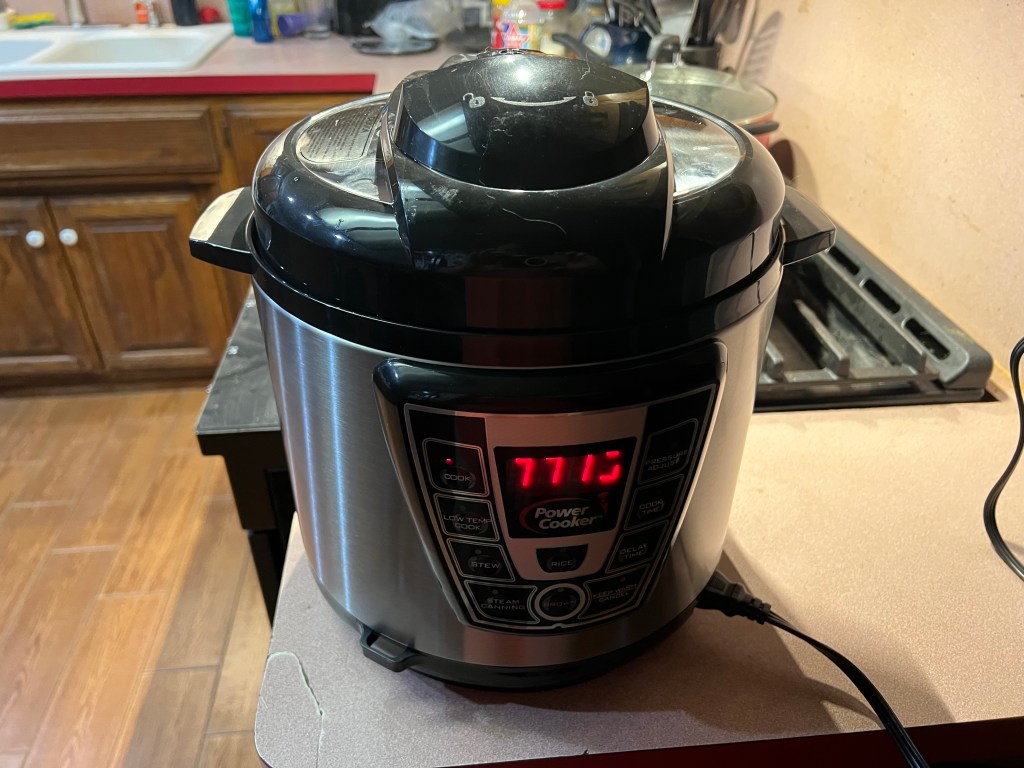
The Southern food tradition of inviting prosperity in the new year by serving black-eyed peas dates to the Civil War. Stacey Lynn, of the website Southern Plate, explained that during the war Union troops confiscated crops and livestock and little was left except peas and greens. “These dishes became cherished and appreciated as what saved many a family from starvation during those times and the tradition of celebrating these dishes on the new year was born.” While I am not a fan of black-eyed peas, I do enjoy an occasional pot of pinto beans. I had frozen the ham hock (with plenty of meat on the bone) from our Thanksgiving ham and thought New Year’s Day would be the perfect time to enjoy this dish. While the beans may not “ensure” the prosperity of the peas, they could not hurt. Melissa’s dad had made a pot of beans for most holiday meals the traditional way of soaking and slowly cooking the beans on the stove for 2 1/2 hours. Melissa said she preferred the faster method of cooking the beans for 20 minutes in a pressure cooker.
When I looked online, I found pressure cooking is the process of cooking food under high pressure steam and water or a water-based cooking liquid, in a sealed pressure cooker. High pressure limits boiling and creates higher cooking temperatures which cook food quicker than at normal pressure. The concept for the pressure cooker was invented by the French physicist Denis Papin in 1681 and called the steam digester. His airtight cooker used steam pressure to raise the water’s boiling point to cook food faster. The manufacture of pressure cookers did not occur until 1864 when Georg Gutbrod of Stuttgart, Germany, began manufacturing pressure cookers made of tinned cast iron. The pressure cooker works by expelling air and trapping steam produced from the boiling liquid. This raises the internal pressure up to one atmosphere above ambient and gives cooking temperatures between 212F to 250F (100C to 121C). Together with high thermal heat transfer from steam it permits cooking in between a half and a quarter the time of conventional boiling and saves considerable energy.
When I canned my pasta sauce last fall, I opted for the water-bath method. After I purchased the necessary equipment Melissa told me she thought we had a pressure cooker that I had given her in Kansas. I later found the pressure cooker still in its original box. We must have used it (once) as the instruction manual was missing. This was one of the newer electric cookers with digital readouts and safety features to prevent the device from holding too much pressure. According to the New York Times Magazine, 37% of households in the US owned at least one pressure cooker in 1950, but that rate dropped to only 20% by 2011. Part of the decline is attributed to a fear of explosion (extremely rare with modern pressure cookers) along with competition from other fast cooking devices such as the microwave oven. Newer pressure cookers have more safety features, digital temperature control, do not vent steam during cooking, and are quieter and more efficient. These conveniences helped make pressure cooking more popular.
THOUGHTS: Melissa and I both have memories of the pressure cookers used by our moms. These cast iron behemoths were primarily used for canning. I recall the cooker sitting on the stove with the “jiggler” valve hopping as the steam escaped. While I am not sure what happened to our family cooker, Melissa said her mom finally threw hers away. It was dangerous and blew up on several occasions. These first generation pressure cookers were replaced by cookers with a spring loaded valve and safety features to keep you from opening the pot until the pressure is released. The third generation electric pressure cookers added more safety features and now have digital controls. It was easy to use our pressure cooker. The hardest part was being unfamiliar with how it worked. I would have never known without trying. Act for all. Change is coming and it starts with you.
 A travelers odyssey
I don’t ever do it, I’m not superstitious
LikeLike
Nor am I. But it is a Fun Fact.
LikeLiked by 1 person