
January 08, 2024
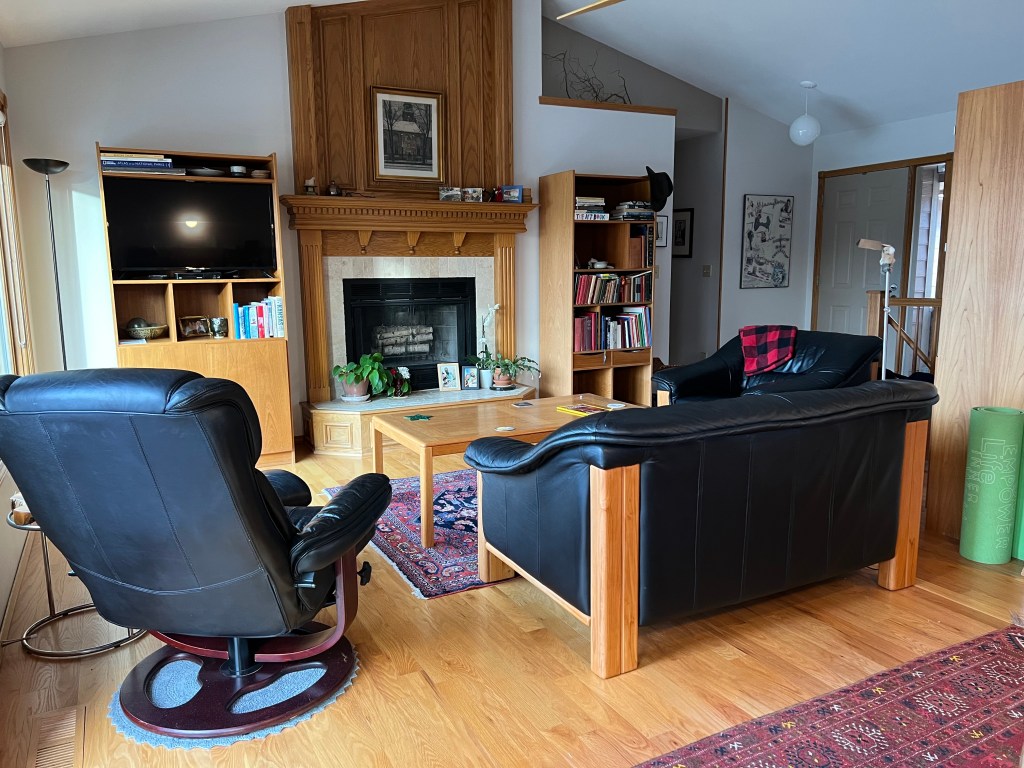
My family gathered at the home of my brother this weekend to celebrate one of the life changes (birth, marriage, death) that bring families together. After a meal of homemade pizza (my brother’s specialty) we retired to the living room to watch the end of Saturday night’s NFL game. As the conversation came up the volume on the TV came down. Our talk began casually enough (life and what was going on with family) and then moved to memories of growing up. The way my family participates in these conversations is by sharing personal stories of the past. For me, this tradition began as I sat around the table at my grandparents’ house and listened to my aunts and uncles tell their stories of growing up. After my grandparents, the venue often shifted to my parent’s house as my sibs would sit and tell stories. Both parents are now gone, but we continue the tradition at some point when we all come together at other locations. What I like about these conversations is the back and forth as each remembers the story in different ways. This will result in additions and different understandings (but never corrections) to the stories that have been told for decades. As we talked, I realized the additions often came from the perspective held by each participant in the same event.
When I looked online, I found the Britannica Dictionary definition of perspective has four parts. If we start at the last (least to most common understanding), the fourth definition of perspective refers to its understanding in the world of art as “a way of showing depth or distance in a painting or drawing by making the objects that are far away smaller and making the objects that are closer to the viewer larger”. The third was similar, with perspective as, “the angle or direction that a person uses to look at an object”. Second was understanding how perspective is, “a condition in which a person knows which things are important and does not worry or think about unimportant things”. The first definition is how most English language users understand the word. Perspective is “a way of thinking about and understanding something” and can refer to “a particular issue or life in general”. The example Britanica used to illustrate this definition was, “The story is told from the perspective of a teenage boy in the 1940s.” While all four definitions provided nuanced understandings of the word, understanding perspective as a “way of thinking” is what resonates with me.
The different perspective my family brought to our stories comes from our memory, or the brain’s ability to acquire, store, and recover information from various experiences. These memories change over time as the information may not be stored properly, or we may forget the details. What we remember is generally associated with the happy times in our life rather than negative experiences. Those who suffer from anxiety or post-traumatic stress disorder find it difficult to overcome bad memories no matter how hard they try. Researchers believe the key to knowing how we remember starts with pinpointing what we remember and why. Understanding our memories and why we recall some events over others can help us better understand ourselves and the world. The positive events and how they are stored as memories are directly tied to our perspective.
THOUGHTS: It is interesting to listen to a story about yourself told by another and hear how different their perspective is on what occurred. I have also listened to old stories and noticed they change over time. These changes may be from loss of memory, or from an unconscious (conscious?) desire to tell a better story. I rarely make corrections and the new perspective may become how the event is remembered by others. Commentators now “fact check” after a political speech to determine the accuracy of any statements. Many statements often contain a basis in fact but are out of context. An unknown author said, “Statistics can be made to prove anything – even the truth.” The “truth” depends on your perspective. Act for all. Change is coming and it starts with you.
 A travelers odyssey