
January 09, 2024
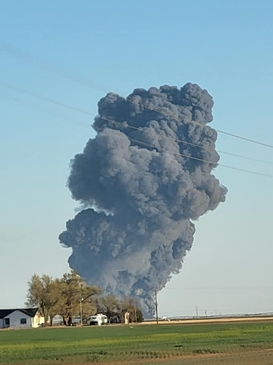
The front page of Sunday’s local newspaper ran a follow-up USA Today article about a disaster that happened on April 10, 2023. The fire took place at the South Fork Dairy Farm about 10 miles south of Dimmitt, Texas. The dairy was started by Eltje Frans Brand who immigrated from Netherlands in 1984. He started a small dairy of 40 cows that grew to several dairies with over 1000 cows each. Brand purchased the land for the Castro dairy in 2019 with a total of 640 acres (258 ha). South Fork Dairy started with 8,000 cows in 2020 and then added 9,500 more the following year, bringing the total to 17,500 mostly Holstein and Jersey cows. The fire killed all the approximately 17,500 cows at the dairy and injured one person. The fire was ruled to have started in a vacuum truck used to suck up the manure and water waste in the cattle barn. This was one of the deadliest fires involving animals, and the deadliest fire involving cattle in at least a decade. The fire wiped out 3% of all dairy cattle in the state of Texas.
When I looked online, I found the South Fork Dairy Farm is a dairy production facility located in Castro County, Texas. According to the 2021 Texas Annual Dairy Review, the county houses 30,000 cattle and is the second largest dairy-producer in the US, with more than 147,000,000 pounds (67,000,000 kg) of dairy produced in February 2023. The South Fork facility was an area of more than 2,100,000 square feet (200,000 m2). The Texas Commission on Environmental Quality (TCEQ) in 2019 had authorized the South Fork Dairy Farm to double the amount of cattle present at their facility (from 11,500 to 23,000), and to allow the dairy to increase manure production by 50%. South Fork Dairy was investing in the latest technology and was operating at a scale that dwarfed the area’s other large dairies. The dairy was in the process of building a biogas digester to process the cow manure currently being stored in outdoor lagoons.
The biogas digester proposed for the South Fork Dairy is touted as a win for the environment. The methane gases produced by the waste lagoons are captured and converted into a renewable source of energy for truck engines and power plants. The EPA listed 343 digestors across the US as of January 2023, another 86 in construction, and 290 are located on dairy farms. The digesters cost from US$20 million to US$70 million to build and incentivize large farms to increase their herd size to sell the waste byproduct. While a dairy will not get rich off the digestor projects, it provides a stable income stream to offset the volatile milk prices. Oil and gas energy giants are pouring billions of dollars into these new plants in return for a percentage of the profits. Shortly after the fire, TCEQ granted South Fork approval to install the digester. Another state agency allowed the dairy to expand the herd to 32,000 cows, making it one of the largest dairies in Texas. Hopefully, there will not be another fire.
THOUGHTS: I visited a friend in high school whose dad operated a 100 cow dairy in Wisconsin. The cows spent most of the winter inside the barn due to the extreme cold. I had worked on a smaller dairy with a parlor (four cows milked at a time) and was interested to see the difference milking in a barn. The barn had a trough with a conveyor system that moved the solid and liquid waste outside to a holding bin which was later spread across the field that grew feed for the cows. My job was to stand outside and make sure the conveyor was working correctly. I still remember the horrific stench as the waste slopped into the bin. I cannot image how much waste (and the smell) goes into the lagoons. The digestor uses a sustainable source (cows) to produce energy and cuts down on the smell. This is a win for the environment and people living on surrounding farms. Act for all. Change is coming and it starts with you.
 A travelers odyssey