
January 23, 2024
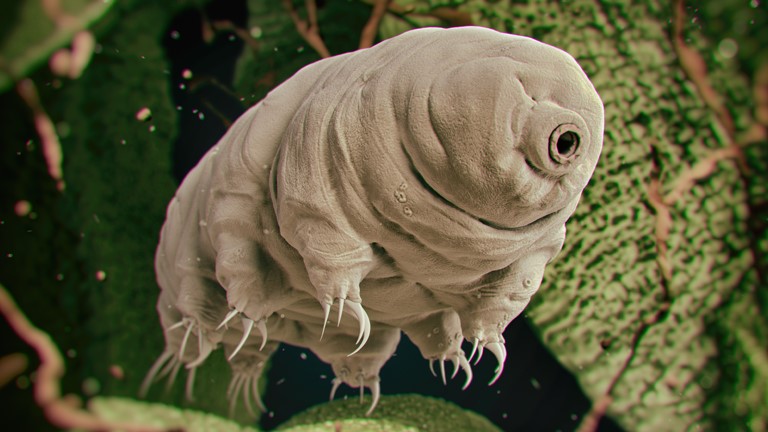
© Deposit Photos
A Popular Science article found on my Microsoft browser referenced the findings of a study published January 17 in the open-access journal PLOS ONE. The study examined tardigrades, some of the toughest animals on the planet. These microscopic creatures can survive in environments with extreme temperatures, without water, or oxygen. Previously, scientists were not sure what signals tardigrades to enter or leave their death-like state. This new study exposed the tardigrades to temperatures of -112F (-80C) or high levels of hydrogen peroxide, salt, or sugar to trigger dormancy in a lab. The tardigrades cells responded by producing damaging oxygen free radicals which oxidize an amino acid called cysteine, causing the animal to go into a dormant state. When conditions improve and the free radicals are gone, the sensor is no longer oxidized, and the tardigrades remerge from dormancy. The team also applied chemicals that block cysteine to their environment and found the tardigrades could not detect the free radicals and did not go dormant. The results show cysteine is a key sensor for switching dormancy on and off in response to multiple stressors and that cysteine oxidation is a vital mechanism that helps tardigrades survive in constantly changing environments.
When I went online, I found that Tardigrades (Phylum, tardigrada), also known as water bears or moss piglets, are a phylum of eight-legged segmented micro-animals. They were first described in 1773 by German zoologist Johann August Ephraim Goeze, who called them Kleiner Wasserbär (“little water bear”). In 1777, Italian biologist Lazzaro Spallanzani named them Tardigrada which means “slow steppers”. There are more than 1,300 known species of Tardigrades. Tardigrades are about 0.02 inches (0.5 mm) long when fully grown. They are short and plump, with four pairs of legs, each ending in claws (usually four to eight) or suction disks. Tardigrades are highly resilient, and individuals can survive extreme conditions of temperatures, pressures (high and low), air deprivation, radiation, dehydration, starvation, and even exposure to outer space. They live in a variety of habitats and are found in mountaintops, deep sea, tropical rainforests, and the Antarctic. The plant-eating species pierce individual plant cells with their stylets and suck out the cell’s contents for food, while other species are predatory carnivores that eat other small invertebrates. The earliest Tardigrades are known from Cretaceous (145 to 66 million years ago) amber from North America, but their origin is likely as far back as the Cambrian over 500 million years ago.
When faced with dry, barren, or other inhospitable environments, tardigrades go dormant and go into suspended animation (“tun” state) where the body dries out and appears as a lifeless ball. Their eight legs retract, their bodies become dehydrated, and their metabolism slows down so much that it is almost undetectable. They can remain in this state for years. Future studies into this mechanism could determine if this happens across all tardigrade species. Since free radicals may be linked to age-related ailments, more studies of tardigrades could help scientists better understand human aging. Tardigrades are prevalent in mosses and lichens and when collected may be viewed under a low-power microscope, making them accessible to students and amateur scientists as well as researchers.
THOUGHTS: The study’s co-author Leslie Hicks, University of North Carolina at Chapel Hill, said, “Whether this is a universally conserved protection mechanism and whether this is conserved across tardigrade species are really important questions.” The answers may help us better understand the aging process and even how to achieve long-term space travel. We often find we do not know what we do not know, and therefore we do not know how to ask the right questions. Losing species to extinction from human activity has direct and indirect effect on the future of humanity. Act for all. Change is coming and it starts with you.
 A travelers odyssey