
January 24, 2024
© Antiquity Journal
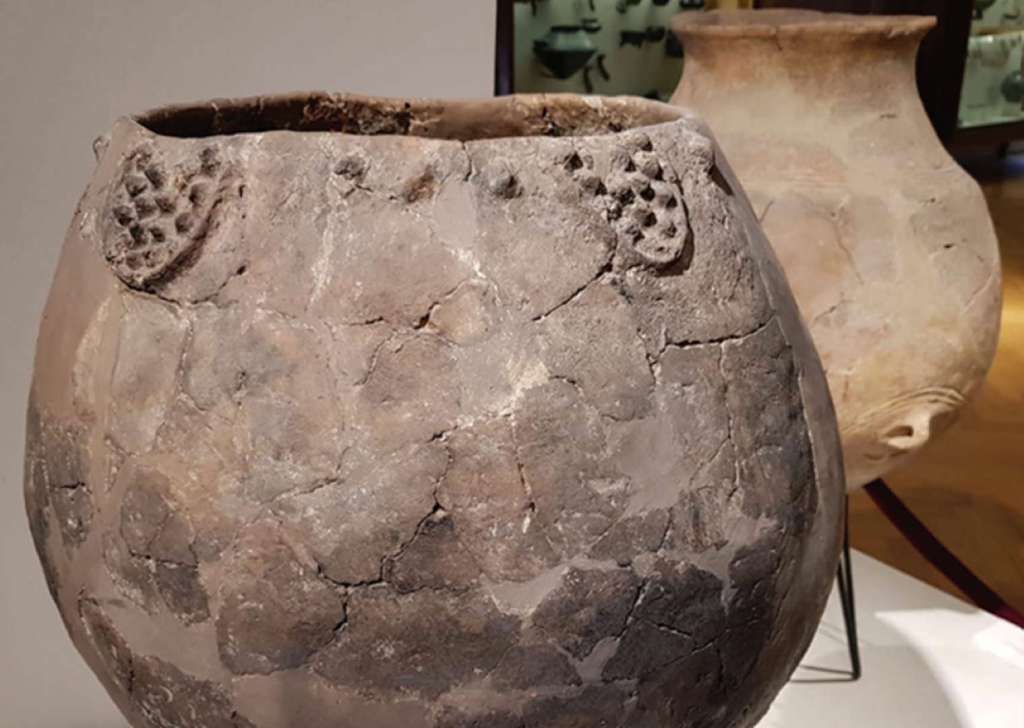
Scrolling through my Microsoft browser I found a Newsweek article saying that archeologists have “revealed how Roman wine would have looked, smelled and tasted around 2,000 years ago.” While Roman wine consumption is depicted in ancient texts and drawings, how it was produced has been a mystery. Researchers Dimitri Van Limbergen, Ghent University, and Paulina Komar, University of Warsaw, compared ancient wine vessels used to make and store wine with containers used in making wine today. Their published findings in the journal Antiquity said Roman wine likely tasted slightly spicy and had aromas like toasted bread and walnuts. Van Limbergen told Newsweek, “By using the techniques we describe in our paper, the Romans were able to make much better, more tasty and much more stable wines than is commonly assumed.” This is the first time the role of vessels in Roman winemaking has been examined. Today most wine is made in large metal vats which allows the wine to be mass produced. The Roman dolia are comparable to qvevri, which are pots used to create wine in Georgia, and the two processes would likely have been similar.
When I went online, I found a dolium (plural: dolia) is a large, fired clay vase or vessel used in ancient Rome for storage or transportation of goods. The dolium was oval, with a wide mouth and rim, and was much larger than the similar pottery amphora. The dolium had no neck or handles and could measure up to six feet (1.8 m) in height. Some dolia have a rounded body tapering into a flat bottom, but more frequently, dolia have a rounded bottom. There was no standard size for dolia, and some sources mention dolia holding up to 50 quadrantals, equivalent to 346.5 US gallons (1,311.6 liters). The dolia were either buried halfway in the ground or left standing under a roof. Unlike amphora, the dolium was not regarded as an accessory and sold along with the wine that it contained but were fixed facilities whose purpose was the permanent storage of goods.
According to the study, the narrow base of the dolia used in the fermentation process allows solids from the grapes to separate from the wine. Unlike the red and white wine consumed today, this fermentation process gave the liquid an amber or orange color. The spicy flavor was created by burying the dolia into the ground allowing the pH and temperature to be controlled as the wine aged and giving the yeasts the opportunity to produce an extremely powerful aroma compound known as sotolon. Big wine cellars filled with dolia were large investments and their presence attests to the economic prosperity in the Roman world. Individual households could afford one dolium and winemaking was probably part of daily life in those families, much like in Georgia today where many households make their own wine and keep it next to the kitchen or in a cellar inside a qvevri. The research gives archeologists new details about how Romans lived. It is clear the Romans knew different techniques for creating wine and could vary how it tasted and smelled by altering the shape of the dolia and how they were stored.
THOUGHTS: I had a friend in High School whose parents made wine and that gave me the idea to make my own. I decided to make dandelion wine. The recipe starts with a quart of yellow dandelion blossoms plucked from the green portions of the flower. I spent weeks harvesting dandelions to get enough flowers. I placed the flowers in boiling water for 4 minutes and then discarded the blossoms. Next came the sugar, orange, lemon, and yeast. I did not have a fermentor (big problem) but placed the liquid in a glass jar that I placed under the kitchen sink. In three weeks, I had my wine. Unlike the Romans, it tasted really bad. That was the last time I have made wine. Maybe if I tried again with dolia . . . Having the right equipment and following directions is often the key to success. Act for all. Change is coming and it starts with you.
 A travelers odyssey