
January 26, 2024
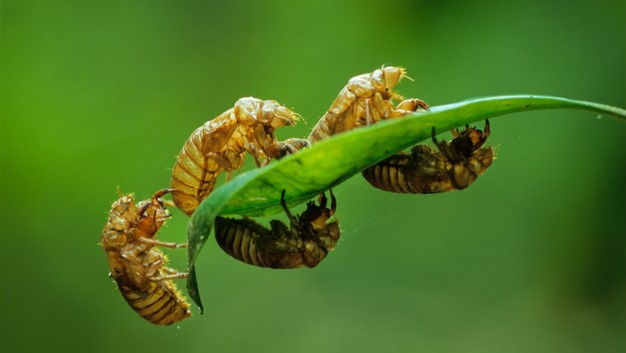
Several years ago (2021) I blogged on how a pizza restaurant in Ohio was using the surplus of Brood X cicadas to offer a Spicy Thai Cicada Pie. At the time I mentioned cicadas living in the southern states (and Arkansas) are defined as Brood XIX. This is a 13-year emerging Brood prepared to emerge in April 2024. While I am still skeptical of trying a cicada pie, the emergence is going to be momentous as two different broods with trillions of periodical cicadas emerge simultaneously this year. The two broods represent 13-year and 17-year periodical cicadas which will reach their mating cycle at the same time. While they will emerge at the same time, most will still be geographically separated. Brood XIX (13 year cycle) will emerge in 14 states across America’s Midwest and Southeast, while Brood XIII (17 year cycle) will appear in five states in the Midwest. The last time this phenomenon occurred was 221 years ago (1803) and it will not happen again until 2245. Only Illinois and Indiana will experience the double emergence of these cicada broods.
When I went online, I found cicadas are a superfamily (Cicadoidea) of insects in the order Hemiptera (true bugs). The superfamily is divided into two families, the Tettigarctidae with two species in Australia, and the Cicadidae with more than 3,000 species described from around the world. One exclusively North American genus, Magicicada (the periodical cicadas), spend most of their lives as underground nymphs then emerge in predictable intervals of 13 or 17 years, depending on the species and the location. The cicada species that emerge together in the same year are collectively called a brood and are labeled with Roman numerals. Broods are complex groups of different species that emerge in different parts of the country at the same time. Across the US, there are 12 broods of 17-year cicada, and three broods of 13-year cicada. Why the broods emerge together is still the subject of scientific debate. Some hypothesize their life cycles are an evolutionary response for avoiding predators’ life cycles and a way to protect against brood hybridization.
Of the more than 3,390 species of cicada around the world, only seven in North America are known to be periodical. The rest emerge annually. Many of the periodical cicadas can interbreed and produce hybrids. Where the broods cross over this year, three species of Brood XIII cicadas will have the opportunity to interbreed with four species of Brood XIX cicadas. When periodical cicadas emerge, they bring great benefits to the environment. The nymphs aerate the soil as they tunnel to the surface, improving water infiltration and encouraging root growth. When they die and decompose, they add nutrients to the soil. The cicadas’ behaviors are changing. They are emerging earlier in the spring than they did a century ago and there have been more broods emerging four years ahead of schedule according to Gene Kristky, entomologist at Mount St. Joseph University. Destruction of forests also threatens populations. In 1954 the entirety of Brood XI went extinct because of forest clearing for agriculture and urbanization. Michael Raupp, an entomologist at the University of Maryland, says the emergence is like nature putting on a show, “It is a wicked cool and interesting event that happens nowhere else on Earth.”
THOUGHTS: The assorted species of Magicicada cicada have earned themselves a world-wide following due to their emergence in tremendous numbers, but not everyone enjoys it. Homeowners complain about the mess of tiny corpses on their lawns and driveways, and they can produce calls of up to 75 decibels (think vacuum cleaner or hair dryer). A cicada does not bite, sting, or carry diseases. Neither are they effectively controlled by pesticides. Maybe eating them on pizza is the best way to deal with them after all (?). Act for all. Change is coming and it starts with you.
 A travelers odyssey