
February 05, 2024
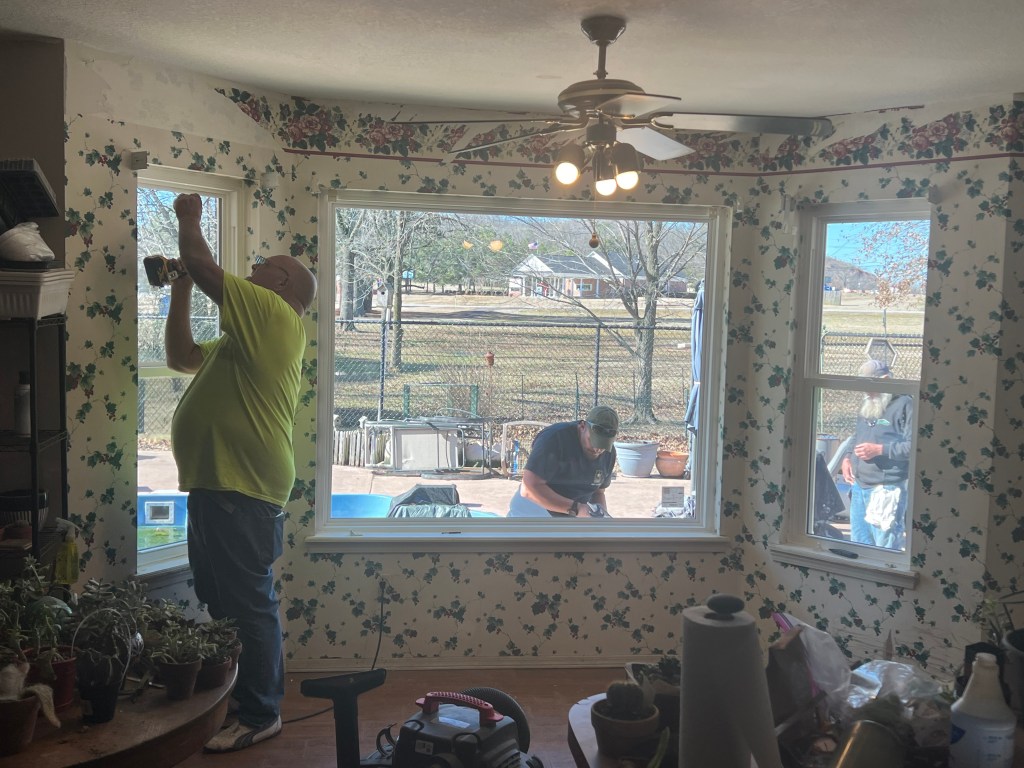
We finally got our bay window installed at our house. This process began last October when we checked the cost for installation of the windows on our screened porch. It was just starting to get cold, and I knew I needed to either get windows or put the “greenhouse” plastic up for another winter. The cost seemed reasonable, so we decided to also replace the kitchen window while we were at it. The four weeks until installation we were promised drug into 2-1/2 months before the porch window system was installed. When we asked about the kitchen windows, we were told they were “not on the truck” (contractor for, “Oops! I forgot to order them”). Now nearly a month since the porch was installed, the kitchen bay window was replaced this morning.
When I went online, I found a bay window is a window space projecting outward from the main walls of a building and forming a bay in a room. This is a generic term for all protruding window constructions, regardless of whether they are curved or angular, or run over one or multiple stories. The bay typically consists of a central windowpane (fixed sash) flanked by two or more smaller (casement or double-hung) windows. A bay window can make a room appear larger and provide views of the outside which would be unavailable with an ordinary flat window. This creates a panoramic view of the outside, allows more natural light to enter the room, and provides additional space within the room. Bay windows are often designed to extend beyond the exterior wall, forming a small nook or seating area inside, which can be used for various purposes such as reading, display, or simply enjoying the view. Bay windows in residential buildings are often found in living rooms, dining areas (like our breakfast nook), or bedrooms. Bay windows are also found in commercial and public structures.
Melissa had our house built in a new subdivision in 1995. It is not surprising that 29 years later there are things that have begun to wear out. Since moving back to Arkansas, we have had to replace the roof and the heating and cooling system (HVAC). The bay window in the breakfast nook is another example of age. The original window had a large center window with a double-hung window on either side and all three contained window grills (fake panes). These were energy efficient (at the time) double pane windows, but over the years the moisture seal had been compromised. That meant temperature changes would cause condensation inside the glass. The new bay window has a large picture window in the center, flanked by double-hung windows (and no grills). Both the porch and the bay windows meet new higher standards for energy efficiency. Whether or not this helps our energy costs, the view without the grill frames makes an incredible difference in our view.
THOUGHTS: While we are far short of creating a green building, the improvements we have made are bringing us closer to being environmentally responsible. Green building refers to the maximum saving of resources, including energy saving, land saving, water saving, and material saving during the whole life cycle of the building. This is also protecting the environment, reducing pollution, and providing people with healthy, comfortable, and efficient use of space in harmony with nature. The architect Frank Lloyd Wright created buildings that succeed aesthetically but ultimately ended up failing to keep out the weather (leaky roofs), and this was true for other innovative architects. It has been said that while the use of cutting-edge materials in new forms leads to progress, it also invites trouble. Pushing the envelope always entails risk, whether it is architecture, technology, or changing societal norms. That does not imply we should stop striving for innovative change, only that we take time to learn to adapt to the changes. Act for all. Change is coming and it starts with you.
 A travelers odyssey