
February 11, 2024
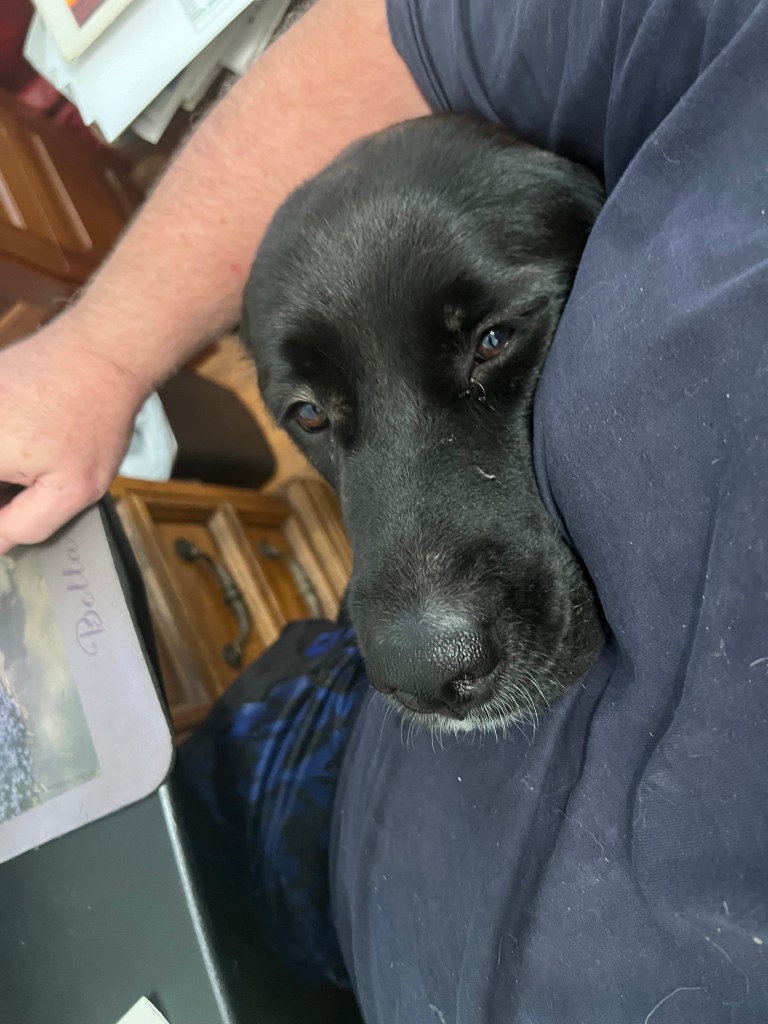
Yesterday Melissa let the dogs into the yard and came in to my office to talk. After leaving I heard her call, “I can’t find the dogs!” They were in the fenced yard and now were gone. Since the gate was closed and locked, we could not figure out what had happened. I looked through the house to make sure they were not just hiding, and then went to look at the fence. Although the gate was locked, the latch had been pushed slightly to the side. Zena had bulled her way out the bottom of the gate. I would not have believed such a big dog could get through such a small opening if I had not seen her squirm under the fence at the dog park. We called for both dogs with no response, then got in the car to cruise the neighborhood. It was the kids’ version of The Great Escape.
When I went online, it said losing your dog can be a terrifying experience (it was), especially if they ran away on purpose. If your dog runs away repeatedly, it is important to understand why and find a way to stop it. The first step to correcting this behavior problem is to find why they ran away. There are four main reasons your dog will escape. The number one reason is dogs get bored. If left alone with nothing to do, they may escape and explore the neighborhood. You resolve this by supervising your dog, giving them proper exercise, and mental stimulation. Another reason is your dog may be looking for a mate. Unaltered males are mainly guilty of wandering the neighborhood looking for love, but neutering your dog or getting a female will not necessarily prevent your dog from escape. Dogs will also escape the yard to chase potential prey, like a rabbit or a squirrel. This is especially common in prey-driven breeds, but most dogs instinctively enjoy chasing small animals. Again, supervising your dog, giving them something better to do, and improving your fencing can all help prevent your dog’s escape. Finally, dogs may try to escape if they are scared. This is especially common during summer thunderstorms or fireworks when the loud booms can send them into a panicked frenzy. Keep your dog inside and do your best to soothe their fears of loud noises with calming treats, white noise, and pressure wraps.
Pressure wraps are designed to help dogs deal with their anxiety over fireworks and loud noises. They work along the same principle of swaddling an infant to calm its’ fears. There are existing theories to explain the effectiveness of maintained body pressure in treating a dog’s noise anxiety, but there are not yet any existing studies specifically examining this treatment in this specific context. The wrap is the same mechanism that allows pressure to treat forms of anxiety in humans and other animals. One example of successful treatment of anxiety through constant body pressure applied by a wrap is Temple Grandin’s “hug machine”. Grandin saw how cattle would calm down while being put into a squeeze chute to receive their shots and developed a machine based on the same principle to treat the anxiety resulting from her own autism. The “hug machines” function by maintaining a constant pressure on the body, leading to a reduction in anxiety. It seems to work.
THOUGHTS: We looked for the kids for 20 minutes and drove all over the neighborhood. One man washing his car said he had seen them go by but did not know where they went. We decided to make one more trip down the road into the next subdivision and saw them loping along on their way back home. I drove up, opened the door, and they jumped right in. I got a small bike chain to wrap the bottom of the gate. My dogs are much like me when I was a boy. I was good most of the time, but the exceptions came when I was not supervised and bored. As Benjamine Franklin said, “Idle hands are the devil’s playthings.” That is why afterschool activities and programs like Big Brothers and Big Sisters are so important. Act for all. Change is coming and it starts with you.
 A travelers odyssey