
February 17, 2024
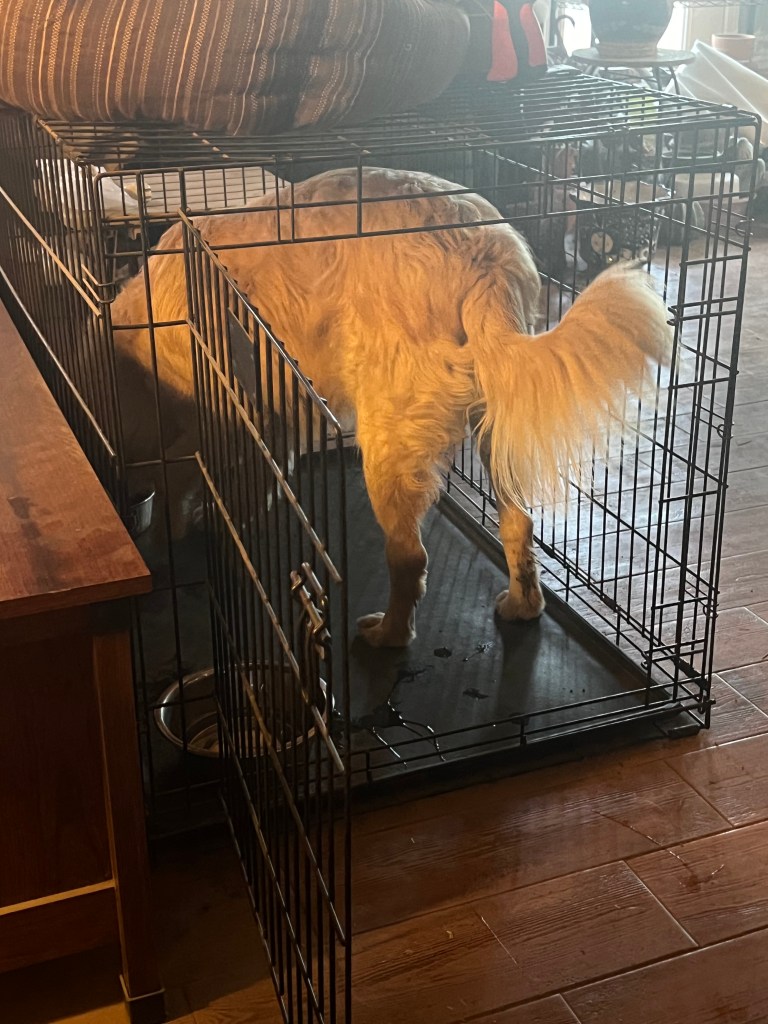
This past week I witnessed two separate behaviors that reminded me how dogs can be like humans. The first was as I prepared to feed the kids. We have a weekly Sib Call, but I had canceled this week as we planned to attend the Ash Wednesday service. I told the kids it was time to eat and started preparations for their supper. My brother missed the cancel text and thought he was late for the online chat, and instead gave me a call. I stopped preparing the kids supper and sat in my chair to talk. While Loki laid on their bed staring at me, Zena did not seem happy and paced back and forth in front of me. Our conversation went on for a half hour as Zena became more perturbed. She had finally had enough and walked over and stomped on my foot to get my attention (this was a first). She then seemed upset as she walked off a little way and stared at me. While this may have been me attributing human action (anthropomorphic) to her response, it worked. I hung up and fed the dogs.
When I went online, I found a Newsweek interview of Kait Hembree, a vet technician, saying your dog does become upset and will let you know it. If your dog has a “negative association” or is upset with you “it will be clear by their body language.” This comes as no surprise as dogs are incredibly perceptive and sensitive beings that can sense emotions and read the facial expressions of humans. Research shows dogs combine hearing and sight to correspond happy and angry human faces with happy and angry vocalizations, according to Stephanie Gibeault, a certified personal dog trainer, in a 2018 article for the American Kennel Club. A study in September 2021 published in Scientific Reports also found dogs can “distinguish intentional actions from unintentional behavior”. This body language might entail moving away from you, being more aloof, or avoiding your gaze when you look in their direction. It could also mean sitting in another location if you come near them or holding their tail low or even between their legs. “They might even go as far as snarling or growling at you,” Hembree added. If you notice these signs, it’s important to remember these are just signals letting you know your dog needs space. You should probably give it to them.
The second action came as Loki began eating his nightly kibble in segments. We feed the kids at the same time but in separate rooms. When Loki was younger, he would wolf down his food and then go into the kitchen to eat anything that was still in Zena’s bowl. This made Zena upset so we had to keep them apart. As Loki matured, we no longer closed the kennel door, but we still fed him in it. Zena will walk into the living room (where the kennel is) and check how much food is left in Loki’s bowl. Only after asserting Loki is still eating would Zena return to her bowl for the rest of her food. This last week Loki has only been eating half of his food and then he checks out how Zena is doing before going to lay on the bed. It is only after Zena has finished and had come into the living room that Loki would go back into his kennel and start eating again. While Zena drinks from Loki’s water bowl, she will not go into the kennel. They are both highly food motivated, and this seemed to be Loki’s way of letting Zena know he had food, and she did not.
THOUGHTS: Saving food was a tactic used by my younger brother and I when we traveled in the car. We did not eat out often, except when traveling to my grandparent’s house. Dad would stop about halfway, and we would get hamburgers, fries, and a drink. We sat in the car at the drive-in and ate our meal. When everyone was done, dad would continue the drive. However, my brother or I would try to hide a partial bag of fries to be produced in front of the other during the trip. This was always a waiting game. You had to sneak the bag into hiding and then weigh the cost of eating cold fries. I have found that making others upset over what you have can bring unwanted consequences. Now I eat my fries before they get cold. Act for all. Change is coming and it starts with you.
 A travelers odyssey