
February 21, 2024
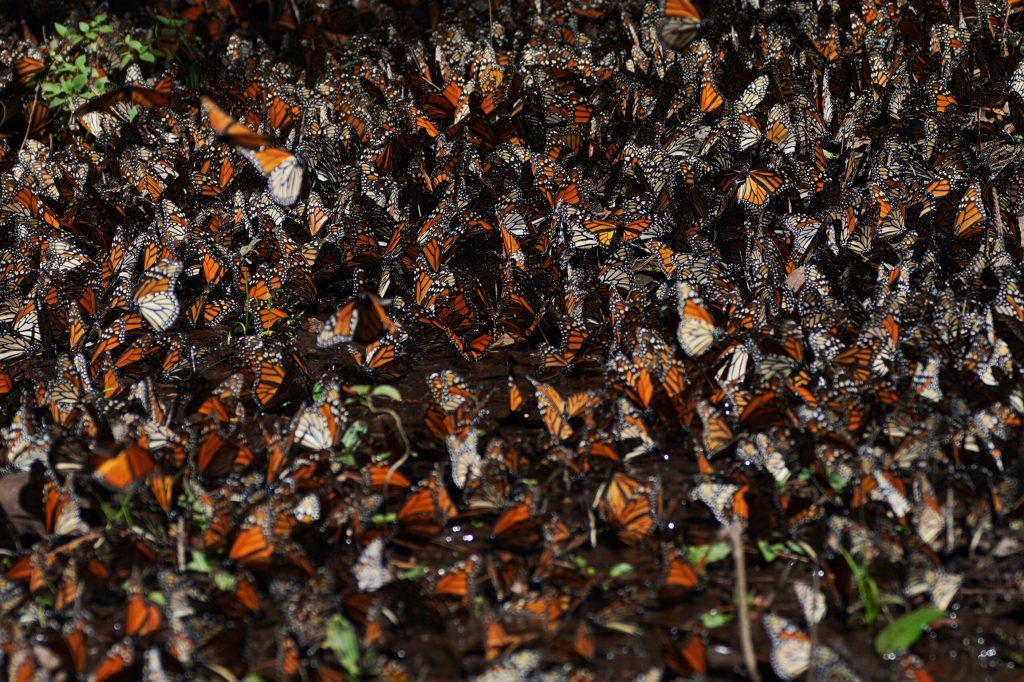
The front page of today’s local newspaper carried a USA Today article on how last year’s drought has affected butterflies. This year’s eastern monarch butterfly population wintering in Mexico is the second smallest on record. The survey taken by the World Wildlife Foundation measures the area they cover in their winter grounds rather than a true census. This year’s estimate found the eastern monarch population only took up 2.2 acres (8903 m2) or 59% less than during the 2022-2023 season. To put 2.2 acres in perspective, it is less than two football fields. The lowest footprint occurred in the 2013-2014 season with 1.7 acres (6879.6 m2) covered. This information has just been released in an article sponsored by Okies for Monarchs, an education and outreach initiative to raise awareness of monarch butterflies and increase monarch habitat in Oklahoma. Oklahoma represents critical habitat along the flyway from Wisconsin to Mexico.
When I went online, I found the monarch butterfly (Danaus plexippus) is a milkweed butterfly (subfamily Danainae) in the family Nymphalidae. The monarch is regionally known by other names, including milkweed, common tiger, wanderer, and black-veined brown. The species is one of the most familiar North American butterflies and an iconic pollinator. Monarch wings feature an easily recognizable black, orange, and white pattern, with a wingspan of 3.5 to 4.0 inches (8.9 to 10.2 cm). The eastern North American monarch population is notable for its annual southward migration in late-summer or autumn from the northern and central US and southern Canada to Florida and Mexico. During the fall migration, monarchs cover up to 3000 miles (4,828 km) which is repeated with a multigenerational return north in the spring. The western North American population of monarchs west of the Rocky Mountains generally migrates to sites in southern California, but individuals have also been found overwintering in Mexican sites.
Monarch populations are extremely sensitive to high heat and drought, and both are becoming more prevalent as the climate continues to change. The major contributing factor for the species decline is loss of habitat. Even though the annual survey is taken in Mexico, the loss of habitat affects the monarch all along the migration route (hence Okies for Monarchs). Karen Oberhauser, founder and director of the Monarch Larva Monitoring Project in Wisconsin, says, “We need habitat everywhere -— where they breed, where they migrate and where they winter.” Oberhauser said. “But right now, the biggest correlation with monarch numbers is the amount of breeding habitat that’s been lost up here (Wisconsin).” Last year severe drought covered much of the US, and this makes milkweed (genus, Asclepias) less nutritious. The monarch depends on milkweed to lay their eggs on and to eat. Oberhauser said conservation efforts to build habitat and restore breeding grounds will be key to preserving the monarch population, even as climate change makes extreme weather more likely.
THOUGHTS: I mentioned several years ago that as director of a rural camp I tried to improve habitat along the monarch flyway by transplanting milkweed plants out of mown areas and into an area where I had seen the butterflies congregate. While the transplant did not work (drought), it was worth a try. Restoration of critical habitat is essential for all endangered species. In February 2015, US Fish and Wildlife Service reported nearly a billion monarchs had vanished from overwintering sites since 1990 due in part to a loss of milkweed caused by herbicides. Some may argue it is just a butterfly, but that ignores the monarch’s role as a prolific pollinator. We might say if the monarch cannot eat, we will not be far behind. Act for all. Change is coming and it starts with you.
 A travelers odyssey