
February 22, 2024
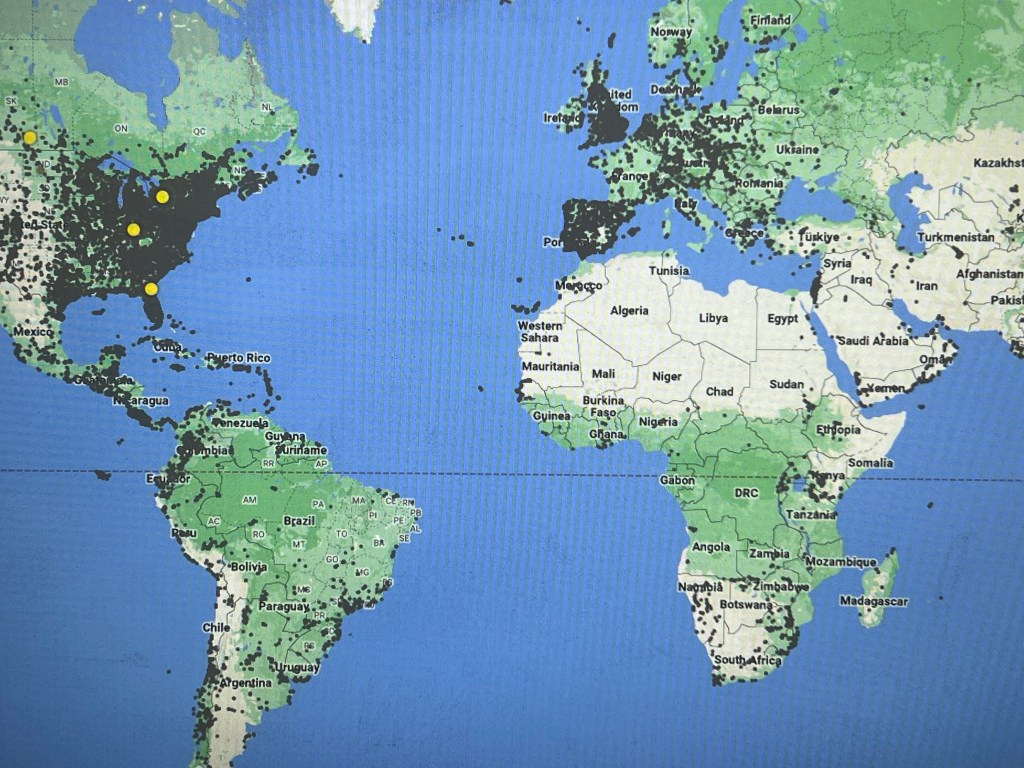
I cannot believe it. I missed this year’s Great Backyard Bird Count (GBBC). I found out about this event from my mom in 2021. She had come across an article in her newspaper saying the weekend was approaching. With her heads up I was able to find the links that lead me to the Cornell Labs eBird site. Since then, I have been participating in the weekend and submitting lists of the birds I have spotted in my backyard feeders. I submitted one list in 2021, three in 2022, and two in 2023. These 15-minute snapshots (or longer) are short enough to not distract from other activities yet still provide an accumulative look at the health of bird populations in my area (Arkansas, US). The participants to the GBBC extend around the world, meaning bird populations in other areas are also tracked and recorded. The lists are combined and submitted to help researchers at the National Audubon Society, Cornell Lab of Ornithology, and Birds Canada learn more about how birds are doing, and how to protect them and their environments. The 27th annual GBBC was last Friday to Monday (16th to 19th).
When I went online, I found the Great Backyard Bird Count (GBBC) was launched in 1998 by the Cornell Lab of Ornithology and the National Audubon Society. The count was the first online participatory-science project, or called community science or citizen science, to collect data on wild birds and display the results in near real time. Birds Canada joined the project in 2009 to expand capacity to support participation in Canada. The GBBC became a global project in 2013 when it began entering data into eBird, the world’s largest biodiversity-related participatory science project. In 2015 nearly half of known bird species worldwide were reported. The data collected annually during the event is subject to verification by experts to overcome potential shortcomings in the abilities of amateur participants (i.e., misidentification). The tally as of today is a total of 294,900 completed checklists from 253 subregions across the globe. A total of 7,834 species were observed. The Clements Checklist of Birds of the World identifies approximately 10,906 bird species globally. Species observed in this year’s count represent 71.8% of the world’s birds.
This year’s GBBC checklists come from 209 of the 253 subregions. There were 323 checklists reporting 30 species from Antarctica. The US (165,623), India (51,352), and Canada (24,546) submitted the most lists. Columbia (1348), Ecuador (1118), and India (1030), and Brazil (1000) reported the most species. This is not surprising due to the diversity found in their tropical forests. Neoh Hor Kee of Malasia observed the greatest number of species (409) with only 23 completed checklists. Second place went to Juan Lopez (a bird tour guide) of Columbia who observed 295 species with 13 checklists from around the world. In the US, Eric Piage completed the most checklists (45) and reported the greatest diversity of species (161). The checklists are still arriving and can be submitted until March 1st.
THOUGHTS: While I was chastising myself for not participating in the GBBC this year, I found I was not the only one who was lax. I was not alone as no checklists had been submitted from 44 subregions, and one checklist had reported no birds. I have had times when I sat at my window watching the feeders and not seen a bird, and it is always disappointing. The highest bird counts come from areas where birds thrive, while the lack of checklists are generally associated with desert environments. There were 95 checklists with 93 species submitted from 14 of the 27 provinces of Ukraine and 200 checklists with 94 species submitted from 19 of the 83 provinces of Russia. Even in strife there is common ground. Act for all. Change is coming and it starts with you.
 A travelers odyssey