
March 11, 2024
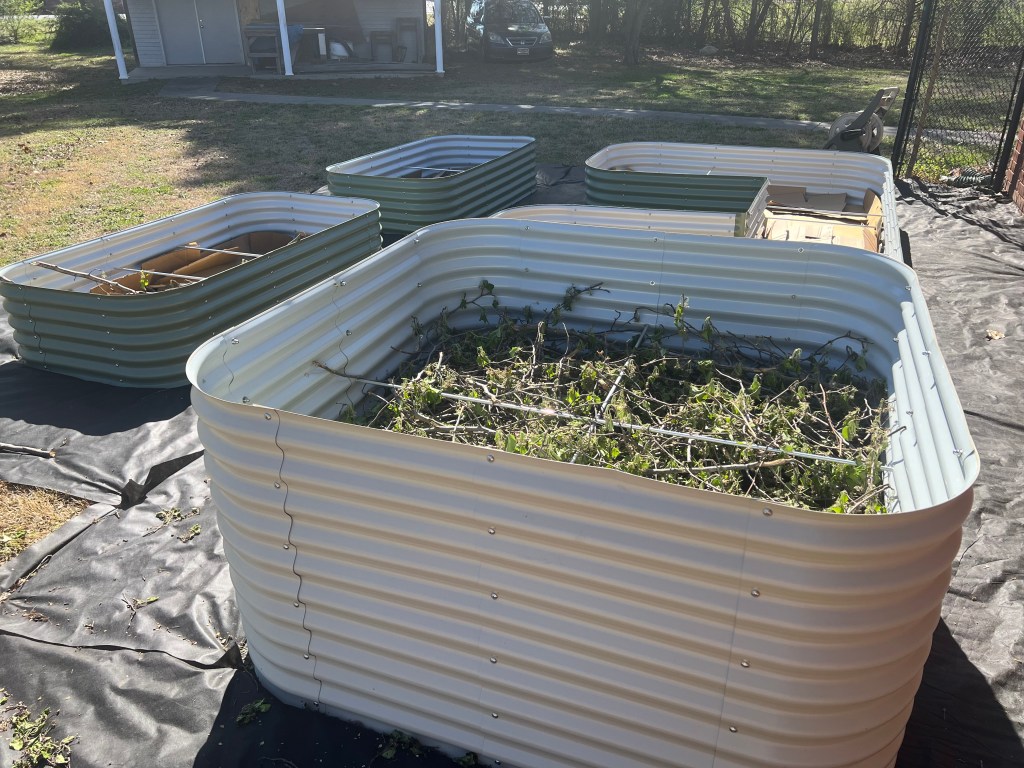
I mentioned Melissa gave me metal raised beds (along with 100’s of seeds) for Christmas. I planned on putting the beds on the south side of the house where we get the most sun. Melissa had grown a vegetable garden there and knew it was a viable location. This would also keep Loki from having direct contact with the beds (he is a digger) and being off the ground would help discourage the critters that have feasted on the melons I tried to grow in my ground beds over the last three years. I took January to research what to grow in the beds and the best way to fill them. The simple answer was fill them with compost and place several inches of potting soil on top. The problem was three of the beds hold around 3 yards3 (2.3 m3) each, and the larger bed is closer to 5 yards3 (3.8 m3). That is a lot of compost. As I checked online about filling raised beds, I kept coming across a less expensive method that used wood and yard debris already on hand and was also said to be a better long term method for your vegetables. This layered approach to filling a raised bed is called hügelkultur.
When I looked online, I found Hügelkultur (German, “mound culture”) is a centuries-old technique of creating mounds of raised garden beds made up of layers of compostable material you already have. That includes tree limbs, grass clippings, leaf litter, and all sorts of garden debris. The mounds can sit directly on the surface of the garden or be contained in a raised bed. A hügelkultur mound consists of layers stacked on top of each other. The bottom layer is made by placing large chunks of wood on the ground and gradually adding smaller branches and debris as you stack the pile. Next comes a nitrogen-rich layer of leaves, grass clippings (if the lawn was not sprayed), kitchen scraps, manure, or other organic matter to fill the spaces at the top of the pile. The third layer adds less desirable subsoil to fill in the holes left in the pile, then 3 to 4 inches (7.5 to 10 cm) of compost, and finally 1 to 2 inches (2.5 to 5 cm) of topsoil. The different layers break down over time and add nutrients to your soil. As the wood layer in the base of the bed rots over time it provides spaces for water and nutrients, keeping your garden productive, self-watering, and full of nutrient-rich soil for your plants. Hügelkultur originated in Germany but is catching on in gardens everywhere.
While I do not have a lot of wood in my suburban yard, I do have several trees that need to be trimmed. During the pre-Christmas sale season, I found a combination cordless electric leaf-blower and grass trimer along with a cordless chain saw that all use the same 40 volt battery. These will remove part of my carbon footprint while I take care of my lawn needs. Everything I read advised against major pruning on my Bradford pear (Pyrus calleryana) until the late winter or early spring as the tree was starting to wake up. This let me say I was waiting (not procrastinating) to do the work of trimming my tree and using the wood to fill my raised beds via hügelkultur. I started putting the four beds together in February, laid down the ground cloth for the spaces between the beds early in March, and this week began to trim my trees and fill my beds. I have more trimming and still need to fill two more beds with debris. Then comes the compost and soil.
THOUGHTS: Using hügelkultur to fill my raised beds sounded like a good idea when I began, and I still think it will be in the long run. While none of these tasks have been hard, all of them have been tiring and time-consuming. These tasks all must be done in stages that are dependent on each other. I need to trim the trees to get the wood for my beds to add compost before I can plant the seeds that have been under my grow lights. Every subsistence agriculturalist goes through a similar progression to plant their crops every year. Then it is up to the weather to get a good result. This is the lesson I hoped to gain from my experience, even knowing I have a safety net (market). Act for all. Change is coming and it starts with you.
 A travelers odyssey