
May 02, 2024
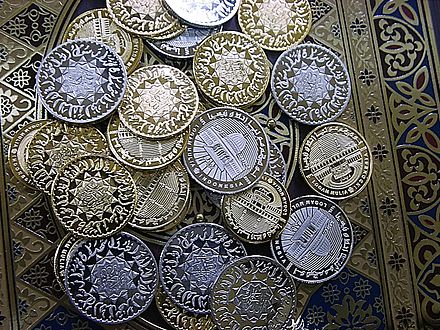
On the back side of the front section of today’s local newspaper was an article on Islamic charity used to address climate concerns. The charity comes from Zakāh, or the third of the five pillars of Islam. Zakāh means “to purify”, “to develop”, and “cause to grow”, and is the amount of money every adult Muslim (male or female) who is “mentally stable, free, and financially able”, has to pay to support the destitute, the working poor, those unable to pay off debts, stranded travelers, and others in need. Religious leaders in Bangladesh are trying to harness the generosity of Muslims around the world to help fight climate change. Bangladesh alone has the potential to raise close to US$9.8 billion. The country needs about US$9 billion a year to support climate adaptation. Most provide zakāh by handing out clothes to family members or the neighborhood poor which has limited long-term impact on their lives. Zakir H Khan, chief executive of Change Initiative, has studied the potential for Islamic charity to pool resources in order “to transform the lives of climate survivors.”
When I looked online, I found zakāh (also alms) is a religious form to donate money, food, or other material goods to people living in poverty and is often considered an act of charity. In Buddhism, this is called “dāna” and it is one of the three elements of the path of practice formulated by Buddha for laypeople. The giving of alms is the beginning of one’s journey to Nirvana. In Judaism, tzedakah (literally “righteousness” but commonly “charity”), refers to the religious obligation to do what is right and just. Tzedakah, prayer, and repentance, are regarded as ameliorating bad acts. Christianity says giving alms is viewed as an act of charity and an expression of love and care for the poor and was understood as an act of love for God. Nearly all Christian denominations have money donated to support financial needs and ministry to the less fortunate. In Hinduism, dāna is an ancient concept of alms dating to the Vedic period (oldest) of Hinduism. Dāna is defined as any act of giving what is yours to a recipient without expecting any return. While dāna is typically given to one person or family, Hinduism also considers charity or giving aimed at public benefit, which is called utsarga. This giving aims at larger projects such as building a rest house, school, investing in drinking water or an irrigation well, planting trees, and building care facilities, among others.
The article identified Wateraid as an international nongovernmental organization which uses the latter concept for zakāh to focus on water, sanitation, and hygiene and uses Islamic charitable donations to help salinity-affected communities in the Global South that have large Muslim populations such as Bangladesh, Pakistan, and Mali. Wateraid focuses on girls and young women whose needs are often neglected. Religious scholars agree on the use of zakāh to combat climate change. This year Indonesia’s council of religious scholars issued rulings on how to use these funds to build water facilities or endow trusts with land or money to plant forests. While there have been debates on the legitimacy of its use, scholars and financial experts are joining on the acceptability of the practice. Zakāh can only be used to help poor Muslims, but other forms of voluntary alms (sadaqua) can support people of any faith. Technology is going to be the key for every stage of faith-based financing and organizations are raising donations online.
THOUGHTS: All of the world’s major religions extoll the need to provide aid to the poor and the underserved. Whether it is called zakāh, dāna, tzedakah, alms, or utsarga, faith-based giving has the potential to make a huge difference in fighting the effects of climate change. Those at the lower end of the economic spectrum do not have the capacity to mitigate these effects on their own. Call it what you will, donations are needed to affect change. Act for all. Change is coming and it starts with you.
 A travelers odyssey