
May 06, 2024
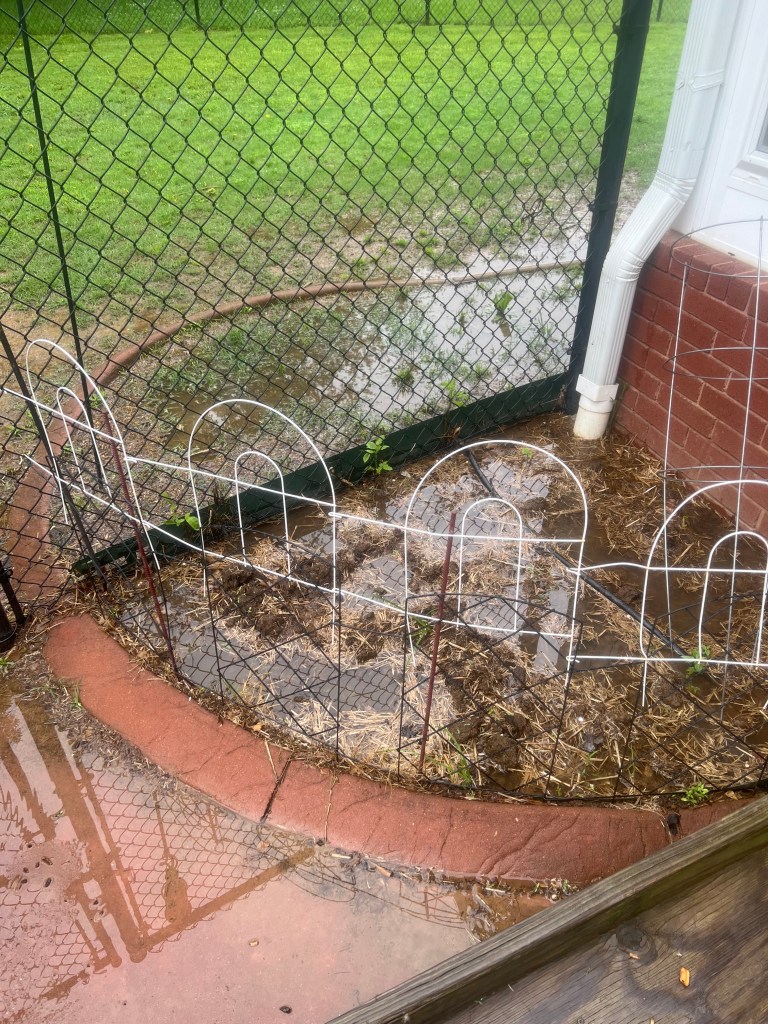
I have grown potatoes for the last two years. The first year I only had one bed (five plants) but still harvested around 40 potatoes of various sizes. Last year I put in the second bed with five more plants (10 total) with great expectations. I also added Yukon Gold to the Russet I grew the first year. I had cleaned out a spot on each side of our patio door and had caged and mulched them with straw. For whatever reason, they all grew great tops, but the potatoes were either mushy or nonexistent. I was determined to have a good potato crop this year and prepared my beds yearly. I weeded the beds, turned over the top 6 inches (15 cm) of soil, and mixed a bag of compost and manure in each of the beds. Loki had been getting into the beds, so I fenced them (and then added a higher fence) to try and keep him out. The problem was, I could not find any seed potatoes even though I had been looking at outlets near me for several months. This might have turned out to be a good thing as the weekend rain completely submerged both beds in water. Today I was determined to find enough seed potatoes to plant 10 hills in those (now) drained beds. My preference is the yellow flesh, taste, and mash-ability of the Yukon Gold.
When I looked online, I found the Yukon Gold (Solanum tuberosumis) a large cultivar of potato most distinctly characterized by its thin, smooth, eye-free skin and yellow-tinged flesh. This potato was developed in the 1960’s by Garnet Johnston in Guelph, Ontario, Canada, with the help of Geoff Rowberry at the University of Guelph. The official cross bred strain was made in 1966 and ‘Yukon Gold’ was released onto the market in 1980. The early name for the new cultivar was “Yukon”, for the Yukon River involved in the Klondike Gold Rush in Northern Canada. “Gold” was later added to describe the potatoes’ color and appearance. Johnston developed and brought 15 other potato varieties to market while at the Ontario Agriculture College lab. A University publication states that “Yukon Gold was the first Canadian-bred potato variety to be promoted, packaged and marketed with its name right on the pack”. The cultivar is resistant to bruising and does not sprout a lot, so it has good dormancy. If potatoes are stored correctly, they will not lose a lot of moisture compared to other cultivars. This seems like a good selection for my sustainable garden.
I checked online one last time and was again stymied in my potato quest. There were several locations that had potatoes in a town 25 miles (40 km) away, but all the local outlets listed them “sold out”. I decided to make one last try at the co-op before I drove into town. That’s when I saw two bushel baskets with signs saying, “Close Out”. One was an unidentified cultivar, and the other was the Yukon Gold I was seeking. I selected ten of the smaller potatoes with prominent budding eyes and took the bag inside to the register. I mentioned how I had been looking for seed potatoes and was not finding any. The man told me they had gotten 2 tons (0.002 kt) in January, and these were the last of them. When he saw how few potatoes were in my sack, he gave them to me for free and even told me to get more if I wanted. I went back to the basket and picked out a couple more.
THOUGHTS: While Yukon Gold are good storage potatoes, I also found they are susceptible to seed decay, blackleg, early blight, late blight, early dying, potato virus (PVY), soft rot, dry rot, leak, pink rot, silver scurf, and black scurf. I will have to see if they were a good choice for sustainability. While most plant seed potatoes in late winter (I could not find them), they can also be grown from seeds harvested from the potato flowers. If you use seeds you need to start them indoors and then transplant them once the temps warm up. If you use potatoes, you cannot eat all of last years’ crop. I am not sure I would be good at either. I am still on that learning curve. Act for all. Change is coming and it starts with you.
 A travelers odyssey