
May 12, 2024
We were under a severe weather alert Friday night that predicted wind, rain, and hail. I did not think much about it as we had been under the same alert for the last several days and very little came from them (in our location). I mentioned when I went outside to check for damage the next morning there was little evidence of a sizeable rain, but the wind had blown around my tomatoes and feeders. After straightening the tomato cages and refilling the bird feeders I checked on the progress of the corn I had planted for my three sisters. At the front of the bed, I noticed a small blue eggshell that had already hatched. I assumed it had come from the Eastern Bluebirds (Sialia sialis) who had taken residence in the nesting box along the back patio fence as there had been quite a bit of activity (going in and out) lately. When I checked my bird chart it instead IDed the egg as from an American Robin (Turdus migratorius). I was not too surprised, as there have been a number of robins cruising the lawn for insects and worms and the trees along our property line provide ample cover for nesting. The bird egg must have hatched and then been blown out of the nest by the wind.
When I looked online, I found the approximately 10,000 bird species all lay a bird egg that comes in different shapes, sizes, and colors, and no two eggs are exactly alike. The average egg size is 2.2 inches (5.6 cm) long and 1.5 inches (3.8 cm) wide, but they can range from a pea-sized hummingbird egg to an ostrich (Struthio camelus) egg over 6 inches (15.25 cm) long. Most bird eggs are either white or a light creamy color, but some species lay vivid blue, green, brown, or brightly speckled eggs. The main elements of an egg are the shell, albumen (egg white), yolk, membranes, and chalazae (ropey strands that anchor the yolk). The hard shell is made of calcium carbonate and has tiny pores for air exchange. Egg incubation ranges from 11 to 80 days depending on the species as the embryo develops. Egg ID starts by noting the appearance of the egg, including the color, size, markings, texture, and shape. Next, note where the egg is found as different bird species nest in different habitats and locations. Identifying the habitat will also provide clues as birds nest in environments that meet their needs for food, shelter, climate, and protection. Once you have this information you can go to a field guide or reference to find egg images and descriptions that match the bird egg you want to identify. There are a number of good guides available, but I use the National Geographic Field Guide to the Birds of North America. Finally, ask an expert for help.
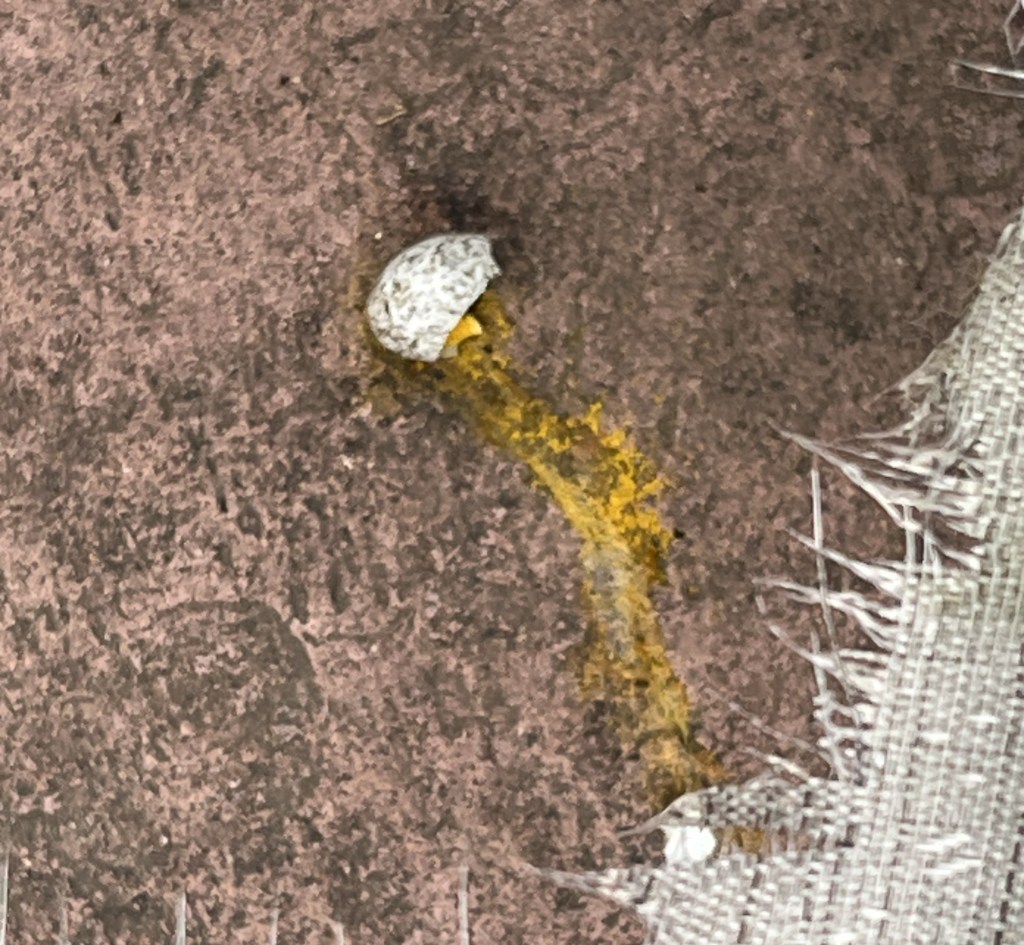
As I continued to check for damage, I found an unhatched (broken) egg under one of our lawn chairs. This egg had probably also blown out of the nest. While the half robin egg was basically intact, the white and brown speckled egg had impacted on the cement deck and broken. When I checked my bird chart it IDed the egg as from a Northern Cardinal (Cardinalis cardinalis). While I was saddened by the loss of the egg, cardinals are another one of the prolific birds that frequent my feeders. I have not noticed any nests in the tree line, but I admit I have not been looking. Identifying a bird egg is another item in a long list of things I need to do to become a competent birder.
THOUGHTS: While a bird egg of each species may be unique, that does not make it any easier for a novice (me) to identify. Like most skills this takes time studying field guides and observing details and habitats. During the Western Renaissance, the Humanists seemed to be masters of the sciences, art, architecture, and even religion. I tried this eclectic approach in graduate school and was booed down because I refused to “take a side”. If I did not agree with a specific philosophy or methodology (theirs), I was wrong. We seem to be employing a similar tact in our current relationships. It was the diversity employed by the humanists that sparked the modern era. Diversity generally creates a stronger outcome in science and relationships. Act for all. Change is coming and it starts with you.
 A travelers odyssey