
May 16, 2024
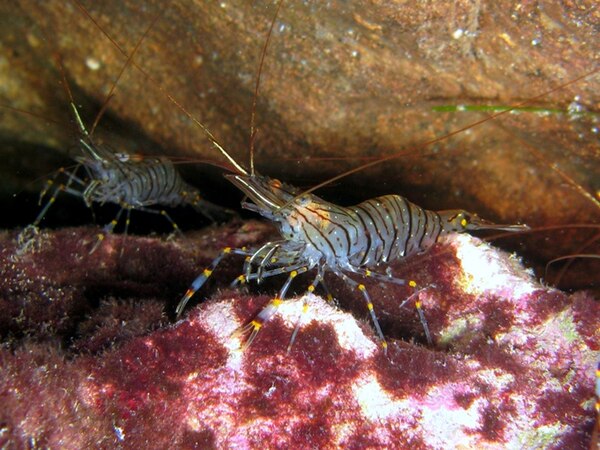
In today’s Business Section of my local newspaper, I found a USA Today article on an abundant harvest in Florida. Homegrown Shrimp is an indoor aquaculture farm on Florida’s Treasure Coast. According to the National Fisheries Institute, the US consumes 5.9 pounds (2.7 kg) of shrimp per person per year. The US imports 1.7 billion pounds (771,000,000 kg). Jake Dietzel served as a federal observer on shrimp boats in the Gulf of Mexico for the National Marine Fisheries Service and saw the bycatch rate in wild-caught shrimp. This can be as high as 80%, meaning for every pound (.45 kg) of shrimp four pounds (1.8 kg) of other fish and marine life are thrown overboard. These dead waste products are discarded because they are not the “target” species. Dietzel now works as hatchery manager for Homegrown Shrimp which is owned by CPF Foods of Thailand. The 20-acre (8 hectare) farm was opened in 2018 and has plans to expand into an adjacent 20 acres. Homegrown currently produces 275 tons (249.5 mt) of shrimp per year, and when fully operational, they will produce from 600 to 1,000 pounds (544 to 907 mt) of shrimp.
When I looked online, I found shrimp is a crustacean (shellfish) typically belonging to the Caridea or Dendrobranchiata suborders of the order Decapoda, although some crustaceans outside of this order are also referred to as “shrimp”. Under a broader definition, shrimp may be synonymous with prawn, covering stalk-eyed swimming crustaceans with long, narrow muscular tails (abdomens), long whiskers (antennae), and slender legs. Any small crustacean which resembles a shrimp tends to be called one. There are thousands of shrimp species adapted to a wide range of habitats, and they can be found feeding on most coasts and estuaries, as well as in rivers and lakes. Shrimp are often solitary, though they can form large schools during the spawning season. Shrimp are an important food source for larger animals ranging from fish to whales, and the tails of many shrimps are widely caught and farmed for human consumption. Commercial shrimp species support an industry worth US$50 billion a year. In 2010 the total commercial production of shrimp was nearly 77 million tons (70 million mt). Shrimp farming became more prevalent during the 1980’s in Asia, and by 2007 the harvest from shrimp farms exceeded the capture of wild shrimp.
Shrimp sold in the US are from shrimp farms or natural habitats. Farm-raised shrimp are cultivated in large tanks or ponds, whereas wild-caught shrimp are caught in their natural habitat (Gulf of Mexico or Atlantic coast). Wild-caught shrimp has a robust flavor that is oceanic and often sweeter than farm-raised shrimps from its natural diet, and the texture is firmer and snappier from the rigors of the wild. However, overfishing leads to depletion of shrimp numbers and an increase in bycatch. Shrimp farming in coastal estuaries in Southeast Asia and Latin America has resulted in the clearing of Mangrove forests to make way for shrimp farms, and reports of human trafficking, child labor, and subpar working conditions in Asian shrimp farms have caused concern. US shrimp farmers have recently begun to adopt sustainable shrimp aquaculture practices like recirculating aquaculture systems (like Homegrown) that use large tanks and ensure that water is filtered and recycled to minimize the environmental impact. Shrimp farming done right is profitable and sustainable.
THOUGHTS: Last year Red Lobster promised customers an endless supply of shrimp for US$20, using what the industry calls a “loss leader”, or selling a product that is not profitable to bring in customers and other sales to make it worthwhile. The offer became a Tik Tok challenge for shrimp eaten and was the key reason the chain had an operating loss of US$11 million during the third quarter. One woman boasted she ate 108 shrimp during a 4-hour meal. Food challenges in times of scarcity may not be the best marketing idea. Act for all. Change is coming and it starts with you.
 A travelers odyssey