
June 03, 2024
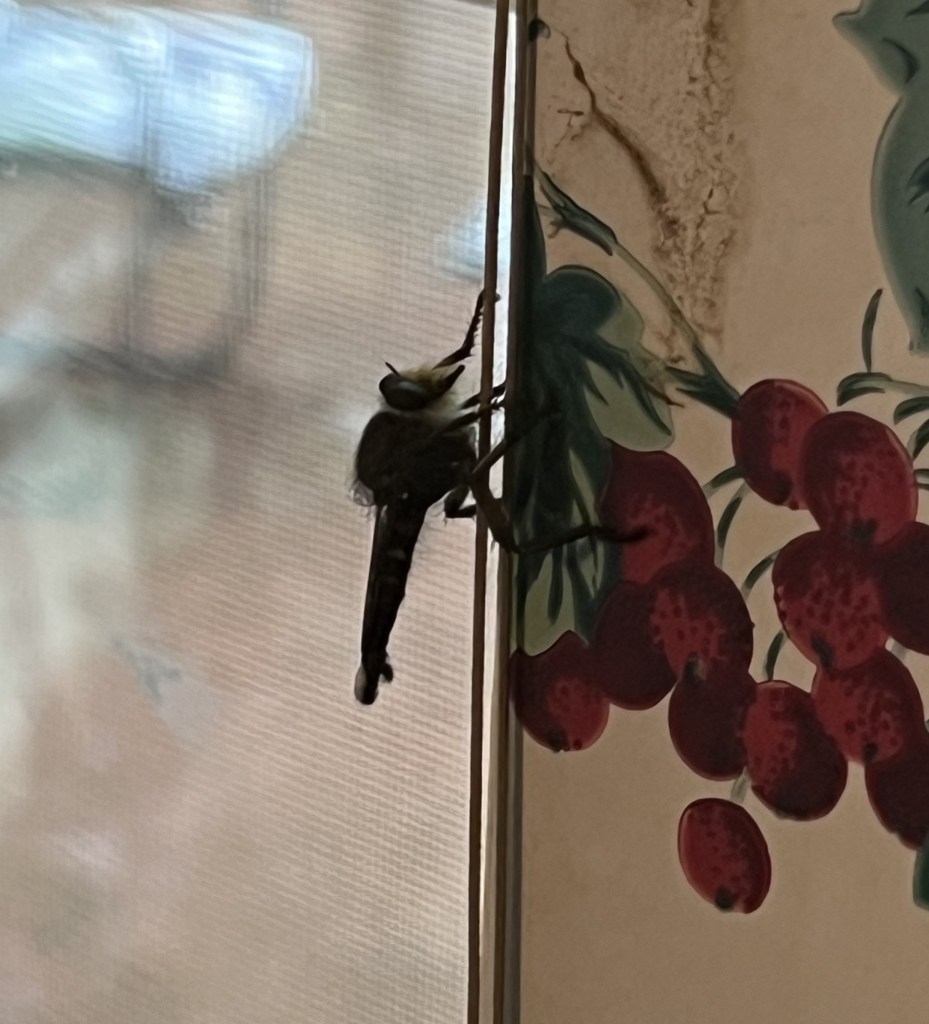
With the overcast days filled with intermittent rains we have been inundated by house flies (Musca domestica) and lately fruit flies (Drosophila melanogaster). Melissa likes to keep the patio windows open along with the kitchen door to take advantage of the breeze. While this still provides a barrier from the outside, the kids put a kink in the system. Melissa works in our bay window to watch the action as the birds (and squirrels) come to the feeders. During the morning the kids tend to run in and out the door between the kitchen and outside fence where Melissa is working. That means Melissa must either keep the patio door open (allowing flies), keep the kitchen door shut (depriving of breeze), or get up and down every time the kids decide they want to go outside after coming in 5 minutes ago. That means the doors are often open and inviting the flies to enter. We occasionally get other visitors who take advantage of the open doors, like the paper wasps (Polistes fuscatus) and black and yellow mud daubers (Sceliphron caementarium). Melissa is highly allergic to bee and wasp stings, so when she saw something that looked like a wasp land on the windowsill next to her head, she called me into the kitchen to investigate. I later found out this was actually a robber fly.
When I looked online, I found the Fan-bristled robber fly (Dysmachus trigonus), or assassin fly, are part of the larger robber fly family. They are powerfully built, bristly flies with a stout proboscis enclosing the sharp, sucking mouth parts (hypopharynx). The name “robber flies” reflects their predatory habits as they feed on other insects by waiting in ambush to catch their prey in flight. The Asilidae are a family in the order Diptera (true flies) and are cosmopolitan (around the world) with over 7000 described species. French zoologists Pierre Andre Latreille established the family in 1802. Robber flies have stout, spiny legs and three simple eyes (ocelli) in a characteristic depression on the tops of their head between two large compound eyes. They also usually have a dense moustache of stiff bristles on the face (mystax). The mystax is suggested to afford protection for the head and face when the robber fly deals with struggling prey. The family of flies attack a wide range of prey, including other flies, beetles, butterflies and moths, various bees, ants, dragonflies and damselflies, ichneumon wasps, grasshoppers, and some spiders. Many Asilidae when attacked do not hesitate to defend themselves and may deliver intensely painful bites to humans if handled.
When I saw the robber fly sitting on the sill, I was at a loss for how to deal with it. I could tell this was not a wasp, so that danger was alleviated. Still, I did not know what it was, and I am not too fond of large insects (or spiders) having free range of my house. With all of the succulents, pots, and potting material there are too many places for such critters to hide and thrive. I could see the large mouth parts (probosces) on the fly and knew even the bite of the common house fly hurt if it chose to bite. I finally just gave in and whacked it with a fly swatter. It was only after I researched the photo of the fly that I learned one of the robber fly preys is the house flies we were trying to get rid of. I felt a little better when I learned the robber fly was also aggressive and would bite humans if handled. I had no idea how I could have gotten it outside the house.
THOUGHTS: My whacking the robber fly is typical of most human reaction to an unknown. If something is unfamiliar and appears threatening, it is best to “whack now and ask questions later”. I would have been better off trying to move the robber fly outside and allow it to control its prey (and my pests). Human evolution created an innate tendence to practice “fight or flight” when facing the unknown, but neither is always the best approach. Positive interactions with the environment (and other humans) often require “stop, wait, and learn” before proceeding. This does well for us, and for whatever we were going to whack. Act for all. Change is coming and it starts with you.
 A travelers odyssey