
June 07, 2024
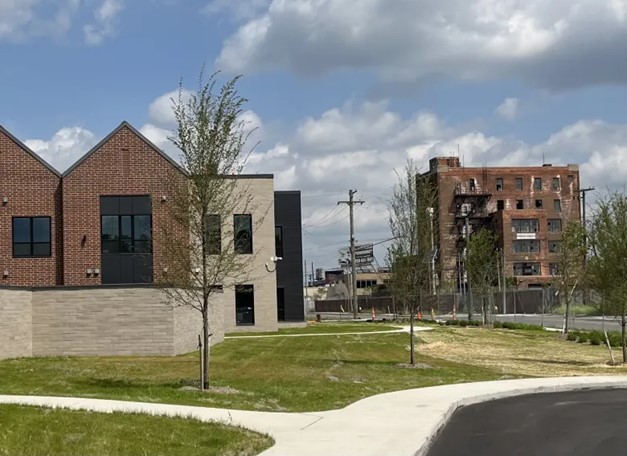
The back page of the front section of my local newspaper ran a USA Today article on a new US$40 million housing campus that just opened in Detroit, Michigan. The complex broke ground in 2022 and officially opened on Monday, but the planning for the center has taken place over the last nine years. Rev. Tim McCabe, president and CEO of the Pope Francis Center (PFC) toured 27 other shelters from around the US to gain insights and ideas for the facility. The site includes a specialty “hot room” for disinfecting blankets and clothing upon arrival or heat lamps that warm a covered patio designed for people seeking shelter from the cold but who are just not ready to come inside. McCabe said, “We’re going to change the conversation around what it means to be homeless . . . and we do that with radical compassion and love.” In Detroit, this radical compassion is on display at the Bridge Housing Campus.
When I looked online, I found PFC’s Bridge Housing Campus is a 60,000 foot2 (5574 m2) campus that sits on 5.3 acres (2.1 ha) of once vacant land. Residents are greeted by a building with gable roofs and contrasting exterior bricks to convey a sense of residence. Each of the 40 residents (men for now) will be assigned a separate studio apartment connected by wide inside hallways painted in calming neutral blue and green colors so nobody feels closed in. The 336 feet2 (31.2 m2) units feature a bathroom and living area, bed, television, kitchenette, and bright windows. Three of the units are designated as anti-ligature rooms (cannot be used by someone to harm self by bind or tie) equipped with fixtures to keep residents safe such as sinks with no knobs. Bridge Housing not only provides residents with a place to live for 90-120 days but services to promote their independence and well-being such as a medical and dental clinic along with a team of social workers, addiction specialists, and psychiatrists. Other amenities are an 8-bed respite center for those discharged from the hospital but needing time to recover, a full kitchen for meals and culinary training, classrooms to provide for job preparation and financial literacy, a library, computer lab, art room, meditation space, barber shop, and a gymnasium for fitness or social activities. The PFC’s regular services at the nonprofit’s downtown location will continue once the campus opens. The downtown day center provides two meals, laundry and shower facilities, medical and dental clinics, and legal clinics to help people to find housing.
A major difference of the Bridge Housing Campus than other facilities designed to address chronic homelessness is a partnership with the surrounding community. McCabe said the campus will not only benefit its residing guests but their neighbors who consented to have the project built. The neighborhood will also have full free access to the campus’ health clinic, classrooms, cafeteria, and gymnasium. “I can’t wait for the kids in the neighborhood to see this and to come and throw a basketball around,” McCabe said, “The community needs to see these people, not as scary”. The interaction between residents and the community will help tear down the stereotypes that add to the trauma already experienced by the homeless and allow the community to see them as people.
THOUGHTS: The potential success of Bridge Housing comes from the willingness of the community to act as a partner in the project. We have had several attempts to build housing communities (tiny houses and community center) on vacant land in the city near us that have been shot down by residents near (not in) the areas suggested. They decried the bad element that would be brought to live in these communities even more than any potential loss of property values. Both reflect the stereotype Bridge Housing was able to overcome through cooperation. People in crisis need a hand up, not a push down. Act for all. Change is coming and it starts with you.
 A travelers odyssey