
June 17, 2024
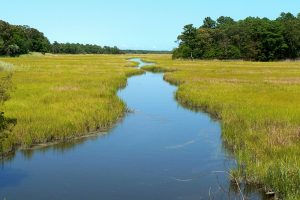
Inside the back section of my local newspaper, I found a USA Today article on a new bill intended to protect the wetlands of Delaware. Delaware is the only Mid-Atlantic state that does not have state protection for its wetlands and relies solely on the federal “Waters of the United States” protected under the Clean Water Act. Last year’s Supreme Court decision (Sackett v. EPA) limited the definition of what constituted these US waters, leaving millions of acres of wetlands unprotected from dredging, development, or other harmful activities. Wetlands make up over 25% of the state’s total area and an estimated 75,000 acres (30,351 ha) of non-tidal wetlands are no longer protected under federal jurisdiction. Senate Bill 290 amends the portion of the code relating to wetlands and broadens the procedures to include protection of both tidal and non-tidal wetlands.
When I looked online, I found wetlands are a distinct ecosystem that is flooded or saturated by water, either permanently, for years or decades, or seasonally for shorter periods. Wetlands can be tidal (inundated by tides) or non-tidal and the water held can be freshwater, brackish, saline, or alkaline. Flooding results in the occurrence of oxygen-poor (anoxic) processes, especially in the soil. All true wetlands have three characteristics: typical wetland plants, wetland soils, and evidence that water is or can be at or near the surface. Wetlands are different from other landforms or bodies of water as their aquatic plants have adapted to oxygen-poor waterlogged soils. Wetlands are considered among the most biologically diverse of all ecosystems and provide habitat for a wide range of plant and animal species. There are four main kinds of wetlands. A marsh is a wetland that is dominated by herbaceous (no woody stem) plants rather than by woody (hard stem) plants. A swamp is a forested wetland that is a transition zone where both land and water play a role in creating the environment. A bog is a wetland that accumulates peat as a deposit of dead plant materials (typically sphagnum moss). A fen is a type of peat-accumulating wetland fed by mineral-rich ground or surface water. Some experts also recognize wet meadows and aquatic ecosystems as additional types of wetlands.
Despite nearly half of Delaware’s original wetlands having been lost over the last two centuries, wetlands still make up nearly 25% of land in Delaware, and 75% of these wetlands are non-tidal. The vast majority of the wetlands are privately owned, with only 20% owned by the state or federal governments. Delaware’s Department of Natural Resources and Environmental Control (DNREC) assesses these lands regularly, but only non-tidal wetlands of 400 acres (162 ha) or more are regulated by the state. Rep. Debra Heffernan, chair of the House Health & Human Development Committee and sponsor of SB290, said “As our communities continue to deal with increased flooding, drainage issues and habitat loss, protecting our remaining wetlands, one of our state’s most valuable ecosystems and assets, is more important now than ever.” This bill will require a permit issued by the DNREC prior to activities that might impact these ecosystems.
THOUGHTS: The proximity of wetlands to lakes and rivers puts them at risk for development and human settlement. Wetlands are often converted to dry land by constructing dykes and drains and used for agricultural purposes. Once settlements are constructed and protected by dykes and levees, they are more at risk for land subsidence and increased flooding. The flooding and subsidence of the Mississippi River Delta around New Orleans, Louisiana is a well-known example. Wetlands offer safety for plants and animals (including humans) and need to be protected, not drained and leveled. Act for all. Change is coming and it starts with you.
 A travelers odyssey