
June 21, 2024
Melissa and I planned a trip to Maine to escape the summer heat in Arkansas that quickly became more involved than it has been in the past. We drop the kids at a kennel and although it has several times for drop offs, they are only 1-1/2 hour periods. That means we work our departure schedule around the kids drop off schedule. Melissa has been fussing over the succulents for the last two weeks making sure the active plants are watered and the dormant plants groomed during their summer sleep. The Real problem is my garden. We have been away for a couple of days during my summer gardens, but this garden is more extensive, and the vegetables in the raised beds are less forgiving of neglect. When I realized we were gone at the beginning of the summer heat (and possible harvest) I contacted the neighbor girl to water in the mornings. Just when all seemed well, we got a text from my sister saying the heat index in Maine was 103F (39.4C). So much for cool. Melissa responded was it was lucky this happened on the longest day of the year since the 1700’s.
When I looked online, I found the 2024 summer solstice (June 20) is the earliest in 228 years, making this the longest day and the solstice is set to get progressively earlier for the next 72 years. Today’s solstice is the earliest since 1796 because of the variation caused by the Gregorian calendar. The calendar divides one year into 365 equal days, but the Earth’s actual orbit around the sun takes 365 days, 5 hours, 48 minutes and 45 seconds. This difference is accounted for by adding a leap year every four years to round the calendar up one day. This creates its own problem as four times 5 hours, 48 minutes and 45 seconds is 23 hours and 15 minutes, or 45 minutes short of a full day. To account for this drift, the calendar is “reset” by skipping a leap day every four centuries. The next reset is due in 2100 but until then during leap years (like 2024) the solstice will occur 18 hours earlier than the previous year and 45 minutes earlier than the previous leap year. Every successive leap year from now until the end of the millennium the solstice will be the earliest since 1796 by 45 minutes.
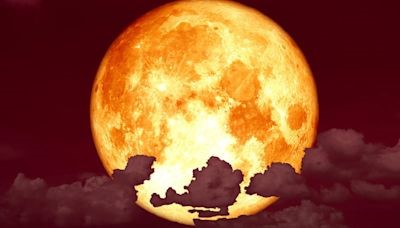
Other phenomena correspond with today as the longest solstice since 1796. The summer’s first full moon (Strawberry Moon) in 2024 is set for moon rise the day after solstice (June 21). Since 2024’s June full moon happens near the solstice (sun’s highest point) the moon is at the very lowest point. The moon being so low makes it appear bigger (Moon Illusion). The solstice itself happens because of the Earth’s tilt along its axis. The origins of tilt can be traced back more than 4 billion years to the Earth’s formation when our planet suffered an estimated 10 gigantic collisions with other planets. The last collision was with a Mars-size planet (Theia) that hit with such force that it transformed Earth’s surface into molten rock and ejected rocks and dust into space, which later coalesced to become our moon. The impact also created the Earth’s 23.5 degrees of axial tilt with respect to the sun. As the Earth orbits our star (Sol), one hemisphere leans away from the sun and the other towards it. It is this tilt that gave rise to the seasons that spurred more complex ecosystems to evolve.
THOUGHTS: Today is the longest day due to human manipulation of the Calendar. The earth has suffered and overcome a number of catastrophic collisions like Theia and the asteroid that caused the Chicxulub crater near the Yucatan Peninsula in Mexico. The earth was able to overcome these events and evolve. Theia gave us the moon and seasons and the asteroid brought about the rise of mammals. While both may have been positive for human evolution, they also destroyed/changed “life as we know it”. Unlike the dinosaurs, humans may be able to survive the next catastrophe but “life as we know it” will no longer exist. Our planet should be treated as a gift to be cared for, not exploited. Otherwise, we may be the cause of the next end of “life as we know it”. Act for all. Change is coming and it starts with you.
 A travelers odyssey