
June 29, 2024
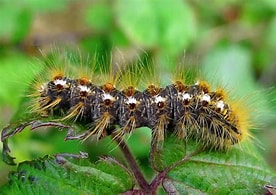
When Melissa and I arrived in Maine we were immediately warned not to touch any furry brown caterpillars we see crawling in the brush. While the larvae do not bite or sting, their presence can trigger a range of discomforting reactions due to the hairs (setae) they possess. These tiny hairs contain toxins that can evoke pain, itching, and discomfort. We were warned it is essential to quickly recognize the symptoms from such encounters, ranging from redness and swelling to itching and burning sensations. While the reaction generally dissipates within a few hours or several days, the severity of the response varies from person to person. My great-nieces showed us the rash left by the caterpillars and nearly everyone in the families had stories to tell of chance encounters. It seemed even the dropping of the adult moth can cause skin irritation and bumps, commonly known as white bumps. These brown hairy caterpillars are the larval stage of the browntail moth.
When I looked online, I found the browntail moth (Euproctis chrysorrhoea) is a moth of the family Erebidae native to Europe, neighboring countries in Asia, and the north coast of Africa. The moth’s life cycle is atypical, as it spends approximately nine months (August to April) as larvae (caterpillar), leaving about one month each for pupae, imagos, and eggs. The larvae are covered in hairs and two red spots on the back (toward tail) distinguish the browntail from similar hairy moth larvae. The adults have white wings and a hairy white body with a tuft of brown hair at the tip of the abdomen. Females lay one egg cluster on the underside of a leaf of a host plant with around 200 eggs. The species feeds on many different species of trees (polyphagous) including pear, apple, maple, and oak. Larval feeding causes reduction in growth and occasional mortality for the host plant. The species was accidentally introduced into Somerville, Massachusetts from Europe in 1897, and by 1913 had spread to all the New England states and northward into New Brunswick and Nova Scotia in Canada. Populations have since slowly decreased due to natural controls until the 1960’s, when the browntail moth was limited to Cape Cod and a few islands off the Maine coast in Casco Bay, but populations are again building in Maine and are found in patches along the coast and up to 60 miles inland from the western Maine border to the New Brunswick border.
One theory for the browntail moth decline appears to come from a parasite fly (Compsilura concinnata) introduced to combat spongy moths (Lymantria dispar), or Gypsy moths, in 1906. The introduction of this fly has created other invasive problems. The fly can alter its life cycle based on the host it inhabits allowing it to act as a parasite on more than 150 species of moth and butterfly (Lepidoptera) in North America. While it attacks the spongy moths (and perhaps the browntail), it also acts as a parasite on beneficial native species. Keith Hopper at the Delaware Department of Agriculture’s Beneficial Insect Introduction Research Unit emphasizes you would need to perform many kinds of tests before concluding what controls an insect population. Hopper was adamant concerning the release of concinnata, saying no one today would introduce a parasite, “With a host range of nearly 200 species! That wouldn’t even make the list of possibilities.”
THOUGHTS: the use of biological control (biocontrol) against the browntail moth is one of many attempts to reduce pest populations using natural enemies such as parasitoids, predators, pathogens, antagonists, or competitors to suppress pest populations. While this is often preferable to the use of chemicals, it can result in the introduction of another invasive species that has other negative effects. This was particularly true early in the biocontrol process. Introducing foreign species into a new ecosystem often has unforeseen results. Act for all. Change is coming and it starts with you.
 A travelers odyssey