
July 16, 2024
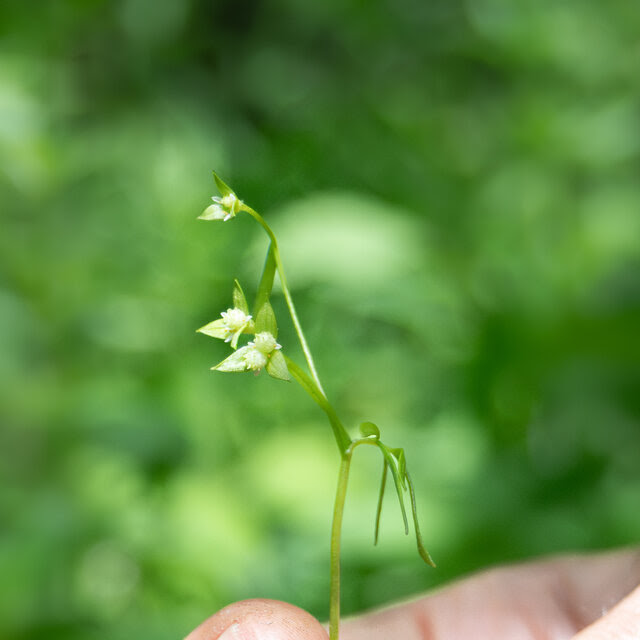
Last month my NY Times online feed reported on the discovery of a species of plant thought to have been extinct in Vermont since 1916. Vermont state botanist Grace Glynn has been searching for the species for years but the spring-blooming herb with dainty flowers has always eluded her. That changed on May 7th when Glynn was surveying turtle habitat and was sent a picture. When she opened the photo. she saw the elusive flower in the corner of the frame. Glynn then visited the site where the photo was taken in the state’s rural Addison County and found hundreds of false mermaid-weed sprigs on both public and private land. Vermont Department of Fish and Wildlife (VDFW) called the discovery “BOTANICAL BREAKING NEWS,” in a Facebook post announcing the find. The Department said it was not surprising that the flower had gone undetected for over a century as each individual plant is “absolutely tiny” with flowers that are “as small as the head of a pin”. Even when trained experts are searching for the plant can be easily overlooked.
When I looked online, I found false mermaid (Floerkea proserpinacoides) is a monotypic genus of plants in the meadowfoam family containing a single species. Other common names are false mermaid-weed and floerkea. This tiny wildflower is native to many parts of North America, where it is found in moist areas, such as shady forests. It is a fleshy, annual herb which grows short stems which may lie flat on the ground, tangle into a clump, or grow somewhat erect. The foliage is hairless and shiny. The leaves are divided into many oval-shaped, pointed leaflets up to 0.79 inches (2 cm) long. The flower is a cup of pointed green sepals containing three tiny white spoon-shaped petals and a bunch of stamens with yellow anthers. Growing in the center of the flower are the two to three fruits, which are bumpy, spherical nutlets. False mermaid only emerges for a short time from late April to early June and is referred to by botanists as an “ephemeral” plant.
Botanists suspect false mermaid-weed populations have suffered because of extreme flooding, invasive species, and human development. This rediscovery is “a sign that good stewardship by landowners and conservation organizations really can make a difference,” according to the VDFW. The last botanist to document false mermaid-weed in Vermont was a woman named Nellie Flynn, who collected 22,700 plants from around the world during her lifetime. Glenn found herself reflecting on the past. “Nellie Flynn was probably the last person to ever touch this species in Vermont back in 1916. And I always think about how there are just these threads through history that kind of tie you to other botanists, and it just adds depth and richness, I think, to an already rich story.” The plant’s state rank in Vermont has now been updated from possibly extinct and missing to “very rare and critically imperiled”. Glynn plans to send some of the plant’s seeds to a seed bank in Massachusetts that preserves native New England species. The work of Vermont botanists is far from finished as they still have another 600 or so rare and uncommon native plants to search for (and conserve) throughout the state.
THOUGHTS: The 2024 discovery of false mermaid-weed is not the first time an unusual plant has been found in Vermont. In May 2022, a citizen scientist discovered nine specimens of a federally threatened orchid, known as the small whorled pogonia (Isotria medeoloides), in Chittenden County. This was the first time anyone had seen the plant since 1902. Life has a remarkable ability to survive amid the worst of human conditions. How much more could survive if we would take concerted steps to preserve it. Act for all. Change is coming and it starts with you.
 A travelers odyssey