
July 22, 2024
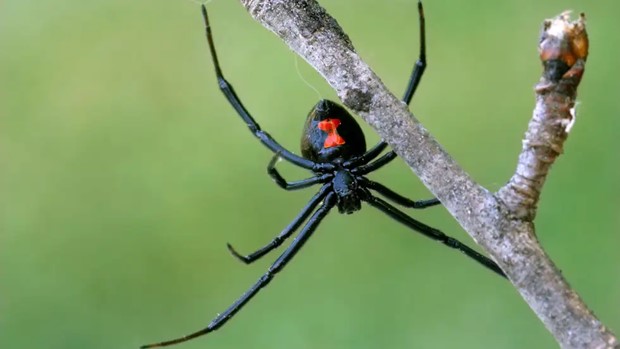
We have had enough rain the last two days that I have not needed to water my vegetables. I still go check on the beds to make sure the plants are doing ok and to harvest whatever is ripe. That was mainly tomatoes (Solanum lycopersicum), but I have also picked two cantaloupes (Cucumis melo). We ate one and took the other to our elderly neighbor. We have shared my fruits with her in the past and she has always seemed appreciative. For the last two weeks every time I go out, I thump the two large watermelons (Citrullus lanatus) to see if they are ripe enough to pick. While they should be ripe, I have never been good at selecting a ripe melon, either in the store or on the vine. My other task this morning was to take the reduced compost from my kitchen composter to place in the in-ground composter in my raised bed. Yesterday I noticed spider egg sacs on top of the compost and did not think too much about it. Today when I opened the box there was a large (1 inch/2.5 cm) spider guarding her egg sacs. It was a black widow spider.
When I looked online, I found there are several species of Black widow spider (Latrodectus species) found in Arkansas, but the most common is the southern black widow (Latrodectus mactans). The defining characteristic of the widow is the shiny black color of the adult female’s body. Females also have a distinctive red hourglass-shaped mark on the underside of their abdomen, which serves as a warning sign to potential predators. The males, on the other hand, are smaller and have lighter color. Black widow females measure around 0.5 to 1.5 inches (12 to 38 mm) in length while the males are significantly smaller at 0.25 to 0.75 inches (6 to 19 mm). The black widow is a venomous spider, and the female’s neurotoxic venom is potent enough to pose a significant threat to humans. They do not generally bite humans unless they feel threatened or provoked. These spiders are most active during the night and prefer to stay hidden during the day. Black widow spiders play an important role in controlling the population of small insects, with a preference for fire ants (Solenopsis Invicta).
Female black widow spiders are notoriously known for their tendency to eat their mates after mating, but this behavior is not always (or usually) observed. The name “black widow” has been used to describe the spider for over a century. It is unclear who first coined the term, but it is believed to have originated in the US. These spiders are cannibalistic, and the females will sometimes eat the males after mating. This behavior gives rise to their name, and it was once believed that the females always killed and devoured their mates after copulation. However, this behavior is not observed in all situations and is relatively uncommon. The male, who is less than half the size of the female, will spin a small “sperm web” and then deposit some semen into the web. He then coats two appendages near the mouth (palps) which resemble tiny claws or thick antennae with sperm. On occasion these palps will become lodged in the female and will tear off as the male retreats, often killing the male. He is later eaten by the female of his species. More often the male will scurry away unscathed.
THOUGHTS: A new study has found a proposed reason for the black widow’s red hourglass marking. Duke University researchers showed the iconic hourglass on the abdomen of the black widow can only be seen by potential predators but remains invisible to the spiders’ prey. Birds can more easily identify the wavelength of red than insects. Black widows also hang upside down, heightening the effect of the warning to aerial predators. Birds would see a spider model with red markings and get startled and jump back. I had a similar reaction when I opened the compost bin. Humans tend to react based on “what is known” more than what is fact. This is compounded by an unwillingness to take time to find the truth. Act for all. Change is coming and it starts with you.
 A travelers odyssey