
August 12, 2024
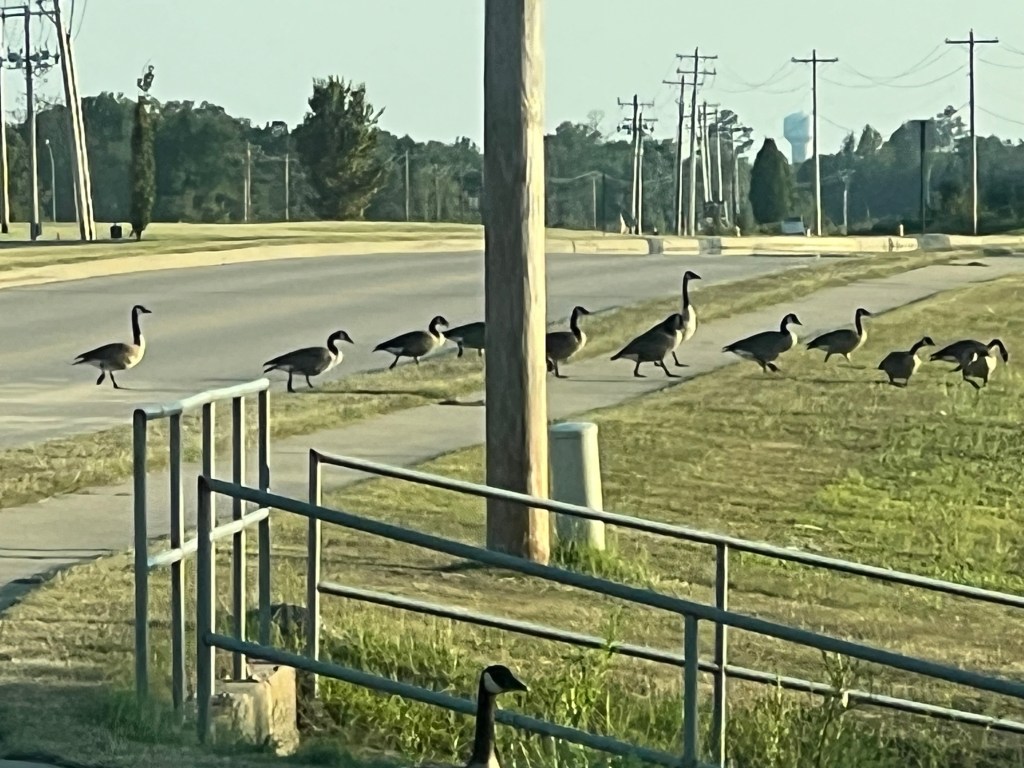
Last week Melissa and I went to eat with friends at a restaurant located in an area that used to be Camp Chaffee. Camp Chaffee was established in 1941 as part of the US Army’s training and readiness program during World War II. From 1942 to 1943 Chafee trained and equipped three armored divisions that deployed to Europe. The camp continued to train armored divisions after the war and in 1956 officially became Fort Chaffee. In 1958, Elvis Presley was inducted into the army and received the most famous military haircut in the world in Building 803, now part of the Fort Chaffee Museum. The Fort was opened to migratory groups three times as a humanitarian housing center. In 1975 to 1976, 50,809 Vietnamese and Cambodian refugees processed through on their way to US resettlement. In 1980, 25,000 Cuban refugees passed through Chaffee awaiting US resettlement. In 2005, several thousand victims of Hurricanes Katrina and Rita found refuge at Fort Chaffee for disaster relief assistance. Fort Chaffee was recommended for closure in 1995, and 7,192 acres were declared surplus and turned over to the local community. The acreage is managed as a mixed use community which now retains industrial, medical, commercial, and housing sites (and our restaurant) creating wide lawns and groomed roadsides. As we left the restaurant we were stopped (along with others) by a flock of non-migratory Canada geese strolling across the road.
When I looked online, I found the Giant Canada goose (Branta canadensis maxima) is the largest subspecies of Canada goose, on average weighing 11 pounds (5 kg), and are found throughout central North America. The subspecies was declared extinct in the 1950’s, but a small population was rediscovered in Rochester, Minnesota in 1962. Recently, the subspecies have been increasing and are now commonly found in parks and other urban areas in the US. It is thought that introduced Canada geese in Europe are derived from “maxima” in addition to the subspecies “canadensis”. The Giant Canada goose was once kept and bred in captivity for use as food and hunting decoys to lure the migratory Canadas close enough to be taken. The Giant Canada is larger and prefer not to migrate, so many do not. If adults do not migrate and teach their offspring the migratory route, youngsters will not be migratory, resulting in flocks of urban geese who do not know how to migrate.
The calls of Canada geese flying high overhead in long, awkward V-formation is one of the most lasting signs of the change of seasons. The southern migration peaks in October as the geese that bred in summer in Canada and Alaska move south to the US. However, there are other Canada geese who prefer to remain in warmer climes throughout the year. The birds we call “Canada Geese” comprise a range of geographic populations and subspecies. Some are larger, some smaller, and most subgroups have distinct breeding ranges north in Canada. However, other Canada Geese are non-migratory and stay year round. These are the descendants of birds introduced by management authorities in an effort to revive some of the original wild populations that had been decimated by the 1900’s. While some Canada geese are migratory and fly thousands of miles each year between nesting and wintering sites, others are non-migratory and thrive on the acres of delectable grass on lawns, parks, and golf courses. These were the geese who blocked our path as we drove home.
THOUGHTS: Canada geese have the same problem as other migratory populations in the US. They are exhilarating as the vast V formations fly overhead, but cause problems as they can overwhelm the limited resources of a particular area when they stop. Economists tell us it is the population of migratory workers who have (and do) already made America great. Rather than freeing up jobs, expulsion could result in economic collapse. Accommodating everyone is not easy, but neither is the mess left behind if we fail to do so. Act for all. Change is coming and it starts with you.
 A travelers odyssey