
August 26, 2024
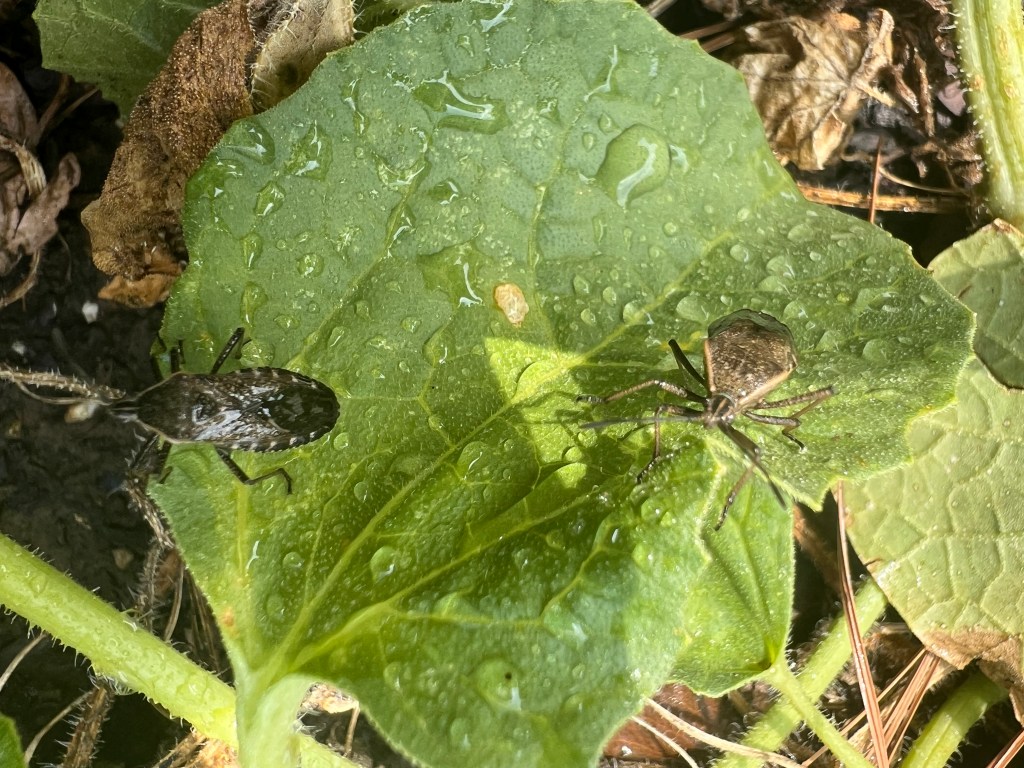
It has been difficult to keep up with the cantaloupes (Cucumis melo, honey melon variety) my plants have been producing. I have taken to eating these fruits as a snack most afternoons when I do not eat some of the watermelon (Citrullus lanatus, rattlesnake variety) I have also grown. This has been a healthy and delicious way to get a cool treat in the middle of a hot summer day. Several weeks ago, I noticed the leaves and vines of both the cantaloupe and cucumbers (Cucumis sativus) were beginning to wilt and die. I assumed it was from a combination of the heat and a natural occurrence of the vines end of life, especially since they were prolific producers. However, this morning I took a closer look and saw the vines were infested with large bugs crawling all over the plants. I learned they are aptly called squash bugs.
When I looked online, I found Squash Bugs (Euthochtha galeator), also known as the squash beetle, are common throughout the eastern US. The adult squash bug is a flat-backed insect that is fairly large (0.6 inches/1.5 cm) and usually dark gray to dark brown. The edges and undersides of the abdomen have orange stripes. Although they can fly, they often simply walk around on plants. Young squash bugs (nymphs) may be gray or light brown and have black legs. They move quickly and often congregate in groups on the undersides of leaves. As the name implies, squash bugs mainly feed on pumpkins and summer and winter squash plants. However, you will also find squash bug eggs and adult bugs on zucchini, cucumbers, cantaloupe melons, and watermelons. Squash bugs emit a foul stench when crushed and are sometimes mistakenly called stink bugs. Although squash bugs and stink bugs look the same and smell awful when you crush them, they are unrelated. A squash bug can do considerable damage by sucking the sap from leaves, causing them to wilt and die.
As any gardener knows, while the key is identifying your pest (my squash bug), the real question is how to get rid of them. The best way is early detection to allow you to eliminate them before they grow to be adults (too late for me), otherwise they are very difficult to get rid of completely. It is suggested to pick the bugs off the plant and flick them into a bucket of soapy water. Once the bugs are dead you can dump them anywhere. The egg masses should be picked off the leaves of the plants in the morning and later in the day. You can scrape the eggs off the leaves with a butter knife and let them fall onto the ground, where other beetles will eat them. Eggs hatch in about ten days, so you need to check for them at least weekly. Another method is to place a board or shingle in the garden at night (or pieces of newspaper) and both adults and nymphs will congregate underneath the cover. You can then squash them between two hard surfaces in the morning and dispose of them. Again, keep checking your plants daily for more eggs and bugs. Finally, remove any plant debris during the growing season to reduce sites where the squash bugs can hide. Looks like I have some work to do.
THOUGHTS: While I prefer using organic methods to control my pests, insecticides are not effective in managing squash bugs once they are adults. Since it is late in the season, I can salvage what is left of my plants and then compost the debris to keep them from overwintering. Since it is just this one bed that is affected, I can also try crop rotation when I plant next year. It is hard to believe I am already considering what to do differently with next year’s garden. Once again, I have learned a lot, but there is still so much to know. Some believe high school or college graduation is the end of your training. In truth, it has only just begun. We need to commit to being a life-long learner. Act for all. Change is coming and it starts with you.
 A travelers odyssey