
May 10, 2025
Sarah Kloepping/USA Today
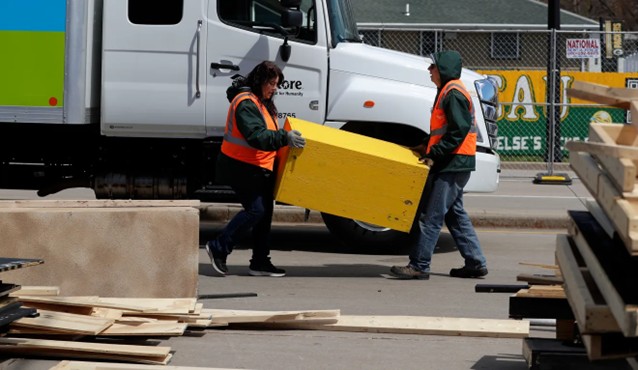
The Sunday edition of my local newspaper (yes, it is Saturday) ran a USA Today article on the donations made by the National Football League (NFL) after the draft in Green Bay, Wisconsin. While some pieces arNFL Drafte returned to their owners, the NFL is donating material and other items to local organizations. That is up to 30 truckloads of food and reusable items. Ryan Sclar of ENGIE Impact, a part of the NFL’s green team, said, “It’s really important to the NFL that not only when they come in for a big event are they having a spectacular fan experience, but that they are leaving a really good legacy.” The NFL and the Green Bay Packers are working with community members throughout Green Bay and the surrounding area to donate reusable items. Recipients include Habitat for Humanity, Red Cross, Oneida Nation, various school districts, and government entities. These donations continue the economic impact of the NFL draft to the area.
When I went online, I found the NFL draft, officially known as the Annual Player Selection Meeting, is an annual event which serves as the source of player recruitment in the NFL. Each team is given a position in the drafting order in reverse order relative to its record in the previous year. Teams with the same record rotate their order for each round of the draft. A team can either select a player or trade its position to another team for other draft positions, a player, or players, or any combination of those options. The round is complete when each team has either selected a player or traded its position in the draft. The first draft was held in 1936 and the rational was to increase the competitive parity between the teams as the worst team would be able to choose the best player available. Early on, players were chosen based on hearsay, print media, or evidence of ability. Some franchises began employing full-time scouts in the 1940’s and the success of these teams forced the other franchises to also hire scouts. While things like team positioning and the number of draft rounds (currently at 7) have been revised since its creation, the fundamental method remains the same.
Edwin Stueck, a store manager for Greater Green Bay Habitat for Humanity ReStore, said donations raise money for their homeowner and building-homes programs. Lowes asked that items from the green room (large rugs, coffee tables and lamps) be donated to Habitat for Humanity homeowners. Volunteers with Rooted In, Inc, worked with 17 different spots to pick up trays of unused catered food to be picked up, refrigerated, and donated it to 13 Green Bay area groups. The Packers have their own sustainability program and worked with the NFL to identify local groups that could use wood from various structures, fence mesh, pieces of metal, flag poles, and other items. The NFL rents a great deal of what goes into building a draft campus, such as fences, generators, lights, stage pillars, and portable restrooms. Sustainability has become a major component of many companies, organizations and individual households. The NFL Draft is yet another example.
THOUGHTS: While the NFL Draft is an example, The NFL says sustainability is a core focus and the league is committed to reducing the environmental impact at each event. Last year’s Draft donations of over US$200,000 in food and materials were exceeded by US$500,000 from Green Bay. The NFL asks fans to help reduce waste by recycling and ensuring recyclables are empty, clean, and dry. We have a new (retired schoolteacher) in charge of our recycling site. When I pulled in, he was inspecting the items the woman had brought and instructing her on what was permissible and about crushing cans and plastic to save room in the bins. Even as a conscientious recycler, I learned some things as well. Recycling is more than dumping trash in a bin. It is an attitude toward sustainability. Act for all. Change is coming and it starts with you.
 A travelers odyssey