
November 13, 2025
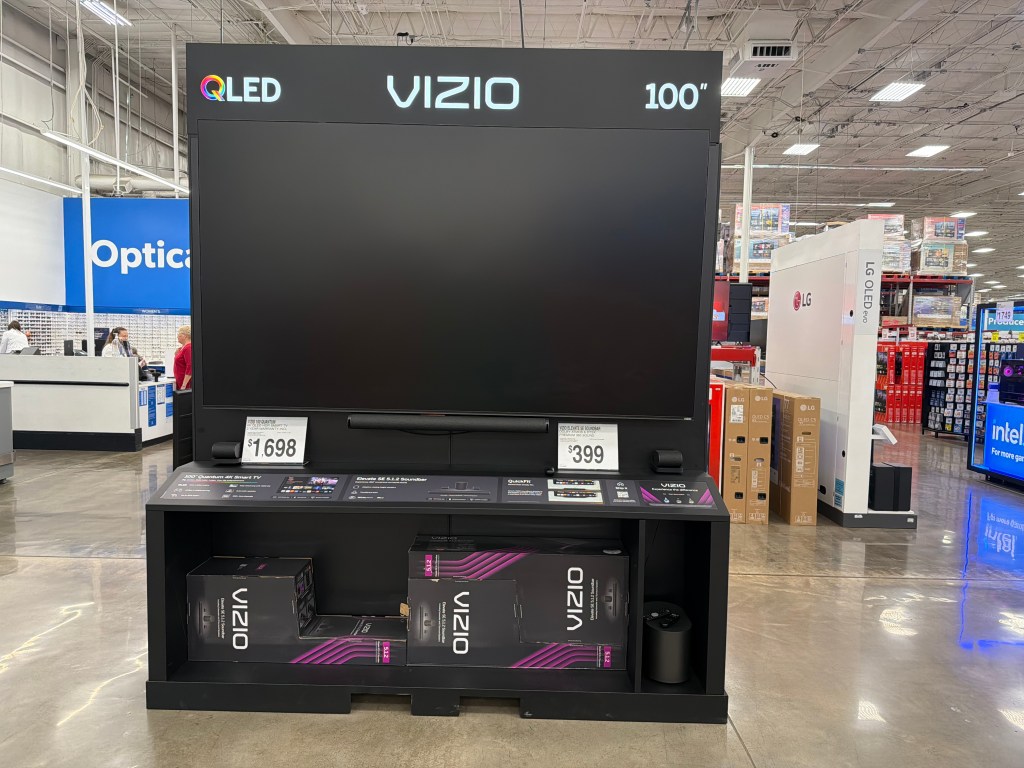
The 2021 C class RV we purchased this summer had a TV mounted inside, but it was an older model. This was a special 40-inch (101.6 cm) RV TV built to withstand the vibrations and temperature changes of being on the road and had a 12V power option that was connected directly to the house batteries for use when not plugged into shore power. We were told a regular TV might not handle the constant shaking or the temperature and humidity fluctuations. Melissa did quite a bit of searching online and in the RV Facebook group she frequents and determined a regular smart HDTV would be adequate for our use. She also checked the dimensions of the cab and found the space would easily accommodate up to a 55-inch (139.7 cm) TV. We have purchased several TVs over the last several years, including two 70-inch (177.8 cm) screens at the conference center where I was director. Each time we found the best (or comparable) deals were from the big box store. Last week I decided it was time to bite the bullet and purchase a new TV. When I walked into the store, I was confronted with a display featuring a 100-inch (254 cm) screen TV.
When I went online, I found a 100″ TV should be placed in a room with a viewing distance of roughly 8 to 11 feet (2.5 to 3.4 meters) away from the viewers. The center of the screen should be at eye level when seated, or around 42 inches (105.7 cm) from the floor, and positioned so viewers are facing it directly with minimal glare from windows or lights. For a more cinematic experience, use the Society of Motion Picture and Television Engineers (SMPTE) or THX (Thanks) recommended 30-to-40-degree field of view, which means sitting closer or about 9.7 to 11.18 feet (2.9 to 3.4 m) away. Arrange your furniture so that viewers are directly in front of the TV, within a 30-degree angle of the screen and use curtains or blinds to block direct sunlight and position the TV to avoid reflections from lamps or other light sources. Finally, ensure there is enough space for people to walk around comfortably and to avoid blocking the screen.
It was clear our RV did not have the space to hold the 100-inch screen, let alone the distance away to provide a clear picture. The 50-inch TV we wanted suggests a range of 4.2 to 6.3 feet (1.3 to 1.9 m) which is perfect for seating in the camper dining area. The previous owners had removed the bench and table seating and replaced it with fabric covered chairs and ottomans. We replaced these with a faux leather reclining loveseat that was more comfortable and provided more room for the kids on the floor. The box store had a variety of other TV sizes, so I walked back to the row of 50-inch TVs. There were three different brands and several levels of picture quality. After a text discussion with Melissa (she had done the research) I settled on a 50-inch 4K QLED Smart TV that is streaming and Bluetooth ready. We have determined a way to run a power strip to the TV which will run off the generator if we are off grid (boondocking). Now all I have to do is install the TV.
THOUGHTS: The THX designation on a smart TV refers to sound quality rather than picture and is an acronym for “Tomlinson Holman’s eXperiment”, a company founded by Tomlinson Holman and George Lucas. The name is also a nod to the 1971 George Lucus film, THX 1138. “Thx” is also a common abbreviation for “thanks”, used as a casual way to express gratitude in texting and online communication. Other common texting abbreviations include LOL (laughing out loud), BRB (be right back), IDK (I don’t know), IMO (in my opinion), FYI (for your information), OMG (oh my God), ASAP (as soon as possible), BTW (by the way), TBH (to be honest), and LMK (let me know). An acronym is a word formed from the first letters of other words that can be pronounced as a single word. If you are familiar with the media or field, they make sense. Language can be a way to both communicate and exclude others. Act for all. Change is coming and it starts with you.
 A travelers odyssey