Bracketology

March 26, 2025

The first weekend of the college basketball playoffs is over and I have life in my brackets.  This year I filled online for a initial bracket, an alternate bracket, and a best guess bracket.  I also filled out hard copy brackets, so I pulled that from the newspaper.  Then Melissa said she would like to do a head-to-head challenge (hardcopy) so I filled out another one for her.  I then filled out two online brackets for the women’s championship.  There seem to be two approaches toward filling out these predictive brackets.  One is the purist approach where only one bracket is allowed.  The other is to fill out as many brackets as possible (a maximum of 25 are allowed by ESPN) and try to gauge all the nuances that might be possible, given upsets and close matchups.  I find myself somewhere in the middle, counting my initial bracket as the “true” representation but still filling out several more brackets for luck.  This annual event for men’s and women’s basketball has become known as bracketology.        

When I looked online, I found Bracketology is the process of predicting the participants in the NCAA men’s and women’s basketball tournaments.  The name comes from the predictions made while filling in tournament brackets for the postseason.  This process uses some method of predicting the metrics the NCAA Selection Committee will use, such as the rating percentage index through the 2018 tournament, and the NCAA Evaluation Tool (NET) since 2019, in order to determine at-large (non-conference winning) teams to complete the field of 68 teams, and to seed the field by ranking all teams from first through sixty-eighth.  Bracketology also encompasses the process of predicting the winners of each of the brackets.  Joe Lunardi is credited with inventing the term bracketology.  On February 25, 1996, The Philadelphia Inquirer referred to Lunardi as a bracketologist, which is the first known instance the term was applied to a college basketball expert.   Lunardi soon started the website Bracketology.net, and ESPN began running his predictions in exchange for a link to his website.  By 2002, Lunardi had his own Bracketology page with ESPN.  In recent years the concept of bracketology has been applied to areas other than basketball.

My efforts at bracketology have only been fruitful in one of the men’s brackets.  My purist bracket chose Duke as the winner but only matched 56.8% of the actual winners through the first weekend.  My alternate bracket selected Auburn as the winner and has done much better, choosing 96.7% of the winners and ranking 792,137th on the ESPN site.  The best guess bracket did the worst, choosing Michigan State as the eventual winner and choosing a lowly 17.9% of the winners.  By contrast both of my women’s brackets have done well.  My initial bracket chose U Conn as the champion and scored 97.6% of all winners.  My alternate chose OU as the champion and came in at an astounding 99%.  I do not follow college basketball (except for favorite teams) other than during championship season.  Still, this time of year causes me to watch games I would otherwise skip and the first weekend provided several exciting games.  One of my bracket busters was the Hogs of Arkansas who took two underdog games, including from St. John’s who I had predicted to go to the elite eight.  There are no perfect brackets left for the men (out of 24,388.569) and only 25 for the women (out of 3,425,826).  I guess that is why they call it bracketology (the study of brackets).

THOUGHTS: To try and keep the public involved in the sport (and betting), ESPN has another chance at Bracketology by offering a second chance option.  This starts with Sweet 16 participants and allows you to select who will win based on those still in the tournament.  This did not spark my interest.   If I do not get it right the first time(s), I am not trying again.  I understand the allure, however.  In life we need to both alter our initial approach and try again.  Life is not a predictable bracketology.  Act for all.  Change is coming and it starts with you.
Python

March 21, 2025

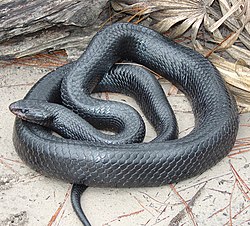
This morning’s local newspaper carried a USA Today article on the adaptability of the Burmese python in Florida.  The snakes have been established in the Everglades since the 1990’s but recent studies and sightings indicate the cold-blooded reptiles have adapted to cooler temperatures and different habitats.  One reason for the adaptation is crossbreeding with the Indian rock python (Python molurus) which has also been introduced into the habitat.  Genetic evidence by the USGS shows at least 13 out of 400 pythons studied were crossbred.  Climate change could expand their range by 2100 to include New York, New Jersey, Pennsylvania, West Virginia, Ohio, Indiana, Illinois, Colorado, and parts of Washington State.  Southern states with climates like the native range of the Burmese python include all of Florida, most of California, the Carolinas, Georgia, Alabama, Louisiana, Texas, and Oklahoma.          

When I looked online, I found the Burmese python (Python bivittatus) is one of the largest species of snakes in the world.  The species is a dark-colored non-venomous snake with many brown blotches bordered by black down the back.  Burmese pythons typically grow to 16 feet (5 m) but unconfirmed specimens of over 23 feet (7 m) have been reported.  The species is sexually dimorphic with females slightly longer but considerably heavier and bulkier than males.  Length-weight comparisons in captive Burmese pythons for females have shown at 11 feet 5 inches (3.47 m) length, a specimen weighed 64 pounds (29 kg) and a specimen of 16 feet (5 m) weighed 165 pounds (75 kg).  Length-weight comparisons for males found a specimen of 9 feet 2 inches (2.8 m) weighed 26 pounds (12 kg) and a specimen of 10 feet (3.05 m) weighed 41 pounds (18.5 kg).  Individuals over 16 feet (5 m) are rare for either sex.  The Burmese is native to a large area of Southeast Asia where it is listed as Vulnerable on the IUCN Red List.  It is an invasive species in Florida because of the pet trade.

Importing Burmese pythons was banned in the US in January 2012 by the US Department of the Interior.  A 2012 report stated, “in areas where the snakes are well established, foxes and rabbits have disappeared.  Sightings of raccoons are down by 99.3%, opossums by 98.9%, and white-tailed deer by 94.1%.”  Road surveys between 2003 and 2011 indicated an 87.3% decrease in bobcat (Lynx rufus) populations, and in some areas, rabbits (Sylvilagus palustris) have disappeared.  Bird and coyote (Canis latrans) populations may be threatened, as well as the rare Florida panther (Puma concolor couguar).  Burmese pythons compete with the native American alligator (Alligator mississippiensis), and numerous instances of alligators and pythons attacking, and even preying on, each other.  By 2011, researchers identified up to 25 species of birds from nine avian orders in the digestive tract remains of 85 Burmese pythons found in Everglades National Park.  Native bird populations are suffering a negative impact from the introduction of the Burmese python in Florida and the wood stork (Mycteria americana) is now listed as federally endangered.

THOUGHTS: A Burmese python named “Baby” was the heaviest snake recorded in the world in 1999 at 403 pounds (182.8 kg), much heavier than any wild snake ever measured.  Her length was measured at 18 feet (5.74 m).  Efforts in Florida have removed over 23,000 pythons since 2000, but trappers have caught less than 1% of the estimated population of tens of thousands.  Lisa Thompson of the Florida Wildlife Conservation Commission said, “Every python removed from the Florida landscape is one less invasive snake impacting our native wildlife and ecosystems.”  While importing exotic wildlife may be chic, bringing them (and allowing them to escape) into compatible ecosystems is never a good idea.  Act for all.  Change is coming and it starts with you.
African Penguin

March 17, 2025

Photograph by Cody O’Loughlin

This morning’s NY Times Morning feed carried an article about a group of penguins who are receiving special treatment at the New England Aquarium in Boston.  Six seabirds were moved to the island for “retired” penguins that opened in February.  The birds were relocated to address the large number of penguins at the aquarium who are living well beyond the age they would be expected to reach in the wild.  The residents of this “country club for older animals” are sectioned off from three other islands inhabited by penguins via a mesh gate in the water.  “They all get a good opportunity to eat and take their time and not feel rushed, not get pushed off the island by another animal that’s anxious to eat,” said Kristen McMahon, the aquarium’s curator of pinnipeds and penguins.  About half of the aquarium’s 40 African penguins are older than the bird’s life expectancy of 10 to 15 years, and some have doubled it.

When I looked online, I found the African penguin (Spheniscus demersus), also known as the Cape penguin or South African penguin, is a species of penguin confined to southern African waters and is the only penguin found in the Old World.  All penguins are flightless and have a streamlined body and wings stiffened and flattened into flippers for a marine habitat.  Adults weigh an average of 4.9 to 7.7 pounds (2.2 to 3.5 kg) and are 24 to 28 inches (60 to 70 cm) tall.  The upper parts of the body are black and are sharply delineated from the white underparts (counter shading), which are spotted and marked with a black band.  The African has distinctive pink patches of skin above the eyes and a black facial mask.  The birds are pursuit divers that feed primarily on fish and squid.  Wild penguins are found in the coastal waters of South Africa and Namibia, where they face threats that include the depletion of food from overfishing, climate change, and pollution.  Once extremely numerous, they are now the rarest species of penguin. 

The geriatric penguins at the aquarium are mostly in their 30’s and receive close monitoring for ailments like cataracts and arthritis.  They are fed fish injected with extra water to promote kidney health, and they get treatments such as eye drops and physical therapy.  Some even get acupuncture.  McMahan said, “We wanted a space that was a little bit lower paced and more easily observed by the veterinarian team and our training team on a daily basis.”  The life expectancy for a wild African penguin likely does not reflect the reality for the species today, said Christina Hagen, the Pamela Isdell Fellow of Penguin Conservation at the organization BirdLife South Africa, a group who are attempting to establish an African penguin colony in the wild.  The aquarium’s penguins can live longer because they do not face the same threats as wild birds and receive specialized care.  The African penguin is classified as a critically endangered species, and conservationists say that they could become extinct in the wild by 2035. 

THOUGHTS: The aquarium’s oldest African penguin, Good Hope (35), and his mate St. Croix (23), are set to move to the retirement island soon.  McMahan said the aquarium does not have plans to move in other birds and will instead let this group “live in harmony”.  Human retirement homes in the US range from independent living to assisted living to skilled nursing care, and the costs vary greatly depending on location and level of care needed.  While independent living costs vary widely based on location and specific community, the national median monthly cost for assisted living is around $5,676, a semi-private room in a skilled nursing facility is around $8,669, and a private room is $9,733.  As of Mar 7, 2025, the average annual pay for a Retirement Community in the United States is $62,680 a year.  Being able to live in harmony is not cheap.  As our population ages new innovations are needed to provide housing.  Act for all.  Change is coming and it starts with you.
Loki

March 13, 2025

We have been getting quite a bit of activity on our feeders over the last month.  When the snow came and the temps dropped, there was a scarcity of natural seeds, and the birds flocked to the feeders.  Now the temps are warming up and the birds are getting frisky and need to replenish their energy.  I also have a group of about ten common grackles (Quiscalus quiscula) that quickly wipe out the feeders.  I have been filling the feeders every morning and finding them completely empty the next day.  I have also noticed the birds are getting more familiar with having the dogs around while they are feeding.  It used to be they would scatter when I let the kids out, but now they tend to either stay or at least do not stray too far.  Several days ago, we were visited by a small American gold finch (Spinus tristis) who refused to move.  Loki ran out of the house and the bird continued to sit on the feeder.  Loki became fascinated and stood looking at the bird for at least a minute.  Even after running away, Loki repeatedly returned to look at the bird, giving it full attention.    

When I looked online, I found (if you do not have a gold finch handy) there are four ways to teach your dog to pay attention.  This is focused on the reward-based method, and since Loki is already food-oriented these should work well.  The method begins by establishing a clear “Watch Me” cue.  This is done by beginning to hold the treat by your face and letting your dog sniff them.  Then slowly move the treats away and reward them the moment they refocus on your face.  Vocal clues like “watch me” or “look at me” are added to positive reinforcement like “Yes” or by using a clicker.  The key is consistency.  Distractions should be added gradually.  Once your dog focuses on you in a quiet environment you can add distractions like toys or other people.  Another technique is to teach your dog that good things happen when they regularly make eye contact.  Here again treats and toys are used as a reward.  Finally, learn to understand tension seeking behaviors and teach them alternative behaviors like sitting to say hello, or fetching a toy to get your attention.

Loki displays several attention-seeking behaviors that can be overpowering.  We have worked on his jumping when we enter the house, and he is getting better.  Loki will also sidle into you or try to get on your chair when you sit down.   These actions could stem from anxiety, lack of exercise or stimulation, a change in routine, or even a natural tendency for companionship.  Dogs can experience anxiety and stress just like humans, and this can trigger clingy behavior as they seek reassurance.  A dog who is not getting enough physical and mental stimulation may resort to these attention-seeking behaviors to release pent-up energy or boredom.  Separation anxiety happens when they anticipate or experience your departure.  Dogs crave attention and affection, and needy behavior may be a way to get more interaction.  Dogs are social animals that need companionship.  A dog who does not get enough social interaction may become more needy in their attempts to bond with their humans.  I think for Loki the behavior comes from a desire for attention.  Loki and Zena sometimes get into pushing matches to force the other dog away and command the attention of both Melissa and me. 

THOUGHTS: Knowing the needy behavior Loki exhibited was a desire for attention means we need to provide more.  When Loki gets on the chair, we tell him to get down but then reward the good behavior by petting and talking to him.  When Loki and Zena get into pushing matches to get close and force the other away, we try to love both, or Melissa will call one to her so they both get full attention.  Attention theory was developed to account for how humans learned based on rewards (approval) for their response.  Everyone requires attention and if they do not get enough, they will act out to receive it.  It seems negative attention is better than none.  Like Loki, society needs to provide positive attention for children and adults.  Act for all.  Change is coming and it starts with you.

Blue Ghost

March 07, 2025

Inside the back section of Thursday’s newspaper was a USA Today article on the lunar lander that touched down early Sunday morning, March 2nd.  NASA’s Janet Petro said, “This incredible achievement demonstrates how NASA and American companies are leading the way in space exploration for the benefit of all.”  The Texas based Firefly Aerospace was hired by NASA to carry scientific instruments to the moon’s Earth-facing side to study its environment ahead of a manned return.  The 10 instruments will be used for lunar subsurface drilling, sample collection, X-ray imaging, and dust mitigation.  The craft has already sent striking images of the moon since it arrived in Lunar Orbit on February 10th.  Firefly has named this class of lunar lander the Blue Ghost.

When I looked online, I found the Firefly Aerospace Blue Ghost, or simply Blue Ghost, is a class of lunar landers designed and manufactured by the private American company Firefly Aerospace designed to deliver small payloads to the surface of the Moon.  The first Blue Ghost mission was launched January 15, 2025, at 1:11 a.m. EST and successfully landed on the Moon on March 2, 2025.  The landers are named after the firefly (Phausis reticulata) known as the Blue Ghost.  Firefly is the prime contractor for lunar delivery services using Blue Ghost landers which provide payload integration, launch from Earth, landing on the Moon, and mission operations.  Blue Ghost has four landing legs and is designed and built to be easily adapted to each customer’s needs between the earth and moon or in the moon’s orbit (cislunar).  Blue Ghost can be customized to support larger, more complex missions and is compatible with multiple launch providers. NASA awarded Firefly the first Blue Ghost lunar delivery task order in February 2021 as part of the Commercial Lunar Payload Services (CLPS) initiative.

The lander’s blue ghost namesake is a species of firefly found in the eastern and central US and is common in the southern Appalachians.  Adults are found in a variety of habitats, including dry and moist woods, near water, and along high, dry ridges.  The male of the beetle species is all-brown and about 0.2 to 0.4 inches (6 to 9 mm) long with large eyes.  The female is smaller, measuring 0.2 to 0.4 (4 to 9 mm) long.  Female blue ghosts are wingless, are yellow. and remain in larval form through adulthood (paedomorphic).  The females glow continuously from 4 to 9 spots on her body so they can be spotted by the males.  Once a female lays her clutch of 20 to 30 eggs, she guards them until she dies in one to two weeks.  The eggs hatch approximately 4 to 5 weeks after the mother dies. The larvae are extremely tiny, approximately 0.05 in (1 – 2 mm) and are bioluminescent.  Unlike many firefly species in the US, the blue ghost displays a steady glow rather than the typical flashing pattern.  The light emitted appears (to humans) as blueish-white when seen from a distance, but bright green when examined at close range.

THOUGHTS: The discrepancy in the observed color of the blue ghost is likely due to the Purkinje effect.  While the effect is often described from the perspective of the human eye, it occurs in other animals under the same name.  This effect describes the general shifting of spectral sensitivity due to pooling of rod and cone output signals as a part of dark/light adaptation.  The colors seen by different animals vary greatly depending on the makeup of those rod and cone features.  Humans seem to be in the middle of both color detection and acuity.  This is also true about our ability to make observations and gain understanding.  “Not like us” means different, not better or worse.  That is true for other animals and other humans.  Act for all.  Change is coming and it starts with you.

Planning

February 28, 2025

It was near or above 70’sF (21C) most of this week, and that after dropping to single digits a week ago.  Warmer temperatures have got me thinking about my garden.  This time last year, I was planning the garden layout and had seedlings under the grow lights.  My main push was trying to collect enough wood, fill, and dirt to create the four Hügelkultur raised beds.  Every step of the process turned out to be more work than I had imagined (and I imagined a lot of work).  This year will be more tweaking the beds and growing methods I already own.  When I started four years ago, I grew everything in container pots.  These were mostly 5-gallon (19-L) buckets, along with several wooden planters left from my mother-in-law and a few large flowerpots.  Now I have moved almost entirely away from my old containers.  This year’s plantings will go into a mix of raised beds and grow bags, along with the three in-ground beds.  I cleaned out the different planting medium when I shut down last fall.  I had also purchased three additional (5 total) rolling, self-watering tomato planters that I put together.   Then it was a matter of planning how to proceed, then cleaning up and placing the different containers along the back fence of my patio.

When I looked online, I found different sites that assured me they could help me with planning the perfect garden.  These ranged from pre-planned gardens (for beginners), to garden guides and layouts, and even complete kits selling seeds and directions for how to plant.  Several of the self-help guides were “old school” and allowed you to draw your plots on lined paper and then add cut-outs of the various plants so you could move them around to ensure the best placement.  Others were high tech with software to walk me electronically through the (same) planning process.  Being trained as an historian I am partial to paper that I could put my hands on, but I was not ready to revert to my elementary school days of cut and paste.  I decided what I needed to start my journey was a planning checklist to walk me through the stages in the proper order.  What I found was literally called, The Ultimate Garden Planning Checklist.  I printed a copy so I could hold it.

The checklist began telling me what to do 3 to 4 months prior to planting.  We are now 6 weeks from the last frost in zone 7, so I missed that part of planning.  I have an excuse as we were in Greece the first three weeks of February, and everything would have died had I started seedlings in January.  There were still some of the later seeds that could be started (6-8 and 2-4 weeks out) but I will have to push to get them going in time for the April 15 target date.  Last year I did not adequately harden off the seedlings and most of them died either on the screened porch or after planting.  I am going to try and do better this year.  It is not subsistence farming if you buy your plants from the greenhouse.  I need to refill parts of the raised beds, put compost and soil in the containers, and decide what I am going to do with the front beds.  I still have lots of planning left to go.

THOUGHTS: Taking time for planning is necessary if I want my garden to produce.  Each year I get a little better at both planning and deciding what and how to plant.  I am challenged as I see the hours spent by Melissa with her succulents.  I have mentioned how Melissa’s mom would spend hours a day working on the flower beds.  I know both are a labor of love.  I am at the stage where my garden is still a labor of like.  Being skilled at anything is a combination of talent and a lot of time spent doing it.  This is true in business, in sports, and especially in interaction with people.  You may get by on a labor of like in dealing with others, but real communication requires you practice until it becomes a labor of love.  Act for all.  Change is coming and it starts with you.
Parthenogenesis

February 21, 2025

undefined

Inside the front section of Monday’s newspaper was a USA Today article on the birth of a baby swell shark (Cephaloscyllium ventriosum).  The swell shark pup hatched on January 3rd after an egg was spotted by the Shreveport aquarium’s animal husbandry team eight months ago.  The birth could be from rare form of asexual reproduction (parthenogenesis), or from delayed fertilization.  The two female sharks present in the tank had not been in contact with a male for more than three years.  A DNA analysis once the pup is big enough for a blood sample to be taken will determine how the birth occurred, but it will take months before the test can be performed.  “This situation is incredible and shows the resilience of this species,” said Greg Barrick, the curator of live animals at Shreveport aquarium. “We are very excited in the coming months to confirm whether this was indeed a case of parthenogenesis or if it was delayed fertilization.”

When I looked online, I found parthenogenesis (Greek parthénos, “virgin” and “génesis, “creation”) is a natural form of asexual reproduction in which the embryo develops directly from an egg without need for fertilization.  In animals, parthenogenesis means the development of an embryo from an unfertilized egg cell.  Parthenogenesis occurs naturally in some plants, algae, invertebrate animal species, and a few vertebrates (some fish, amphibians, and reptiles) and has been induced artificially in animal species that naturally reproduce through sex (fish, amphibians, and mice).  Normal egg cells form in the process of meiosis (division) and have half as many chromosomes as their mother’s body cells (haploid).  Such individuals are usually non-viable, and parthenogenetic offspring usually have a complete number of chromosomes (diploid).  In parthenogenesis, the offspring having all of the mother’s genetic material are called full clones and those having only half are called half clones.

The baby shark has been named Yoko, after the Native American Chumash people’s word for shark (onyoko) and is said to be thriving, although sharks born by such reproduction face significant challenges.  The aquarium staff said she will leave an “unforgettable legacy” to the study of shark reproduction and conservation.  If Yoko was born via parthenogenesis, she would join a small number of invertebrate animals capable of “virgin births”.  Laying eggs without mating is much rarer in vertebrates, but it has been seen in zebra sharks (Stegostoma tigrinum), sawfish (Pristis zijsron) and a handful of reptiles.  This type of birth was first documented in Komodo dragons (Varanus komodoensis) in 2006 in two separate British zoos.  Charlotte, a stingray (Hypanus americanus) in an aquarium in North Carolina, was found to be pregnant in 2024 despite not having been in contact with a male for eight years.  While scientists assume vertebrates turn to parthenogenesis when no mates are present, it is unknown why they occur and what triggers birth. 

THOUGHTS: Whether Yoko was born from delayed reproduction or parthenogenesis, she is an extraordinary birth. The aquarium staff said she will leave an “unforgettable legacy” to the study of shark reproduction and conservation.   While the behavior of domesticated animals has long been studied (ethology) attention has only focused on animals in the wild during the last century.  What we have found is they are far more complex and diversified than we previously believed.  The study has even forced us to reconsider what “makes us human”.  It seems we are not so different after all.  Act for all.  Change is coming and it starts with you.

Seadevil

February 19, 2025

My NY Times feed carried a story about an eerie looking creature from the ocean’s depths that has become an inspiration for intense emotions on social media.  It is easy to believe a fish with a gaping mouth of razor-sharp teeth, a bioluminescent rod sticking out of its head, and lidless eyes to scan the darkest depths of the ocean, might elicit fear.  The freakish looking creature is also moving people to tears of emotion.  Social media has turned the fish into a folk hero after it swam great lengths from its usual home 650 to 6,500 feet (200 to 2,000 m) deep in the ocean to the surface.  Fans of the fish have turned this odyssey (which ended in death) into a version of the hero’s journey, a quest to reach the light.  Hannah Backman, of Minneapolis, who posted about the fish on TikTok, said she succumbed to the poetry of a lone fish approaching the light, “spending her literal last seconds trying to do something beautiful.”  The fish made headlines in late January when it was spotted by a group of researchers off the coast of Tenerife in the Spanish Canary Islands.  The team observed the fish, which was already injured, for several hours and it ultimately died.  Fans of the Black seadevil anglerfish have posted tributes set to ballads, written poems, created fan art, and even gotten tattoos.

When I looked online, I found a Black seadevil (Melanocetus johnsonii) is small, deep-sea fish of the order lophiiform and family Melanocetidae.  There are five known species (only two are given common names) within the genus Melanocetus.  They are found in tropical to temperate waters of the Atlantic, Indian, and Pacific Oceans, with one species known only from the Ross Sea.  The Black seadevils are named for their intimidating appearance and typically pitch-black skin and are characterized by a gelatinous, mostly scaleless, globose body, a large head, and their large, sharp, glassy, fang-like teeth lining the jaws of a cavernous mouth.  These teeth are depressible and present only in females.  Like other anglerfishes, the black seadevil possess a modified dorsal spine “fishing rod” (illicium) and a bulbous, bioluminescent “fishing lure” (esca).  The bioluminescence is produced by symbiotic bacteria thought to enter the esca via an external duct suggesting they originate from the surrounding seawater.  The bacteria are apparently different in each anglerfish species.  There is a strong sexual dimorphism, with females reaching a length of 7 inches (18 cm) or more, and males under 1 inch (3 cm).  Males also lack lures.

It is unclear why the seadevil came to the surface, although scientists speculate it might have been from an illness or an unusual current.  The fans on TikTok have woven a beautiful, albeit fanciful, narrative for the fish.  This is a story of a creature in its final days, desperate to experience a source of light not generated by its own body.  Madison Sharp, a behavioral therapist in Dallas, noticed an outpouring of emotion for the fish in her social media feeds.  “Instead of just seeing a fish reach the surface, they see hope, and meaning, and symbolism,” she said.  She was inspired to draw a picture of the seadevil approaching the surface, adding tears to its eyes, and the word “finally” floating above the waterline.  “I think the most important part was the expression of the fish,” she said. “I added the little eyebrow on top to show the longing of it.”  Well, there you go.

THOUGHTS: Humans often turn charismatic animals into anthropomorphized heroes.  Consider Flaco, the Eurasian eagle-owl that escaped from the Central Park Zoo.  Sadly, neither Flaco nor the seadevil survived.  It seems their death is taken as indicative about our own struggle with life.    Or as sci-fi writer David Gerrold is quoted, “Life is hard.  Then you die.  Then they throw dirt in your face.  Then the worms eat you.  Be grateful it happens in that order.”  Being anthropomorphic about a seadevil does not seems so bad after all.  Act for all.  Change is coming and it starts with you.
Little Sticks

February 17, 2025

I was surprised by the number of aged or impaired travelers on our cruise.  Admittedly, I should have known as much when I took a “no kids” version of travel.  Another giveaway was the cruise sailing in the beginning of February when our kids are in school.  While we did see a good number of French and Greek school groups at every site we visited, they were led by teachers, and we found them doing oratory (critiqued by the teacher) in every theater we encountered.  The kid of course, shot up and down the steps, passing me several times on both ways.  I instead used the Pilgrims Progress approach, slow but steadily working toward my goal. I did not really think much about it until we reached the Acropolis Museum in Athens.  As I stood at the base of a long flight of stairs the guide mentioned there was an elevator available for those who used the “little sticks”.  I was somewhat incensed and took my little sticks up the stairs to the next level.

When I looked online, I found that while walking is one of the best forms of exercise for seniors, it can pose challenges for older adults, such as joint pain, fatigue, and increased fall risk.  Many seniors are turning to walking poles (i.e., little sticks) to minimize these downsides and increase their physical activity so they can enjoy the benefits of walking.  These devices can even enhance your walking experience by utilizing other body parts like your arms and core to stay stable and strong.  Walking canes are primarily used for daily support and provide stability and reduce weight on a weaker or painful leg.  Walking poles are usually used in pairs for activities like walking or hiking and while they do provide balance, they involve the upper body, promoting better posture and evenly spreading the effort between arms and legs, engaging the whole body.  While both canes and walking poles offer support, they cater to different needs and activities.  Knowing the difference can help seniors choose the right tool for their mobility goals.

Nordic walking poles have been around since 1900, but the newer aluminum or carbon fiber sticks really caught on in the 1970’s.  Since then, the popularity of these little sticks has grown to the point where roughly one-third of our excursions carried one or a pair of walking sticks with them.  I purchased my stick 20 years ago as my knee began to deteriorate.  My weak knee has since been replaced, and I now use the stick for my other knee.  My son had given me a collapsible version of a pair of walking sticks for my birthday.  I was unfamiliar with these new sticks and finally decided to bring my cane version.  I was the only one I saw using the cane variety stick and I believe the longer pair of sticks would have helped greatly.  This time my vanity backfired.

THOUGHTS: It was the next day I encountered the challenge of the Oracle of Delphi with the “little sticks” comment still ringing in my ears.  I would like to think that it did not fuel my drive to reach the top, but it probably did.  This is along the line of refusing to accept being called a senior.  If I refuse to define myself as such, I can live out my fantasy.  I have often heard the phrase, “you are as young as you feel”.  This morning, I felt the effects of the hike to the top.  Still, I did not feel as bad as I anticipated.  If I can still push myself, even with the help of little sticks, I can refuse to be categorized as a senior.  Many adjectives we use to define people are seen negatively by the people classified as such.  We need to take care to identify people in ways to choose for themselves, not by what we choose for them.  Act for all.  Change is coming and it starts with you.
Delphi

February 16, 2025

Yesterday I was able to check off another bucket list site with my visit to Delphi.  We left on the bus from Athens and wound 2-1/2 hours through the countryside.  This included navigating the narrow streets of the ski town near the Mainalon ski center.  I was excited to see the site towering 1,640 feet (500 m) above us as we disembarked the bus.  The guide told us we would have a tour for an hour, and then another hour to explore on our own.  The lower third of the tour followed the sacred way, where a series of temples and shrines (Greek and Roman) flanked the path.  This culminated at an insignificant looking bell-shaped reproduction of the Omphalos of Delphi, which had been housed in a small temple of Apoll.  From here we were cut loose to explore.  I had always thought the oracle was housed in a cave, and there was none at the site so far.  I was determined to hike to the top of Delphi and find what I knew to be the original location of the oracle.    

When I looked online, I found the Oracle of Delphi (Greek: Δελφοί) in legend previously called Pytho (Πυθώ), was an ancient sacred precinct and the seat of Pythia.  The major oracle was consulted about important decisions throughout the ancient classical world.  The ancient Greeks considered Delphi to be the center of the world, marked by the stone monument known as the Omphalos of Delphi (navel).  According to the Suda, Delphi took its name from the Delphyne, the she-serpent (drakaina) who lived there and was killed by the god Apollo.  In other accounts the serpent was the male serpent (drakon) Python.  The sacred precinct occupies a delineated region on the south-western slope of Mount Parnassus.  The area is now an extensive archaeological site, and since 1938 a part of Parnassos National Park.  The precinct is recognized by UNESCO as a World Heritage Site in having had a great influence in the ancient world, as evidenced by the various monuments built there by most of the important ancient Greek city-states, demonstrating their fundamental Hellenic unity. 

The guide mentioned Delphi had three significant features that drew crowds.  The first (and most important) was the sacred way leading to the oracle, the second was the walkway leading up to the (5000 person) theater, and the third was the large stadium situated at the top of the hill.  I trudged my way up the path and finally reached the theater.  I figured the stadium could not be much farther, so I kept going.  The path to the stadium wound back and forth across the face of the hill, and I noticed the crowds from below had diminished greatly.  I kept going, telling myself it had to be “just around the next bend”.  I was wrong.  By the time I reached the stadium I was exhausted, and my legs had begun to quiver.  I had expected a cave at the top, but realized the temple ruin at the end of the sacred way was where the Oracle of Delphi had stood.  The stadium was nice, and I now had a story to share, but I still needed to get back down the hill and walk a quarter mile (400 m) to the museum and bus.  At this point perseverance set in.

THOUGHTS: It would have taken great perseverance to traverse the countryside to this remote site to have your questions answered.  A woman of blameless life was chosen from the peasants of the area to serve as the spokesperson for Apollo (Pythia).  She sat alone in an enclosed inner sanctum on a tripod seat over an opening in the earth (the “chasm”).   According to legend, when Apollo slew Python its body fell into this fissure and fumes arose from its decomposing body.  Intoxicated by the vapors, the sibyl would fall into a trance, allowing Apollo to possess her spirit, and giving her the ability to prophesy.  King Leonides had visited Delphi prior to facing the Persians at the Battle of Thermopylae, and was told he would fall.  He went anyway, to preserve the rest of the Greek city-states.  Sometimes you need to persevere.   Act for all.  Change is coming and it starts with you.