Earring

December 21, 2020

One of the problems I have found with wearing a mask is getting it tangled in my earring.  I started wearing a pierced earring in the 1980’s.  I stopped wearing the earring when I got to Kansas.  I was walking down the hall with a friend and she gave me an odd look, then asking, “Do you have an earring?”  When I said I did, she suggested perhaps I “should not wear it here.”  When we got married, Melissa and I bought matching diamonds when we were on our honeymoon in Hawaii.  I would wear it for Melissa when we were on vacations but did not wear it other times.

I started wearing my earring in Utah and continued to wear it when I moved to California.  I was living in the Bay Area, which along with Seattle is known as a gourmet coffee center.  I was always skeptical of the coffee I was served in other areas as I had become a coffee snob.  I remember going to a local favorite Kansas restaurant of my family and asking what brand of coffee they were serving.  My aunt apologetically suggested to the waitress that “it was a California thing.”  The waitress looked at me and touching my earring said, “I bet this is a California thing as well.”  

I am sure any who wear pierced earrings (or even clip-ons) have had the same problems I have had.   The diamonds we purchased in Hawaii were inexpensive cosmetic ones.  When I retired Melissa bought me a real one to wear.  I wore it for over two years without problems.  That was before the masks.  I do not think I had gone two weeks before I took my earring off along with my mask.  I looked all over my work office but could never find a trace.  I never did find it. 

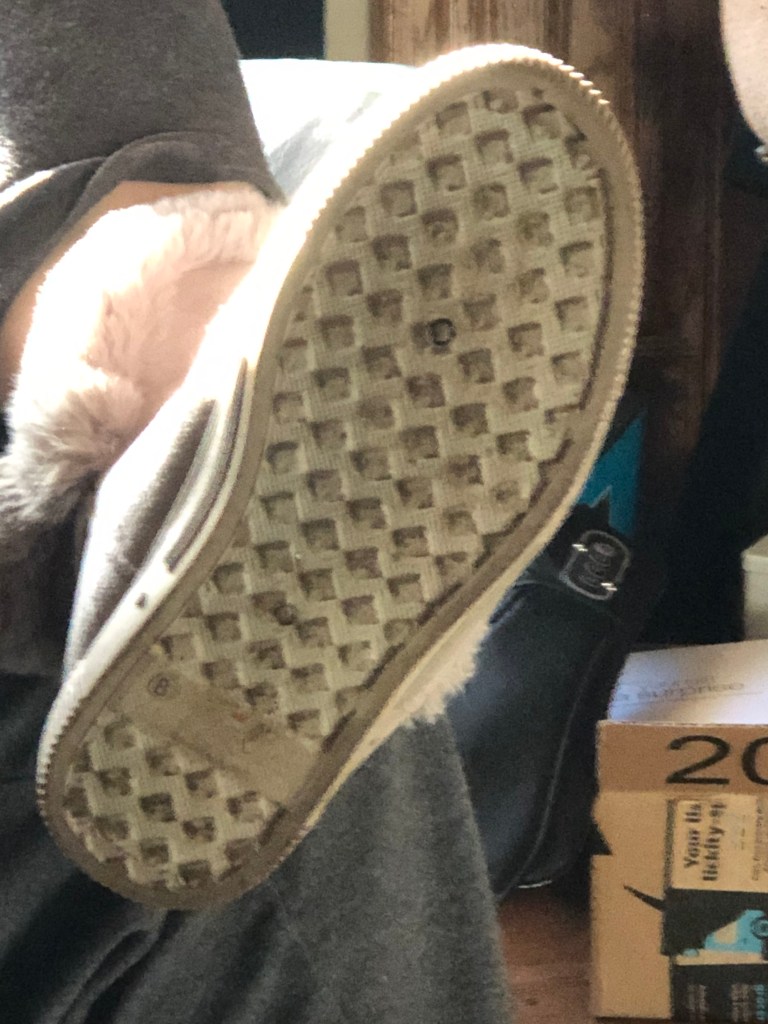
Thoughts:  After coming home from work last week I took off my mask and put it in the hamper as usual.  After lunch I went back to my office and rubbed my ear, finding the earring was gone.  I looked everywhere I had been but to no avail.  I even went so far as sweeping the floor to see if I could find it.  Again, no luck.  On Saturday Melissa was wondering what was wrong with her shoe, as it had felt uncomfortable for several days.  When she looked, she found my earring stuck in the crepe sole of the shoe.  She had been walking on it for three days.  It seems there are good reasons to be uncomfortable.  Being uncomfortable is what allowed Melissa to find my earring.  Being uncomfortable wearing a mask can help stop the spread of the virus.  Just be careful of your earrings.  Follow the science.  Change is coming and it starts with you.

Interior

December 19, 2020

President Elect Biden has continued to make historic selections for his cabinet positions.  Today it was reported that Rep. Deb Haaland (D-N.M.) was nominated to fill the position Secretary of the Interior, marking a turning point for the U.S. government’s relationship with the nation’s Indigenous peoples.  In selecting Haaland, a member of Pueblo of Laguna, Biden placed a descendant of the original people to populate North America atop a 171-year-old institution that has often had a troubled relationship with the nation’s 574 federally recognized tribes.  Three divisions of Interior have a tremendous impact on Indian Country, including the Bureau of Indian Affairs, the Bureau of Indian Education, and the Bureau of Trust Funds Administration, which manages billions held in trust by the U.S. government.

I was able to see some of this “trouble” when I worked with the Native Tribes in Utah.   There are eight sovereign tribal governments in Utah:  Confederated Tribes of the Goshute Reservation, Navajo Nation, Northwestern Band of Shoshone Nation, Paiute Indian Tribe of Utah, San Juan Southern Paiute, Skull Valley Band of Goshute, Ute Mountain Ute Tribe, and the Ute Indian Tribe.  One case that stuck out was with the Ute Mountain Ute Tribe.  When I was there during the 1980’s the Corps of Engineers had constructed 12 different reservoirs in the Wasatch Mountains to store and divert water to the Colorado River to be used in California.  The original agreement specified this diversion would be compensated for by building three dams to send water to the Ute Reservation.  Even as I worked on additional reservoirs to store California water, none had been built or even started for the Utes.

Haaland was born in Arizona to a Native American mother who served in the Navy and a Norwegian American father who was an active-duty Marine.  Haaland bounced between 13 public schools as the family changed military bases.  At 15, she worked at a bakery, and later attended law school with the help of student loans and food stamps, occasionally experiencing homelessness as a single mother.  Now after serving a single term in Congress, Haaland will oversee a department that manages roughly one-fifth of land in the U.S.  While New Mexico is one of the top oil-and gas-producing states, Haaland has pledged to transform the department from a champion of fossil fuel development.  Instead, the focus will be on promoting renewable energy and policies to mitigate climate change.

Thoughts:  During the 1970’s the Keep America Beautiful campaign featured Iron Eyes Cody, the actor who played an Indian shedding a tear at the sight of a littered American landscape.  This became one of television’s best-known and most-honored commercials.  Cody had roles in nearly 100 movies, including ”Sitting Bull,” ”Paleface” and ”A Man Called Horse,” as well as guest appearances on television programs like ”Bonanza,” ”Gunsmoke” and ”Rawhide.”  Hopefully Haaland will be able to shed a tear seeing an opposite landscape, free from garbage, smoke, and other pollutants.  Follow the science.  Change is coming and it starts with you.

Classy

December 18, 2020

Demolition Man is a 1993 American science fiction action film starring Sylvester Stallone, Wesley Snipes, and Sandra Bullock.  Stallone is the risk-taking police officer and Snipes the evil crime lord.  Both have been cryogenically frozen for crimes in 1996 and are thawed in 2032.  The dystopian society has changed, and all crime has seemingly been eliminated.  The story alludes to many other works including Aldous Huxley’s 1932 dystopian novel Brave New World and H. G. Wells’ 1899 The Sleeper Awakes.  The film was released in the United States in October 1993 and earned a total of $159 million.  One of the humorous side notes was how in the future Taco Bell is the classy restaurant that everyone wants to go for sit down dining.

While the Taco Bell reference was supposed to be tongue-in-cheek in 1993, it may be closer to reality than you think.  The pandemic is splitting the restaurant industry in two.  Big, well capitalized chains like Chipotle and Domino’s Pizza are gaining customers and adding stores while tens of thousands of local eateries go bust.  About 17% (110,000) of America’s restaurants have already permanently closed this year.  One survey of open restaurants found a 36% drop in revenue and 83% expects sales to be “even worse” over the next three months, and 37% of restaurants said it is “unlikely” they will be open in six months from now without additional government help.

While that is true for small locally owned restaurants, the reverse is true for the large national chains.  Larger operators generally have the advantages of more capital, more leverage on lease terms, more physical space, more geographic flexibility and prior expertise with drive-throughs, carryout, and delivery.  Chipotle more than tripled its online business sales in the second quarter while Domino’s, Papa John’s International Inc. and Wingstop Inc. all reported double-digit same-store sales increases in the third quarter.  McDonald’s also said U.S. same-store sales rose 4.6% in the third quarter.  That included a rise in the low double digits during September, its best monthly performance in nearly a decade.  Just as with household income, the food divide continues to widen.

Thoughts:  With indoor seating either banned or limited, local restaurants have been forced to switch to curbside or drive thru to stay afloat.  Most of these restaurants do not have suitable locations for drive thru and curbside still requires interaction.  Add to this the inconvenience of either calling ahead or sitting in the parking lot waiting for a meal, then driving home and (usually) eating cold food.  While that works with gazpacho, most entrees are not the same.  When it comes to my favorite classy restaurants, I go there because they are not “fast food.”  Darwin might call this survival of the fittest.  The key is finding rapid ways to adapt.  Follow the science.  Change is coming and it starts with you.
Insecurity

December 17, 2020

As 2019 ended we received exciting news concerning both income and poverty rate in the US.  Income had grown and poverty had plummeted as a result.  The official poverty rate fell to a record low of 10.5 percent in 2019.  Over 4 million people were lifted out of poverty between 2018 and 2019 for a 1.3 percentage point decrease.  This was the largest reduction in poverty in over 50 years.  Even more encouraging was minority groups led the way in poverty alleviation.  Compared to the overall poverty rate reduction of 1.3 percentage points, black poverty fell by 2.0 percentage points, Hispanic poverty fell by 1.8 percentage points, and Asian poverty fell by 2.8 percentage points.  Notably, the black poverty rate fell below 20 percent for the first time in history.

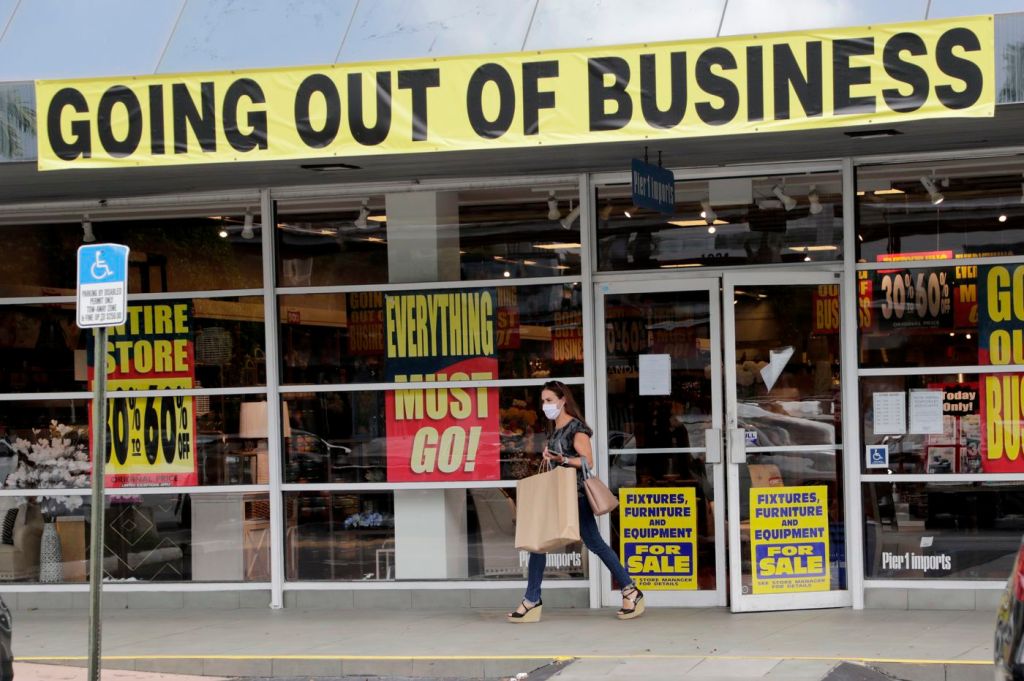
That was then, this is now.  Statistics for 2020 indicate over 8 million people have slipped into poverty since May, or an average of over 1 million per month.  The reality is more staggering, as 6 million of these people have dropped into poverty during the last 3 months.  This is more concerning when you consider an estimated 4 million people came out of poverty in response to the stimulus checks received in May.  This coincides with the 885,000 claims for unemployment last week, up from 862,000 the previous week.  As we have learned, this does not include those who have given up or are no longer receiving assistance from government agencies.  Most of these workers are BIPOC.   

Other studies have found that Black and Latino people are more than twice as likely as whites to live below the poverty level (currently $26,200 for a family of four) and child poverty has risen an additional 2.5 million just since May.  Both minority groups disproportionately work in industries hard-hit by the recession and are prone to layoffs.  Blacks disproportionately live in Southern states where benefits are low, and some Latinos are disqualified because they lack legal status.  Many employers are still slashing jobs as the pandemic forces more business restrictions and leads many consumers to stay home.

Thoughts:  During the presidential debates Andrew Yang suggested a guaranteed income of $1,000 a month for every single adult in America.  Yang stated, “Putting money into peoples’ hands and keeping it there wouold be a perpetual boost and support to job growth and the economy.”  That means every couple with two children would be guaranteed to live below the poverty level.  While many defamed the idea as “socialism,” the only thing that has made an impact on the poverty level this year has been a one-time stimulus of $1,200 per adult.  Economic insecurity is the force driving much of the civil and political unrest in America.  It must be addressed.  Do the work.  Change is coming and it starts with you.
Bats

December 16, 2020

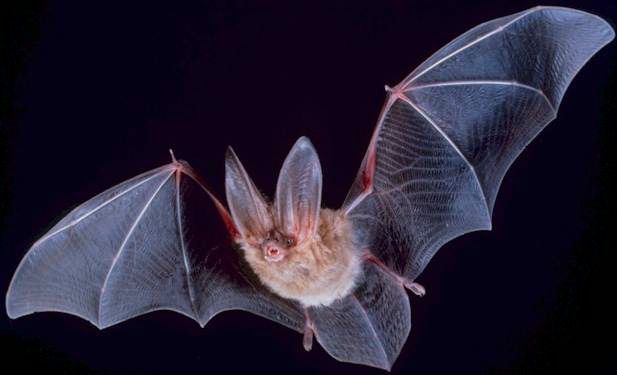
I came across an AP article in the newspaper that addressed the steps being taken to avert the next pandemic.  While the article focused on work being done in Brazil, it said similar studies were being done around the world.  Despite what some may claim, covid-19 appears to have originated in the open-air flesh markets of Wuhan, China, as the virus crossed from a bat to humans.  Studies on the spread of viruses from the five most common mammalian species found viruses spread from bats are the most virulent in humans.  The researchers begin by trapping representatives of the over 1,400 species of bats and checking to identify other viruses that may be highly contagious or lethal in humans.

My son Alex and I liked to hike and explore the wilderness canyons of Southeastern Utah.  While it was usually hot during the day, the air would cool down at night.  That would make for a perfect sleep lying on the rocks above the dry stream beds.  The cooler temps also brought out an array of night flying insects.  When we first began these trips, I was puzzled by the zipping noises we would hear.  It would be zzzt, zzzt, zzzt, all night long.  I finally realized this was the sound of bats feeding on the abundant insects.  Although we never saw a bat during the day, they were abundant at night.

Another reason to study bats is because of their highly developed immune system.  It seems the ability to recover from the stress caused by flying also gives them protection against pathogens.  It is hoped by studding the bat immune system scientists will learn how bats are able to shed the viruses, providing hints for future medical treatment strategies.  Examining the various species of bats can also identify existing viruses that may be spread by the creatures.  This could give us a head start on the next pandemic.

Thoughts:  An aside to the story on bat pathogens was the reason for increased human interaction with bats.  The increasing destruction and fragmentation of wild habitats across the world are forcing all wildlife into proximity with humans.  This is especially true in the biodiverse areas like tropical forests.  It has long been known that many cures to human ailments are available in these biomes.  Apparently, that goes both ways and pathogens deadly to humans are present as well.  Like most things, more research is needed to shift the good and the bad.  Sadly, funding tends to wax and wane depending on our sense of urgency.  We have been shown this is a world-wide problem.  It is time to launch a world-wide solution.  Follow the science.  Change is coming and it starts with you.
Shields

December 15, 2020

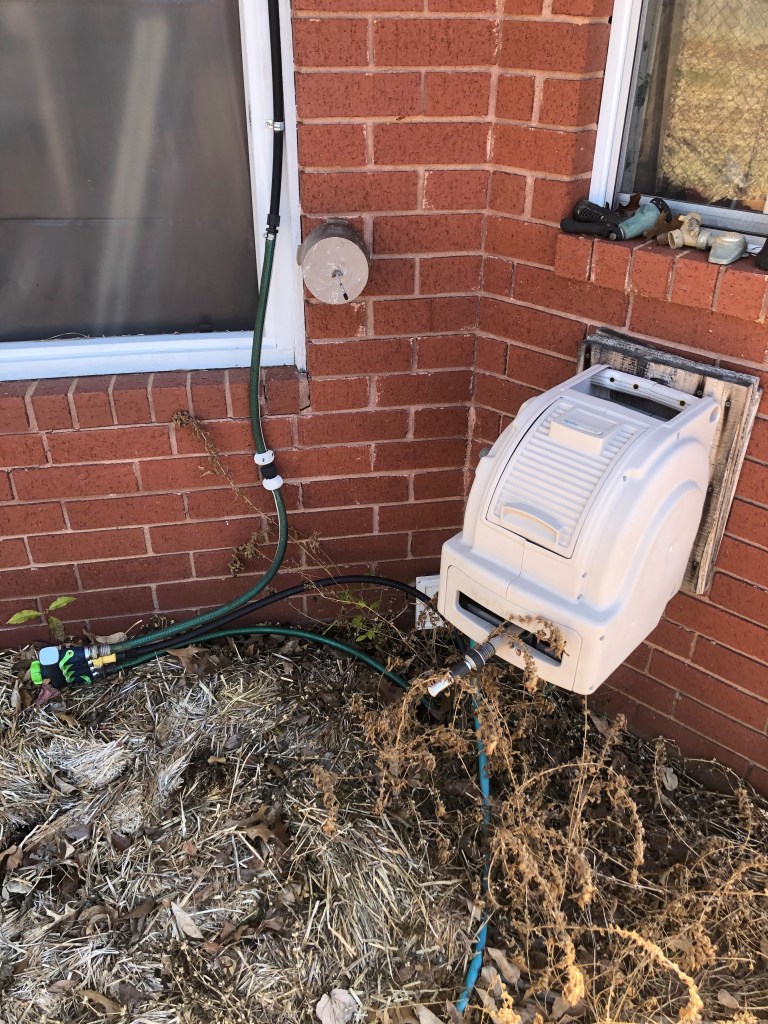
I have been so concerned with protecting Melissa’s succulents that I forgot about the annual protections I needed to be taking care of.  While the River Valley does not have many days below freezing, we do get a few.  Some nights even drop to the point of a hard freeze.  We have had several nights of sub-freezing and even temperatures into the low 20F.  While I was checking my patio beds, I noticed the hoses still connected to the faucet.  This is a good way to freeze the water left in the pipes.  I quickly removed the hoses from the front and back of the house and placed the Styrofoam shields over the faucets to provide protection.

While I have often heard (and obviously used) the term “hard freeze,” I have not known the true definition of the term until today.  A frost refers to the conditions that allow a layer of ice crystals to form when water vapor condenses and freezes without first becoming dew.  Frost may happen when the “surface” air temperature (officially measured at 4 or so feet above ground) is below 36F. (Ground temperature, meanwhile, may be below 32F, and below frost point.) Various factors must be present, such as clear skies, moisture, and calm or light winds.

A freeze can happen when the surface air temperature falls to 32F or below, and frost may or may not form.  A light freeze (between 32F and 29F) can kill vulnerable plants.  A moderate or “hard” freeze (between 28F and 25F) can cause wide destruction to most plants.  A severe or “killing” freeze (24F and below), causes heavy damage to most plants. Many plants can survive a brief frost, but very few can survive a severe freeze.  That is true for water faucets as well.

Thoughts:  When I left my house for a week my first winter back in Kansas, I was vigilant to turn off the heat and water to save energy.  When I returned I walked in on 45F.  I forgot that Kansas winters are colder than the Bay Area.  I turned everything back on and was glad it did not kill any of my plants.  The next time I turned the heat down but not off.  Shielding items (or people) from harm varies with what is being protected.  When I placed the shields over my faucets, I was trying to shield them from the freezing effect of the night air.  When I wear my mask shield, I am trying to protect my neighbors from exposure to the virus.  They have both been proven effective.  Follow the science.  Change is coming and it starts with you.
Prepare

December 14, 2020

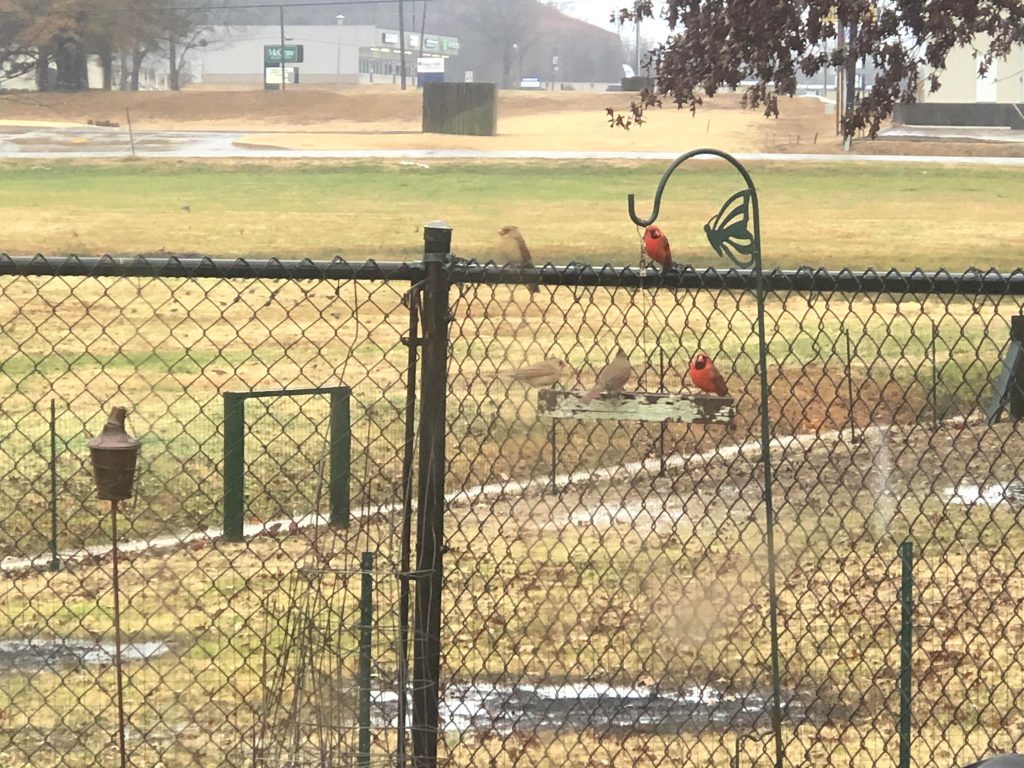
When I got home the Cardinals were swarming the backyard feeders.  The light rain that had been falling all morning had let up and even though the skies were not clear, the birds seemed to know it was time to stock up on food.  We had three or four cardinals on each of our five feeders.  A wren would sneak in occasionally or a Jay would power its way to the seed, but the cardinals were using the feeders to prepare for the possibility of bad weather.  I am always amazed how animals are so attuned to the same weather that I fail to notice.

When I fished one of our local ponds recently, I remembered the snake we constantly battled during the summer.  As soon as our bobbers hit the water the snake arrived, even coming ashore when we caught a fish and forcing Melissa to use her pole to push it back into the water.  When it got cooler, the snake disappeared.  When I looked online, I found that rather than hibernating, snakes and reptiles enter brumation.  While reptiles do sleep during brumation, they also wake and need to forage for food and water, before returning to brumation.  Reptiles in brumation use less energy and can go longer between feedings.  Snakes prepare for brumation anytime from September to December and this can last until March or April, depending on the weather pattern.  I guess this gives us a few months to prepare for the snake to start chasing us again.

As the afternoon wore on the cardinals were proven right.  The light rain turned to a heavy wet snow.  While the cement pool deck never got cold enough to hold the flakes, the ground was covered with more than an inch of snow.  As the sun started going down Melissa went outside to check the succulent beds.  The mesh has been effective in keeping the plants warm as the temperatures dropped.  The mesh was even effective with the light rain as it passed on through and the plants were safe.  We were not as prepared for the snow, especially as wet as it was.  The weight had drug the mesh down and it was laying on the taller plants.  Luckily, we were able to carefully scoop the snow off and reset the stakes holding it up.   It is getting down to the low 20F tonight.  We have prepared, now we wait and see.

Thoughts:  Following the Ebola scare America had ramped up our stockpile of PPE and devised ways to quickly identify and contain possible health threats.  The risk of a potential threat has defined as high by health agencies for several years prior to the pandemic outbreak.  When it happened, we were not prepared and did not react until months too late.  However, the lessons learned by researchers meant they were prepared.  When the pandemic hit, they went into overdrive and produced several vaccines in a matter of months.  The long wait came with testing and approval.  Now the rest of us need to catch up on our personal preparation.  We are not through this yet.  Follow the science.  Change is coming and it starts with you.
Slabs

December 12, 2020

I realize the word “slabs” is reserved for the fat crappie that are pulled in during the spring spawn, but I could not help stealing the term.  Slabs are crappies bigger than the average sized fish that gather in easily caught schools.  The sizes of these crappies are astonishing, and they do produce slabs of flesh from the fillets they produce.  When I checked out the “official” definition online, I found that for a crappie to qualify as a slab it needs to measure at least 14” to 16” (or more) and weigh close to 4 pounds.   The only ones I have caught that qualify were two black crappie I caught on a guided trip in Minnesota.  I was fishing for Walleye.  Go figure.

I mentioned several weeks ago I had gone to one of my favorite spillways.  I had immediately caught a crappie and two large bluegills when I realized I was out of cell range.  Since I was waiting for a call, I packed up and moved back into cell range.  This left me thinking what might have been if I had stayed.  Melissa and I decided to take a mental health afternoon and went back to the lake.  We got almost down to the right bank of the spillway when we encountered the gated road and the stop sign.  I immediately thought, nice of them to let us know.  I drove the ten minutes back to the other side discouraged because I had fished this side twice before without catching fish.  I decided to give it a try while Melissa stayed in the jeep.

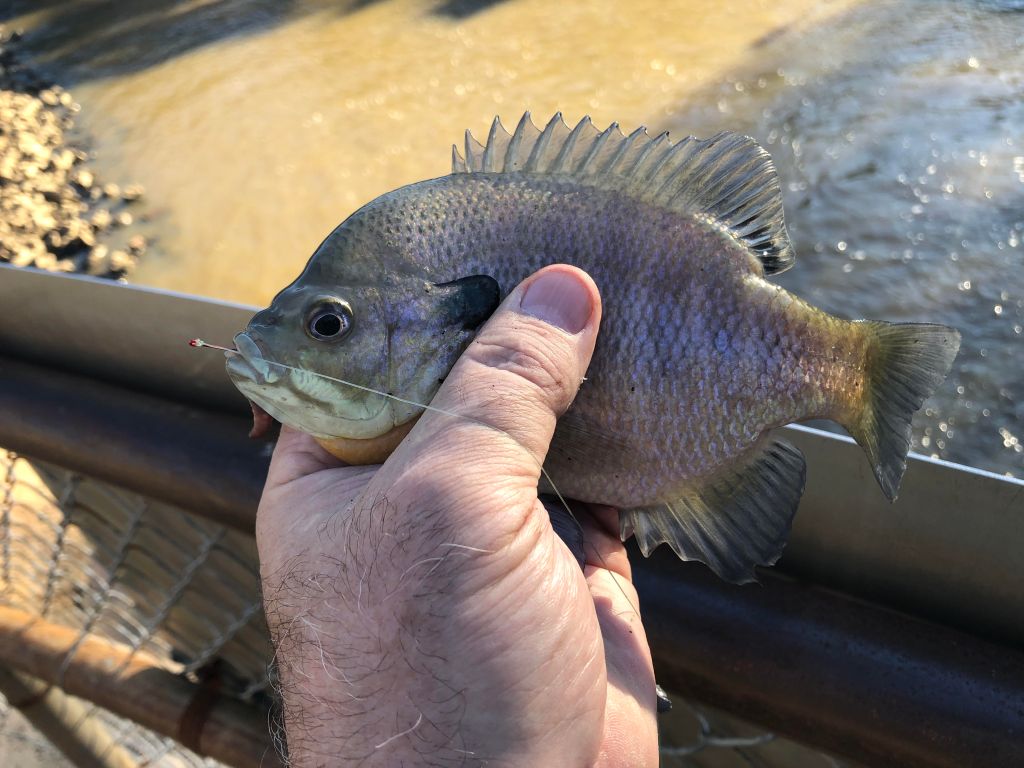
I threw my bobber in the water and immediately caught one of the largest Bluegill I had seen in a while (since the last time I was here?).  I showed Melissa and she was impressed but remained in the car.  I tossed my line back in and immediately caught another.  This time when I showed her, she was intrigued.  She got her pole and came over to try her luck.   Melissa immediately began to catch fish as well.  These were fat slabs of fish that were obviously storing fat for the winter.  Occasionally, we would catch a smaller hybrid, but mainly it was one of the big bluegills.  We caught 20 in an hour and a half.

Thoughts:  I have mentioned that while Melissa likes to catch large numbers of fish (often small), I prefer less fish but of larger size.  It is a definite win/win when we can catch lots of fish that also have size.  We are often faced with choices that force us to choose between two outcomes where we like neither.  Some consider this a lose/lose situation, but your choice often comes from your end goal.  During the pandemic we face what some tell us is a lose/lose situation.  Wearing a mask can be uncomfortable but if we all wear one, we can protect each other from possible spread.  Not wearing a mask may seem like a “right,” but this puts you at a higher risk for contracting the virus.  Today we are at 295,000 deaths in America.  We have no right to put others at risk.  Follow the science.  Change is coming and it starts with you.
Adaptation

December 11, 2020

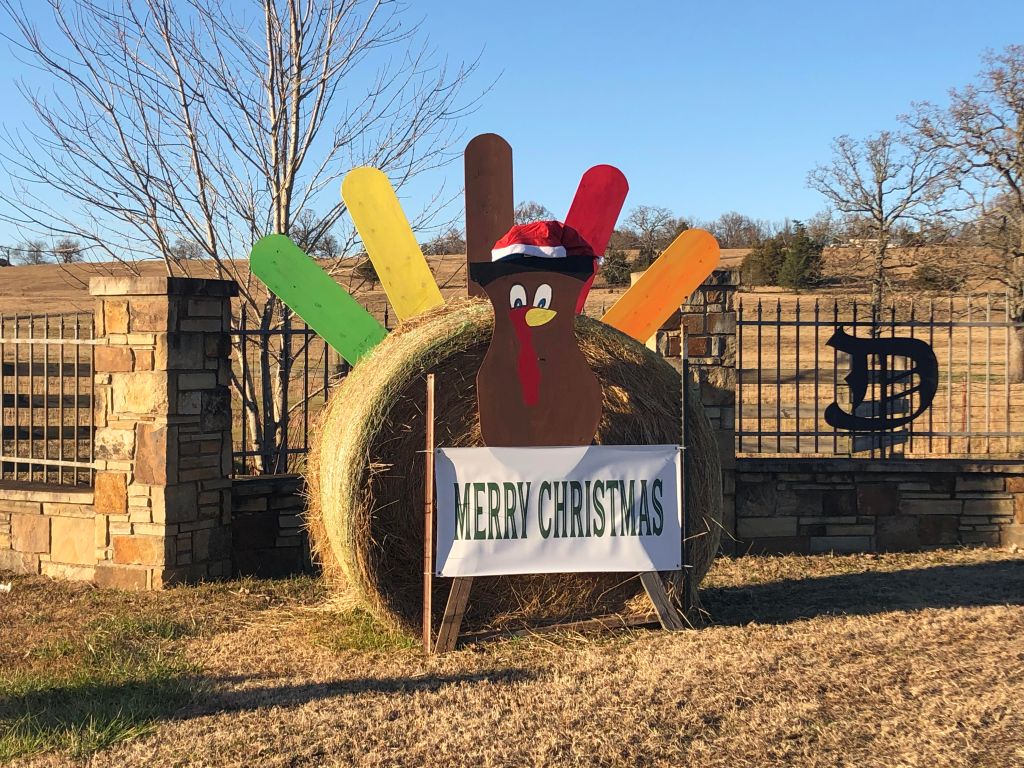
When I went to fish the spillway several weeks ago, I saw a Thanksgiving display at one on the ranches along the route.  They had taken a large round bale of hay and decorated it with fence pickets attached to the back of the bale.  They toped this off with another larger picket on the front of the bale with a face painted on it.  After painting the slates in various colors, the multi-colored slates made a passible turkey.  The look was completed with a sign saying, “Happy Thanksgiving.”  I thought the display was well done and was amused by their adaptation of the hay bale into a piece of art.

When I was in High School, I spent several seasons working on my grandfather’s farm during the hay season.  This was a win/win as he needed cheap labor and I needed money.  Bucking bales has adapted over time.  Hay used to be thrown on a large pile and compressed as well as possible by standing on it.  A later adaptation was the oblong bale.  The baler would run through the field and scoop up the dried hay, compress it into on oblong shape, tie it with twine, and spit it out onto the ground.  My cousins and I went along behind and threw (bucked) the bales onto a hay trailer to be taken to the barn.  Again, we would toss the bales onto a hay elevator that took them to the hay loft.  The bales were then stacked.  Depending on the yield and dryness of the hay, these bales weighed from #100 – #120 each.  Bucking bales always made for a long day.

Hay bales have gone through another adaptation.  Manual labor is harder to find and never was efficient.  The balers used now create the large round bale I saw in front of the ranch driveway.  These weigh in around #1,100 and can not be lifted by a crew of grandkids.  Instead, the hay is swathed, turned to dry, baled, and moved to storage, all by machine.  Since the bales are so large, they are often just moved to the side of the field to be stored until they are moved to feed the cattle.  The feeders represent another adaptation.  The bale is usually placed in a circular grid of pipe that allows free access to the hay.  The cattle then feed as they will.

Thoughts:  When we went past the entrance that held the Thanksgiving Turkey on the way to the spillway yesterday, I noticed another adaptation.  The bale decorated as a turkey was still there, but they had added a Santa hat. The sign was also changed to “Merry Christmas.”  I thought this was a good adaptation as they again repurposed the bale.  I have been impressed by the innovative adaptations that have happened during 2020.  The American Dialect Society’s Word of the Year is the oldest English-language version, and the only one that is announced after the end of the calendar year.  This is determined by a vote of independent linguists.  While it had yet to be decided, my vote for 2020 for the greatest adaptation and most used word would be “Virtual.”  Follow the science.  Change is coming and it starts with you.
Collapse

December 10, 2020

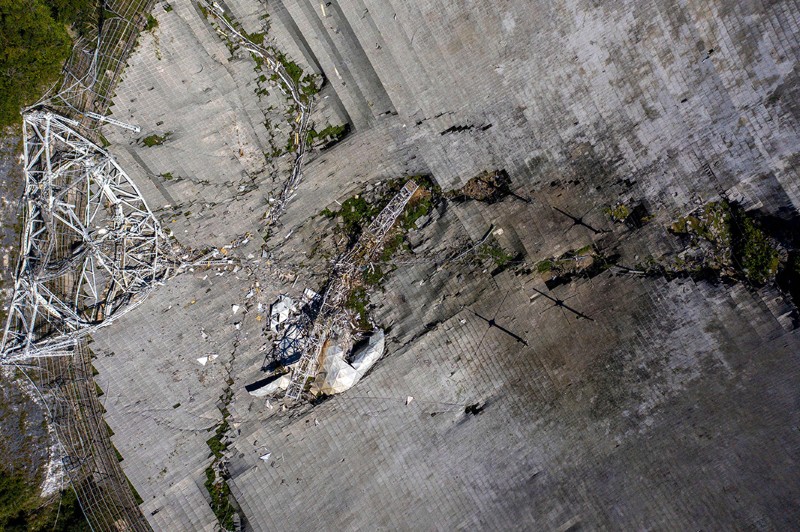
On December 1, 2020, the iconic radio telescope at the Arecibo Observatory in Puerto Rico collapsed.  Engineers had warned that the 900-ton platform suspended above the telescope’s 305-meter-wide dish could fall at any moment, as one of the main cables supporting it had snapped in early November.  Last month, the US National Science Foundation (NSF), which owns the observatory, had announced it would shut down the telescope permanently, citing safety concerns over its instability, and damage too extensive to repair.  The final collapse happened just before 8 a.m. local time.  No one was injured.

The cable that failed in November dated back to the observatory’s construction in 1963.  Since construction, scientists using the Arecibo Observatory have made amazing discoveries.  The first extrasolar planets around the pulsar B1257+12 were found in 1992.  Detailed radar maps were made of the surface of Venus and Mercury and these showed that Mercury rotated every 59 days instead of 88 days, proving the planet did not always show the same face to the Sun.  American astronomers Russell Hulse and Joseph H. Taylor, Jr., used Arecibo to discover the first binary pulsar, and showed it was losing energy through gravitational radiation at the rate predicted by physicist Albert Einstein’s theory of general relativity.  They won the Nobel Prize for Physics in 1993 for their discovery.  The iconic structure was also used as a movie set for filming Golden Eye, Contact, and Species, among others.

The NSF intends to continue paying staff at the observatory to carry on the science at smaller facilities on site.  It is unclear whether the dish will be demolished, rebuilt, or left in ruins.  Observatory director Francisco Córdova told reporters that officials would investigate ways of establishing similar or even better scientific capabilities, perhaps at or near the site.  This would depend on the US Congress allocating money to replace the Arecibo dish.  Given the speed Congress has used to respond to the pandemic, this may take a while.

Thoughts:  One of the responses to the collapse in the article’s comments section was to say that with everything else that has gone on this year, it was a fitting end to 2020.  While there seems to be a general feeling that “if we can only get of 2020,” the reality is little will change.  The new year will bring what it always brings, expectation and hope for the future.  What makes a difference is not the passage of time but learning from what has happened during that time.  This too is the same every year.  The coming year can achieve great advances if we decide to do what has been proven to work, with or without the vaccine.  Follow the science.  Change is coming and it starts with you